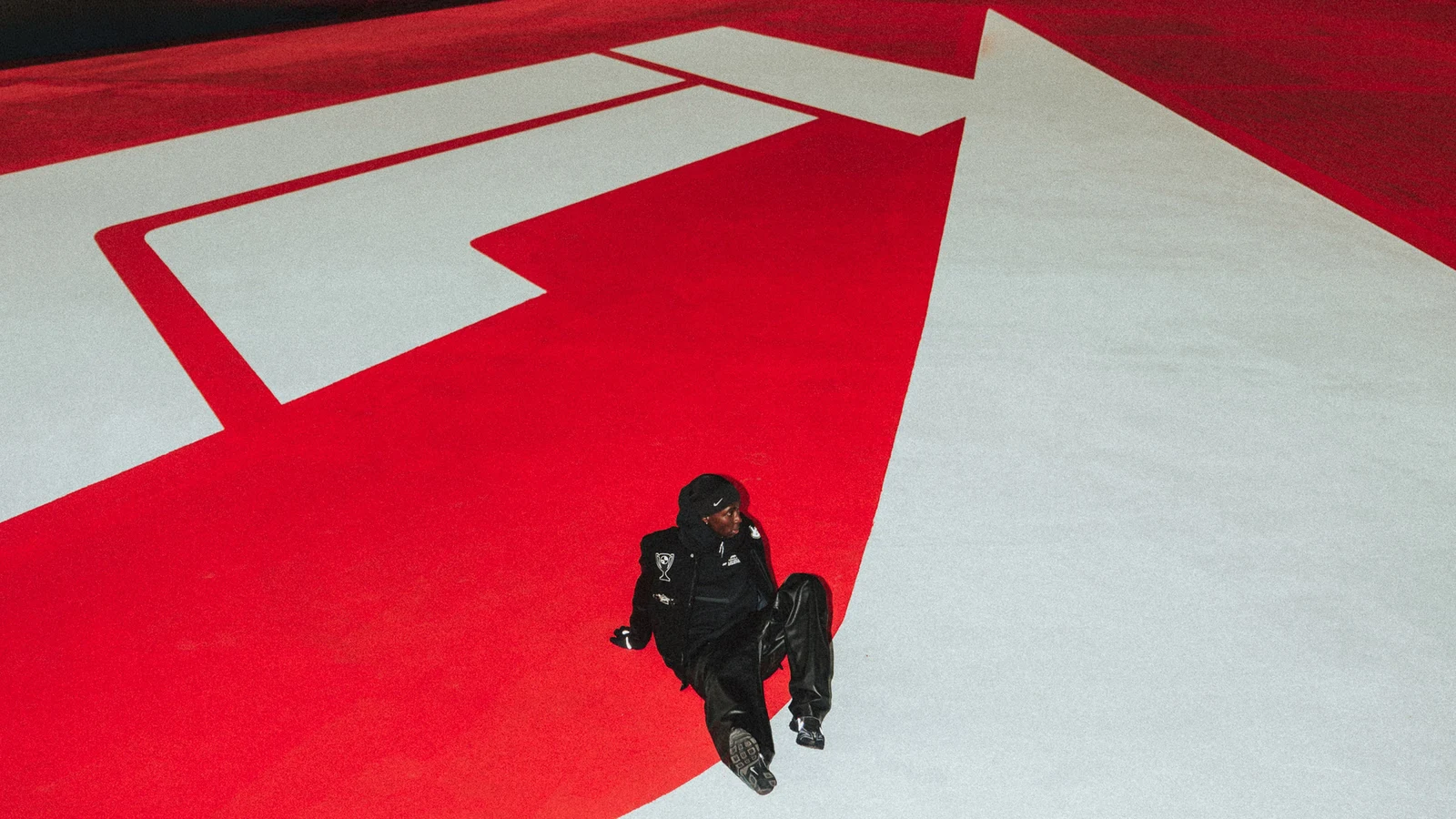
Formula 1’s new long-term partnership with Nike creates a commercial system with four connected outputs: uniforms for Formula 1 staff, consumer products, race-weekend experiences and athlete-informed performance development through F1 Academy.
Nike becomes an Official Partner and Formula 1’s Official Apparel and Uniform Supplier from the 2027 season. It will produce co-branded clothing for staff at events worldwide and develop footwear, apparel and accessories for fans. The first limited Formula 1 x Nike capsule launches in Las Vegas on 20 November, sold through the Nike store at Caesars Palace and the F1 Hub at The Venetian.
The agreement also appoints Nike as Official Sporting Apparel Partner of F1 Academy. Nike says it will work with the series’ drivers to shape performance products for the demands of racing, using athlete insight, innovation, design and technology.
Neither party has disclosed the rights fee, contract length beyond describing it as long term, product royalties, minimum guarantees, inventory ownership, category exclusivity, performance targets or the financial allocation between Formula 1 and F1 Academy. Formula 1 has not said which company will operate event retail from 2027 or whether Nike has exclusive trackside vending rights.
That last omission is commercially important. Puma’s 2023 Formula 1 agreement explicitly covered staff uniforms, licensed fan products and exclusive trackside vending through its stichd subsidiary at selected races. The Nike announcement confirms the uniform and product roles but does not state that the previous retail structure transfers with them. The new partnership should therefore be analysed on the rights that have been announced, not assumed to be a like-for-like replacement of every Puma function.
The disclosed package is still material. It gives Nike a championship-level platform rather than a single-team association and gives Formula 1 a supplier capable of connecting performance research with a global sportswear business. The result can be more valuable than a uniform contract if the parties build a repeatable path from athlete need to product, launch and retail.
Formula 1 is buying capability as well as selling rights
Official-partner status is usually described as inventory sold by a rights holder: branding, hospitality, content and access in return for a fee. The Nike agreement also contains an operating dependency. Formula 1 needs thousands of staff uniforms to be designed, manufactured, sized, delivered and replenished across a 24-race global calendar. That makes Nike both commercial partner and supply-chain participant.
Uniform supply produces recurring product and service requirements. Formula 1 will need role-specific ranges for event, technical, guest-facing and office staff; size and regional availability; replacement stock; weather variants; sustainability and compliance records; and a system for delivery before each event. If designs change annually, the programme also needs a controlled transition that avoids waste and inconsistent presentation.
Those operational requirements create a base layer beneath the visible partnership. A uniform deal can deliver predictable volume and brand presence, while consumer collections provide higher-variance retail upside. Race-weekend experiences and F1 Academy development add marketing and innovation layers that can strengthen both.
For rights holders, this is a useful procurement model. A supplier category can be packaged with commercial rights when the partner has a genuine operating role. The rights fee should not obscure the cost and performance of the supplied service, however. Formula 1 needs separate measures for uniform quality, fulfilment, lead time and waste, alongside sponsorship exposure and fan engagement.
Suppliers bidding for similar roles should expect two evaluations. The commercial team will assess brand fit, activation and rights value. The operations team will assess product specification, capacity, logistics, service levels and contingency. A bid that excels in one but fails in the other transfers risk to the rights holder.
Athlete insight gives F1 Academy a different job
F1 Academy is not presented only as a branding platform in the agreement. Nike says the series’ drivers will inform future performance products created for the specific demands of racing. That gives the property a potential product-development function.
The word potential matters. Neither Nike nor Formula 1 has identified a research protocol, named product, testing schedule, participating drivers, intellectual-property terms or launch commitment. No evidence yet shows that athlete feedback has reached a commercial item. The partnership starts in 2027 and should be judged on what follows the announcement.
A credible programme would begin with defined problems rather than a generic apparel brief. Drivers operate in heat, restricted cockpit space and multi-layer safety equipment, then move through engineering, media and podium activity with different thermal and movement requirements. Travel, recovery and repeated time-zone changes create further needs outside the car.
Not every problem belongs to Nike. FIA-homologated racewear, team kit and championship staff uniforms sit in different regulatory and purchasing categories. The parties should state which products are within scope and which are not. That prevents performance language from implying involvement in safety equipment that remains supplied and approved elsewhere.
For F1 Academy, structured product work could create value beyond exposure. Drivers can be paid or otherwise recognised for their input, the series can demonstrate a practical athlete-service programme, and Nike can test products with a group whose needs have historically been less represented in motorsport apparel. The commercial strength would come from documented changes based on that input, not from attaching drivers to a finished collection after design is complete.
The operating model needs consent and ownership rules. Contracts should specify how driver feedback, measurements, images and performance data can be used; who owns resulting designs; whether drivers can discuss the work; and what happens when a driver leaves the series. Suppliers collecting body or performance data also need a privacy basis, restricted access and a deletion schedule.
Teams and junior series can copy the principle at a smaller scale. A partner is more defensible when participants help improve a product or process. The work must be real, scoped and measurable. Otherwise athlete innovation becomes another label competing for attention in a crowded sponsor portfolio.
The first capsule is a distribution test
Nike and Formula 1 are starting with a deliberately limited Las Vegas release rather than waiting for the 2027 uniform programme. The disclosed sales points are physical: Nike’s Las Vegas store at Caesars Palace and the Formula 1 Hub at The Venetian. Neither announcement identifies a global online release, price list, unit volume or restock policy for the first capsule.
That makes the launch a useful test of location, scarcity and audience overlap. Formula 1 can measure demand from race-week visitors inside its own retail environment. Nike can measure demand through a mainstream sportswear storefront. Comparing those channels can show whether buyers enter from motorsport, from the Nike brand or from the event itself.
The parties should avoid treating a fast sell-through as complete proof. A limited quantity can sell out because supply is deliberately constrained. The more useful measures are sales per store visitor, conversion by product, full-price mix, return rate, customer acquisition, stock remaining after the event and evidence of demand outside Las Vegas.
If the capsule is the beginning of a recurring programme, cadence becomes critical. Formula 1 already supports numerous team collections, event products, fashion collaborations and licensees. Nike needs a recognisable design and release architecture that does not simply add another red-and-black logo range to the same calendar.
Product launches can be organised around global seasonal collections, event-specific capsules and athlete-informed performance items. Each has different economics. Seasonal products justify broader manufacturing and distribution. Event capsules use local urgency but carry deadline and residual-stock risk. Performance products require longer development, testing and claims substantiation.
The supply chain needs to match the category. A Las Vegas capsule has an immovable delivery date; late stock loses most of its event value. A worldwide 2027 collection needs regional forecasting, customs planning, ecommerce integration and returns capability. A performance item needs development gates and quality evidence. Treating all three as one merchandise stream would conceal their different working-capital and execution risks.
The disclosed deal leaves retail architecture open
The previous Formula 1–Puma announcement was unusually explicit about distribution. Puma held the right to produce Formula 1-branded apparel, footwear and accessories, supplied circuit staff from 2024 and used stichd for exclusive trackside vending of Formula 1 and team merchandise at selected Grands Prix.
The Nike announcement confirms product creation and staff supply, while naming two Las Vegas outlets for the launch capsule. It does not identify the operator of future Formula 1 fan stores, grant exclusive event-vending rights, describe ecommerce distribution or explain how Nike products will sit alongside team merchandise.
That may simply reflect a launch communication rather than a narrower contract. It nevertheless matters to teams, licensees and retail suppliers. A championship-appointed apparel partner can influence floor space, staff presentation, event activations and the promotional calendar even without controlling every store.
Formula 1 should give commercial stakeholders a rights map before 2027. Teams need to know whether existing replica-kit and event-retail arrangements change. Licensees need category definitions and launch windows. Promoters need to know which retail areas, pop-ups and local partners remain available. Suppliers need clarity on warehousing, point of sale, staffing and unsold inventory.
The cleanest structure separates five functions: Formula 1 staff supply; Nike-designed Formula 1 product; third-party licensed product; team merchandise; and operation of physical or online stores. One company can perform several functions, but the contract and reporting should preserve the distinction.
That clarity also protects consumer data. The F1 Hub, Nike store and official online channels may each control different transaction records. If the partnership is intended to build a shared audience, consent and data-sharing terms must allow analysis without assuming that every purchaser can be marketed to by both parties.
Nike’s investor strategy explains the timing
Three days before the Formula 1 announcement, Nike presented its Full Stride Ahead strategy and a 2031 financial framework. The company expects Performance Sports to contribute about $4bn of $5bn in incremental revenue growth from its 2027 base, with Sportswear contributing about $1bn. Nike also describes fiscal 2027 and 2028 as investment years focused on improving the quality of growth.
Formula 1 can touch both engines. F1 Academy athlete development and staff supply provide a performance and product-learning narrative. Footwear, apparel, accessories and race-weekend capsules sit inside sportswear and lifestyle demand. Formula 1’s global calendar also gives Nike recurring launch locations rather than a single annual event.
This strategic fit does not establish financial success. Nike’s targets are forward-looking and company-wide; Formula 1 is one partnership among many. Neither company has provided revenue or margin guidance for the agreement. It would be misleading to allocate any part of the $5bn target to motorsport without evidence.
The timing does show what the relationship must deliver internally. Nike is asking investors to judge a return to athlete-led innovation and profitable growth. A Formula 1 programme that produces only licensed graphics would have limited relevance to that case. A programme that turns driver and event insight into products, sells them through repeatable channels and attracts new consumers would be more aligned.
For Formula 1, Nike brings distribution and cultural reach but also a demanding performance standard. A global sportswear company will compare motorsport products with opportunities across football, basketball, running and other sports. Formula 1 must supply timely intellectual-property approvals, event access, participant cooperation and consumer evidence if it wants sustained internal priority.
What teams and suppliers should watch
The first signal is product scope. The parties should clarify whether Nike will build a permanent Formula 1 range, how often limited capsules will appear and which markets receive them. A launch calendar will indicate whether the agreement is a licensing programme with occasional activation or a year-round retail business.
The second is F1 Academy output. Named pilots, design briefs, athlete sessions and a product roadmap would show that innovation is moving beyond positioning. Teams and suppliers should watch whether any item reaches broader Formula 1 staff or fans, and whether participating drivers are credited for their contribution.
The third is distribution. Retail operators will need to know whether Nike assumes any of Puma and stichd’s event role, supplies product into an existing Formula 1 system or creates parallel locations. Ecommerce availability, wholesale partners and regional inventory will determine the addressable market more than the announcement reach.
The fourth is operational delivery. Uniforms must arrive for thousands of staff before the 2027 season and remain consistent across the calendar. Size availability, replacement speed, climate suitability and stock waste are measurable. These service levels will matter inside Formula 1 even if they never appear in consumer marketing.
The fifth is portfolio interaction. Nike’s championship relationship will coexist with team apparel suppliers, fashion licensees and other Formula 1 collaborations. Rights conflicts can arise around footwear, staff clothing, athlete appearances, branded content and event retail. Teams should audit their agreements before offering assets that may touch the championship category.
For suppliers, the deal creates work beyond garment manufacture. Product testing, demand forecasting, event logistics, retail installation, ecommerce, localisation, returns, data analysis and content production all sit around the core rights. Agencies that can connect those functions and show margin by channel will be more valuable than those offering exposure reporting alone.
The scorecard is a product P&L
Formula 1 and Nike will need more than sponsorship metrics. The uniform programme requires service measures. The consumer range requires a product profit-and-loss account. F1 Academy work requires innovation milestones. Race-weekend experiences require participation and customer outcomes.
For consumer products, the core scorecard should include gross and net sales, sell-through, markdowns, returns, production cost, freight, event operating cost, royalties and inventory remaining. Revenue without these deductions can make a high-profile capsule appear healthier than it is.
Channel reporting should separate Nike stores, Formula 1 stores, event locations, ecommerce and any wholesale distribution. That shows where customers were acquired and which party contributed demand. It also prevents a product moved between channels from being mistaken for new consumer demand.
The athlete programme should record the problem selected, baseline product, feedback sessions, changes made, test results and launch decision. Not every experiment needs to reach market; a documented rejection can still be useful research. The danger is announcing innovation without creating a process capable of producing or stopping products.
The partnership starts with a strong set of assets: a global championship, an apparel company with product and distribution capability, an immediate Las Vegas retail test and a female development series that can supply athlete insight. The missing information is commercial and operational: economics, exclusivity, retail ownership, development milestones and measurement.
That is why the deal is more significant than a change of logo on staff uniforms. If Formula 1 and Nike connect supply, athlete research, product creation and distribution, they can build a repeatable apparel platform. If those parts remain separate, the relationship will behave like a conventional rights package with a large uniform order attached.
The industry should judge the partnership by the connections between those parts. The first capsule shows whether the brands can attract a buyer. The 2027 programme must show whether they can repeatedly turn racing access and athlete knowledge into products that work, arrive on time and make money.
Sources and further reading
- Nike official partnership announcement and downloadable media assets, 19 November 2026 ↗
- Formula 1 official partnership announcement, 20 November 2026 ↗
- Nike Full Stride Ahead strategy and 2031 financial framework, 17 November 2026 ↗
- Formula 1 official Puma supplier and retail announcement, 4 May 2023 ↗
- Puma official partnership and trackside-retail announcement, 4 May 2023 ↗
- Reuters independent report, 19 November 2026 ↗