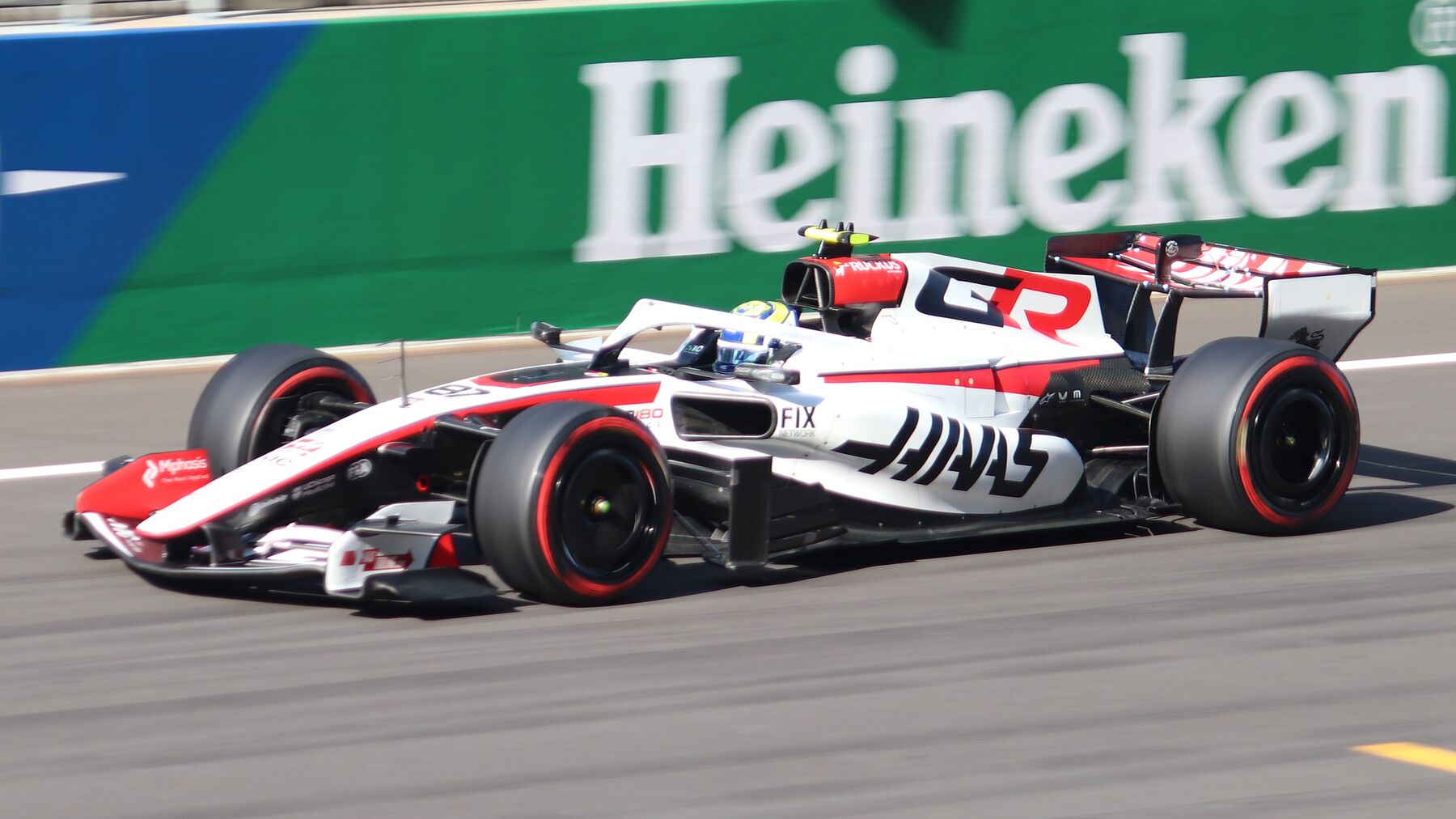
TGR Haas F1 Team is turning the visual and technical identity of its 2026 Formula 1 car into a product platform.
The team announced a multi-year global licensing agreement with Memento Exclusives on 7 October. The planned range includes full-size show cars, advanced motion simulators, replica wheel rims, nose cones, front and rear wings, halos and headrests. Products will be offered through F1 Authentics, the retail and auction platform operated by Memento under licence from Formula 1.
No contract value, revenue split, minimum production volume or product launch date has been disclosed. That prevents a valuation of the deal. It does not prevent a business assessment of the structure: Haas has selected one company to translate controlled team intellectual property into engineered products and sell them through an established specialist channel.
For teams, the model opens revenue and engagement beyond apparel without creating a consumer-products factory inside the race operation. For suppliers, it creates work around composites, machining, electronics, motion systems, finishing, packaging and installation. For sponsors, it raises a practical rights question because a replica carrying a race livery can reproduce more partner marks than an ordinary item of teamwear.
One partner controls manufacture and route to market
Memento is not presented only as a brand licensee. The company says it designs and manufactures official Formula 1 show cars, professional simulators and pit systems from its Northamptonshire base, while also operating F1 Authentics. Its published capabilities include computer-aided design, composites, paint, quality control, engineering, product development and licensing.
That combination shortens the commercial chain. Haas can provide approved references, brand assets and product sign-off while Memento handles physical development and a specialist storefront already used by collectors. The same business can receive demand signals from the marketplace and feed them back into product planning and production.
Formula 1 extended Memento's championship-level F1 Authentics licence through 2030 in September 2025. The platform is recognised by the rights holder as an official memorabilia channel and supplier of licensed show cars to teams, partners and promoters. Haas is therefore adding a team-specific licence on top of a distribution relationship that already exists at championship level.
That rights stack matters. A team entering an unfamiliar premium-product category does not need to build consumer trust, auction capability or global fulfilment from zero. Memento gains authorised access to another current-grid identity and can spread factory, software and retail investment across multiple motorsport clients.
The efficiency is an inference from the operating model, not a disclosed saving. Neither company has published manufacturing capacity allocated to Haas, inventory ownership, returns exposure or the commercial margin retained by each party.
The range creates a deliberate price and use ladder
The announced products span very different buying occasions. A replica wheel rim or headrest can serve a private collector, office display or hospitality prize. A nose cone, wing or halo creates a larger statement piece. A motion simulator becomes an interactive installation, while a full-size show car can support a headquarters, retail launch, exhibition, dealer event or sponsor activation.
That breadth gives Haas more than a single merchandise line. It creates a ladder from display components to capital-style experiential assets. The team can remain visible in customer premises and brand events long after a Grand Prix weekend, while Memento can sell to businesses as well as individuals.
The official release specifies products based on the 2026 season. That date is commercially useful because it anchors the collection to a defined car and livery rather than a generic Formula 1 shape. It also creates an approval burden. CAD-derived geometry, colours, logos and sponsor placements can change during a season, so each product needs a controlled reference state.
Teams considering similar programmes should treat the product master as they would other governed technical data: identify the approved version, separate confidential performance information from visible geometry, record permitted marks and define who signs off changes. A convincing replica does not require access to every engineering detail, but it does require reliable source material and traceable approval.
Licensing is becoming a production discipline
The Haas range illustrates why modern motorsport licensing increasingly overlaps with engineering procurement. A show car needs structural design, moulds, panels, surface finishing, wheels, cockpit detail and safe installation. A simulator adds controls, computing, displays, motion hardware, software integration and after-sales service. Large replica components need packaging that protects complex shapes during international delivery.
Those requirements create opportunities for specialist suppliers, but the threshold is higher than for novelty merchandise. Buyers will expect consistent finish, accurate geometry, electrical safety where applicable, documented installation requirements and replacement support. Corporate customers may also require warranties, insurance documentation and service-level commitments.
Lead time will be a commercial variable. Current-season products benefit from relevance but compete for approval attention while the race team is still developing and operating the car. Producing too early risks obsolete branding or specification; producing too late loses the moment when interest is highest. A multi-year agreement gives the partners time to sequence releases, but no public timetable shows how they will manage that balance.
The supply chain also needs clarity on what the product is not. A full-size show car may reproduce the appearance of a race car without containing competition-grade systems or structures. Marketing, sales contracts and installation documents should make that distinction explicit so customers understand authenticity, function and limitations.
Haas now has two connected licensing layers
In September, Haas appointed Brandand as its global licensing and brand-management agency, with a brief to identify partners and develop categories including lifestyle, technology and home products. The Memento agreement is more specific: it names a manufacturer-licensee, a product family and a route to market close to the race machinery.
The two announcements show a programme moving from strategy into category execution. Brandand provides the wider partner-development framework; Memento brings a defined premium engineering-and-collectibles offer. Haas has not said whether Brandand brokered or manages the Memento relationship, so MRI is not inferring a contractual link.
For rights managers, the important task is category architecture. Simulators can be entertainment products, technology products or corporate installations. Replica components can overlap with memorabilia, furniture or interior design. Clear definitions are needed to stop future licensees competing for the same customer or using similar rights.
The same applies to sponsors shown on the products. Team branding rights do not automatically confer unlimited permission to reproduce every third-party logo. Contracts need to specify which liveries and partner marks can appear, in which territories and for how long. If a sponsor changes, the partners also need rules for existing inventory and archived editions.
That governance can itself create partner value. A sponsor that approves its mark on a show car or simulator gains visibility in homes, offices and events beyond the live race. A sponsor that does not want retail association needs a clean opt-out. The product approval process therefore becomes part of the team's commercial-rights operation, not just a manufacturing check.
The missing numbers define the next test
The agreement is verified and the proposed product categories are unusually specific, but its economic scale remains unknown. Haas and Memento have not disclosed wholesale prices, recommended retail prices, production quantities, customer deposits, delivery lead times, territorial restrictions or revenue guarantees.
The most useful next evidence will be operational: the first products listed for sale, their price points, stated production limits, delivery markets and service terms. A sold-out numbered run would demonstrate scarcity demand. Repeat simulator and show-car orders from corporate customers would demonstrate a broader business-to-business market. Neither outcome should be assumed before products launch.
Independent reporting from GP Traveler confirms that the offer is intended to sit inside F1 Authentics and highlights the separation between Haas's broader Brandand-led licensing push and Memento's machinery-focused category. Formula 1's own 2030 extension confirms that the storefront and show-car channel sit inside a longer championship licensing framework.
For motorsport businesses, the larger lesson is that intellectual property can become engineered inventory when rights, manufacturing and distribution are designed together. The race car remains the scarce original. The commercial opportunity is to build authorised products around its recognisable shapes without consuming competition parts or asking the team to operate an unfamiliar factory and retail business.
Haas has supplied the identity. Memento supplies the production and sales system. The value of the agreement will be measured when that system turns approved digital references into delivered, supportable products at a margin both partners can sustain.
Sources and further reading
- TGR Haas F1 Team official announcement, 7 October 2026 ↗
- Memento Exclusives official announcement, 7 October 2026 ↗
- Formula 1 F1 Authentics licence extension, 30 September 2025 ↗
- GP Traveler independent report, 7 October 2026 ↗
- Memento Exclusives capabilities ↗
- Wikimedia Commons image record ↗
- Creative Commons Attribution 4.0 licence ↗