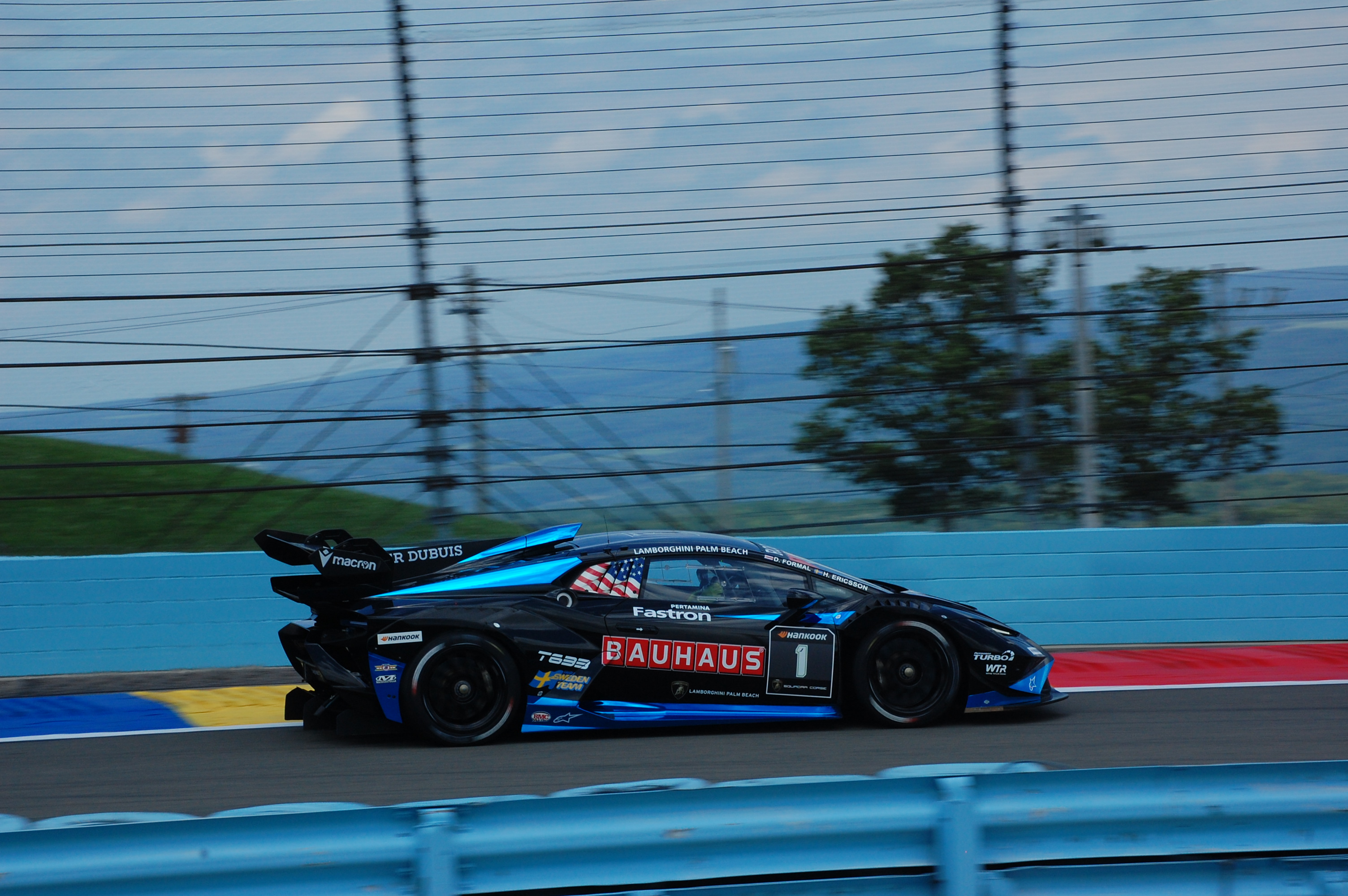
Lamborghini's three regional Super Trofeo championships are due to complete their 2027 seasons at Circuit de Barcelona-Catalunya before the World Finals at the same venue, according to independent reports published during the 2026 finale at Monza.
Sportscar365 reports that the European, North American and Asian series will hold their final regional rounds on 11–12 November, followed by the World Finals on 13–14 November. Endurance-Info also identifies Barcelona and the 13–14 November dates. It will be the circuit's first World Finals and the third Spanish venue used for the event after Valencia and Jerez.
The location and dates have not yet appeared in Lamborghini's own newsroom calendar page. Its official 24 September release lists the sixth round of each championship and the World Finals as to be announced. This analysis therefore treats Barcelona as a newly reported venue decision, not as a published promoter contract. No sanction fee, circuit hire, freight package, entry list or hospitality plan has been disclosed.
What Lamborghini has confirmed directly is the operating framework around the decision. All three championships will introduce the Temerario Super Trofeo in 2027. The manufacturer says the new car will be built in-house, uses a twin-turbo V8, shares key components with the Temerario GT3 and costs €295,000 plus VAT and duties in Europe, $399,000 plus applicable taxes in the United States, and €299,000 plus VAT and duties in Asia-Pacific. The European and US prices expressly include shipping; the announcement does not apply that wording to the Asia-Pacific price.
That makes Barcelona more than a host announcement. It concentrates the first global season of a new customer-racing asset into one paddock. Independent teams arriving from three continents will bring recently purchased cars, new spares holdings, incomplete reliability histories and technicians still learning a platform that replaced the Huracán after the 2026 season.
For Lamborghini, the concentration creates a product demonstration, owner event and technical feedback loop. For teams, it creates a working-capital and freight test. For suppliers, it creates a short period in which parts availability, workshop response, tyres, fuel, data support and damage repair must serve a global field at once. For Barcelona, it creates a manufacturer-led international event that can be sold through tickets, hospitality and destination packages without relying on a single conventional championship weekend.
One fleet, three regional cost bases
The published car prices establish the first visible capital requirement. A European team buying one Temerario Super Trofeo starts at €295,000 before VAT, duties and the rest of a race programme. A two-car entry starts at €590,000 on the same narrow basis. The figure is not a season budget: it excludes additional wheels, spares, test mileage, personnel, travel, crash damage, consumables, insurance and entry costs.
North American buyers have a $399,000 published price, while Asia-Pacific buyers have a €299,000 price. Lamborghini says shipping is included, but it has not published the delivery point, payment schedule, deposit, currency protection, cancellation rights, allocation priority or the specification of any initial spares package. Teams should not assume that a delivered car is a Barcelona-ready programme.
The first commercial question is delivery timing. Europe begins at Imola on 21–23 May 2027. North America starts at Sebring on 17–19 March, and Asia opens at Sepang on 9–11 April. Cars for the US market therefore need to be delivered, commissioned and tested earlier than cars whose first championship round is two months later in Europe.
That sequence affects Lamborghini's own production and support curve. It must build and distribute cars, release technical documentation, train engineers and parts staff, establish regional inventories and support pre-season running across three markets. A delay that can be absorbed before Imola may be critical for a North American entrant preparing for Sebring.
Teams have a related cash-flow problem. Deposits and balance payments can fall before sponsorship income or driver funding is collected. If a team changes chassis generation while continuing to own Huracán inventory, it may carry two asset bases until older cars and parts are sold. The resale value of the outgoing platform will depend on where it remains eligible, the supply of technical support and the number of cars released by established teams.
The published purchase price also needs to be separated from lifecycle cost. The Temerario is the first Super Trofeo car with a turbocharged powertrain and is built entirely in-house by Lamborghini. A new gearbox, braking relationship, electronics package and body system can change service intervals and component prices even when race duration and staffing remain familiar. Teams need a priced component-life schedule, repair catalogue and lead-time matrix before they can compare the new programme with a late-cycle Huracán season.
Barcelona turns regional preparation into one global stress test
The World Finals format brings the regional series together after their own title deciders. Lamborghini's 2026 Monza preview described nearly 80 cars and 128 drivers across ten races during the outgoing Huracán's final competitive meeting. That is a verified benchmark for the current event, not a forecast for Barcelona.
The 2027 entry is not yet published. Some teams may run more or fewer cars under the new platform, and the allocation of cars among regions is unknown. Still, the format makes the finale a high-concentration support problem. A manufacturer can distribute assistance across separate regional calendars for most of the season; in Barcelona it must serve the combined field through regional finales and World Finals races in one four-day competitive window.
Parts planning cannot rely only on an average race weekend. The Barcelona stock needs to cover normal service, predictable wear and correlated incident demand. One wet session or multi-car accident can create simultaneous calls for splitters, rear assemblies, suspension corners, radiators, wheels, sensors and bodywork. A new platform provides less historical evidence for setting those quantities.
The support model needs declared boundaries. Teams should know which components Lamborghini or an appointed partner will hold at the circuit, which parts require advance ordering, whether high-value assemblies can be rented, and when ownership transfers. They also need procedures for priority when multiple cars require the same scarce item before a title-deciding session.
Shared components with the Temerario GT3 may improve scale and technical continuity, but shared does not mean interchangeable in every application. Lamborghini says the Super Trofeo car uses the same Hoer six-speed gearbox and braking system as the GT3, while retaining important differences including road-car turbochargers and two-way adjustable KW Automotive dampers. Teams need part-number clarity rather than broad platform language.
Technical support will be as important as physical stock. A first-season field will generate setup questions, software issues, calibration requests and fault investigations. The World Finals compresses those demands across different team experience levels. A ticketing system for technical cases, common service bulletins and consistent access to manufacturer engineers can prevent the best-connected teams receiving faster answers than the rest.
Barcelona can support that concentration with established garages, power, communications and freight access. It cannot solve a missing part or undocumented fault on its own. The event's credibility will depend on a joint operating plan between Lamborghini, the circuit, regional championship partners and the suppliers responsible for tyres, fluids, braking, dampers, exhausts, air filters, data and other controlled components.
The freight model is different for each region
European teams can reach Barcelona by road, giving them relatively flexible control over transport volume and departure time. North American and Asian entrants face long-haul freight, customs documentation and a much longer recovery path if equipment is left behind.
The 2027 calendars create planning time. North America's penultimate event is at Indianapolis on 17–19 September. Asia's last regional event before the finale is Shanghai on 27–29 August. Europe races at the Hungaroring on 1–3 October. That spacing allows sea freight for selected equipment if teams own duplicate stock and the championship fixes its loading dates early enough.
Cars and critical equipment may still move by air, particularly where teams cannot release assets months in advance. The freight package has not been published. Teams do not yet know whether Lamborghini will centralise transport, offer a weight allowance, require an appointed forwarder, subsidise costs or leave each entrant to contract independently.
Central freight can aggregate volume, simplify paddock delivery and standardise customs processes. It also concentrates failure. If one consolidated movement is delayed, many entries can be affected together. Independent freight offers control and redundancy but can duplicate cost and administrative work. A hybrid arrangement—common transport for cars and core equipment, optional team-funded capacity for extras—would balance scale and choice, but no such model has been announced.
Temporary import rules also differ by origin. Cars, spares, tools, data equipment and promotional items may require carnets, bonds or other customs procedures. Consumables and controlled goods can sit outside the same process. A team that normally buys locally in its home series needs to know which tyres, fuels, oils, gases and chemicals will be supplied in Spain and which may travel.
The return journey deserves equal attention. A car damaged in the World Finals may need to be repaired before export, shipped incomplete or held while an insurance claim is assessed. Teams should know who controls the garage after the final race, how long freight can remain on site and which local workshops are approved to inspect or stabilise a damaged chassis.
For suppliers, the opportunity is wider than international freight. Barcelona will need bonded storage, forklift and handling services, secure transport, workshop capacity, composites and body repair, machining, electrical support, catering, hotels and ground movement. Buyers should publish scopes early enough for local firms to reserve capacity and demonstrate motorsport-specific response standards.
A new car changes the value of trackside data
Late-cycle one-make racing benefits from accumulated knowledge. Teams know baseline setups, recurring failure modes, tyre behaviour and which spares are most likely to be used. The first Temerario season resets part of that advantage.
The technical specification gives teams a starting point: a rear-wheel-drive car producing 620 hp at 7,000 rpm and 650 Nm, weighing 1,392 kg, with a hybrid aluminium and carbon-fibre-reinforced-plastic chassis and integrated FIA roll cage. Lamborghini also identifies electro-hydraulic power steering, new double-wishbone suspension mounting and aerodynamics developed for different circuit configurations.
Those figures do not replace operating data. Teams need damper ranges, setup windows, brake wear, heat management, turbo response, fuel use, tyre degradation and repair time under race conditions. Every regional round becomes a learning exercise, and the Barcelona paddock becomes the first opportunity to compare evidence across all three championships at scale.
Lamborghini can turn that into a service advantage if it structures the information flow. Common anonymised reliability notices can reduce repeat failures. Regional engineers can bring different circuit and climate experience into one technical group. Suppliers can see whether demand reflects an isolated team practice or a platform-wide issue.
Data governance needs boundaries. Competitors will not want setup or performance information shared in a way that erases legitimate engineering advantage. Safety and reliability information, however, should move quickly. The organiser needs a policy distinguishing proprietary team data from mandatory technical reporting and fleet-wide corrective action.
Software control is part of the same problem. A common vehicle may use controlled firmware, calibration files and diagnostic tools. Updates close to the finale can create compatibility risk if teams arrive with different versions. A release freeze, version register and rollback process would protect the event from an avoidable software split.
The commercial product is an owner event as well as a race
Lamborghini describes the World Finals as the annual meeting point for teams and drivers from its regional championships. Its event material also positions the weekend as a gathering for customers, owners and fans, with parades, previews and entertainment around the racing.
That combination is commercially valuable. The new car gives dealers and customer-racing staff a live product demonstration. Prospective entrants can compare teams in one paddock. Owners can be offered circuit activity and hospitality. Technical partners can show products in the exact environment where buyers use them.
Barcelona adds destination appeal and major-event infrastructure. The circuit already hosted a Super Trofeo Europe round in October 2026 as part of its Festival de la Velocidad, so local operations have recent experience of the series. Hosting the full global event is a larger task, but it is not a first contact with Lamborghini customer racing.
The promoter has not published ticketing, hospitality, owner packages, support races, broadcast distribution or commercial partners for 2027. Those products will decide whether the event converts paddock concentration into revenue. A large car count can raise operating cost without automatically generating a proportionate gate or sponsor return.
The circuit and Lamborghini can segment the offer. General admission needs visible track activity and access that justifies a November trip. Corporate hospitality needs customer time with teams, cars and brand executives. Owners need benefits beyond a conventional grandstand. Dealers need lead capture and a clear territory model. Technical suppliers need buyer access rather than passive logo inventory.
Rights allocation should be mapped before sales begin. A team sponsor, regional series partner, manufacturer partner and event partner may hold overlapping categories. Barcelona-based activation cannot assume that global Lamborghini marks, driver likenesses, onboard footage or paddock access are included in every agreement. Clear rights reduce the risk of campaigns being approved too late or blocked after production spending.
The new platform also creates content value. Build stories, first deliveries, regional debuts and technical learning can form a season-long narrative that concludes in Barcelona. That is more useful to partners than treating the World Finals as a standalone weekend. The strongest campaigns will follow a team or supplier through the transition and use the finale as proof of delivery.
The supplier programme needs more than prominent logos
The Temerario Super Trofeo extends relationships with named technical partners. Lamborghini has identified KW Automotive for dampers, Pertamina for engine lubricant, Capristo for the exhaust system and BMC Air Filters. The new car also uses the Hoer gearbox shared with the GT3 platform.
For those companies, 2027 offers product exposure across three regions and a single global event. The operational commitment may include more than supplying parts. A first-year customer fleet can require training, trackside technicians, inspection tools, rebuild capacity, data analysis and emergency stock.
The commercial and service contracts should align. A partner cannot be evaluated only by branding if teams experience long lead times or inconsistent regional support. Conversely, a supplier carrying substantial inventory and technical staff needs a commercial model that recognises the cost of readiness.
Independent suppliers also need visibility. Teams will buy transport cases, garage equipment, radios, data accessories, tools, safety equipment and replacement consumables around the controlled package. Lamborghini and the circuit can improve the market by publishing technical constraints, paddock access rules and approved delivery windows early.
Local support should be qualified. A general automotive workshop may not meet the chain-of-custody, material traceability or response time required for a race chassis. Approved vendors should carry suitable insurance, keep technicians available during sessions and document repairs. The event can create durable supplier relationships if capability is measured rather than chosen only on proximity.
Teams should budget the transition as a portfolio, not a chassis
The car price is the visible line, but the business decision is a portfolio of commitments. A team needs the chassis, mandatory equipment, spares, testing, entries, drivers, engineers, mechanics, freight, hospitality and commercial delivery. It also needs enough working capital to absorb damage and delayed partner payments.
A two-car team can share tools, staff and some spares, but it also creates correlated exposure. One incident can consume stock intended for both entries. A second chassis may improve revenue and data collection while increasing the cash tied up before the first race.
Teams should model at least three cases: a normal season, a high-damage season and a delivery or reliability disruption. Each case should show cash timing, not just total cost. A component that is reimbursed months later can still stop a smaller entrant from attending the next round.
Driver agreements need the same discipline. If a funded driver leaves, is injured or cannot obtain travel permission, the team remains responsible for the car and calendar. Contracts should define deposits, damage liability, test allocation, sponsor conflicts and World Finals participation. The Barcelona commitment may involve extra freight and travel beyond the regional season, so it should not be buried in a generic per-round price.
The outgoing Huracán estate is a separate decision. Teams may retain cars for track-day, club or resale markets, but storage and support cost money. A managed disposal plan can release capital for the Temerario. A rushed sale across many teams can depress prices. Lamborghini has not published a trade-in programme or post-2026 factory support horizon.
What remains undisclosed
The public evidence is clear on the new-car launch, core specification, regional pricing and 2027 calendar structure. Independent reporting identifies Barcelona and the four-day finale schedule. The delivery economics remain largely private.
There is no published World Finals promoter agreement, sanction fee, event budget, public subsidy, freight allowance, tyre allocation, entry fee, prize fund, hospitality capacity or projected attendance. The manufacturer has not disclosed the number of Temerario Super Trofeo cars ordered, planned production volume, delivery sequence or initial parts stock.
There is also no published Barcelona supplier roster, customs plan, broadcast package or sustainability method for the long-haul movement. Claims about economic impact or international reach should wait for defined measures. Gross visitors, streams or social impressions will not by themselves show whether teams, circuit and partners created sustainable value.
These gaps do not invalidate the event. They define the work between announcement and delivery. Buyers should ask for written scopes, inclusions and service levels before committing to packages. Suppliers should distinguish confirmed procurement from promotional interest. Sponsors should price rights against deliverables that can be audited.
A useful scorecard for November 2027
Lamborghini can judge the fleet transition through car delivery, event execution and customer retention. Delivery measures include cars handed over on time, test kilometres completed, parts fill rate and unresolved technical cases before each regional opener.
At Barcelona, operational measures should include freight delivered on schedule, customs exceptions, cars participating, technical requests closed within target, parts stock-outs, repair turnaround and session losses linked to common systems. Publishing aggregated results would give prospective customers more confidence without exposing team data.
Commercial measures include paid attendance, ticket yield, hospitality utilisation, owner participation, dealer leads, sponsor renewal intent and the share of regional entrants continuing into 2028. Media measures should separate live audience, on-demand viewing and qualified digital engagement by market.
Teams will apply a simpler test: did the new asset race reliably, did support arrive when required, and did the programme produce enough driver and sponsor revenue to justify the capital? Suppliers will ask whether the event generated repeat business rather than one urgent order. Barcelona will ask whether a global manufacturer weekend adds profitable, differentiated inventory to its calendar.
The strongest outcome is not merely a full grid. It is a repeatable customer-racing system in which cars are delivered on time, regional teams can price participation, parts move predictably, technical knowledge is shared fairly and commercial partners can activate across markets.
Barcelona is the convergence point
The reported venue choice gives Lamborghini a logical stage for the end of its first Temerario season. Barcelona has recent Super Trofeo experience, major-event infrastructure and a marketable destination. The four-day sequence lets regional titles and the global finals sit within one operational build.
It also removes hiding places. Problems that appear manageable when spread across three continents will arrive in the same paddock: parts shortages, software differences, inconsistent training, freight delays and unclear rights. The World Finals will expose whether the manufacturer and its partners created one global customer-racing platform or three regional programmes sharing a badge.
For teams, the decision is a capital and service proposition, not simply a €295,000 car. For suppliers, the opportunity depends on readiness, stock and response time. For sponsors and dealers, the value lies in turning a technical transition into customer access and measurable content. For the circuit, the task is converting a concentrated brand community into a viable international event.
Barcelona therefore matters less as a pin on the calendar than as the point where Lamborghini's promises converge. By November 2027, the new fleet will have raced in Europe, North America and Asia. The World Finals will show whether the commercial and technical system travelled with it.
Sources and further reading
- Lamborghini official 2027 Super Trofeo calendar announcement, 24 September 2026 ↗
- Lamborghini official Temerario Super Trofeo technical and pricing announcement, 11 May 2026 ↗
- Lamborghini official 2026 World Finals preview, 20 October 2026 ↗
- Lamborghini official World Finals overview ↗
- Sportscar365 independent Barcelona report, 24 October 2026 ↗
- Endurance-Info independent Barcelona report, 25 October 2026 ↗
- Circuit de Barcelona-Catalunya official 2026 Super Trofeo event record ↗
- Wikimedia Commons image record ↗