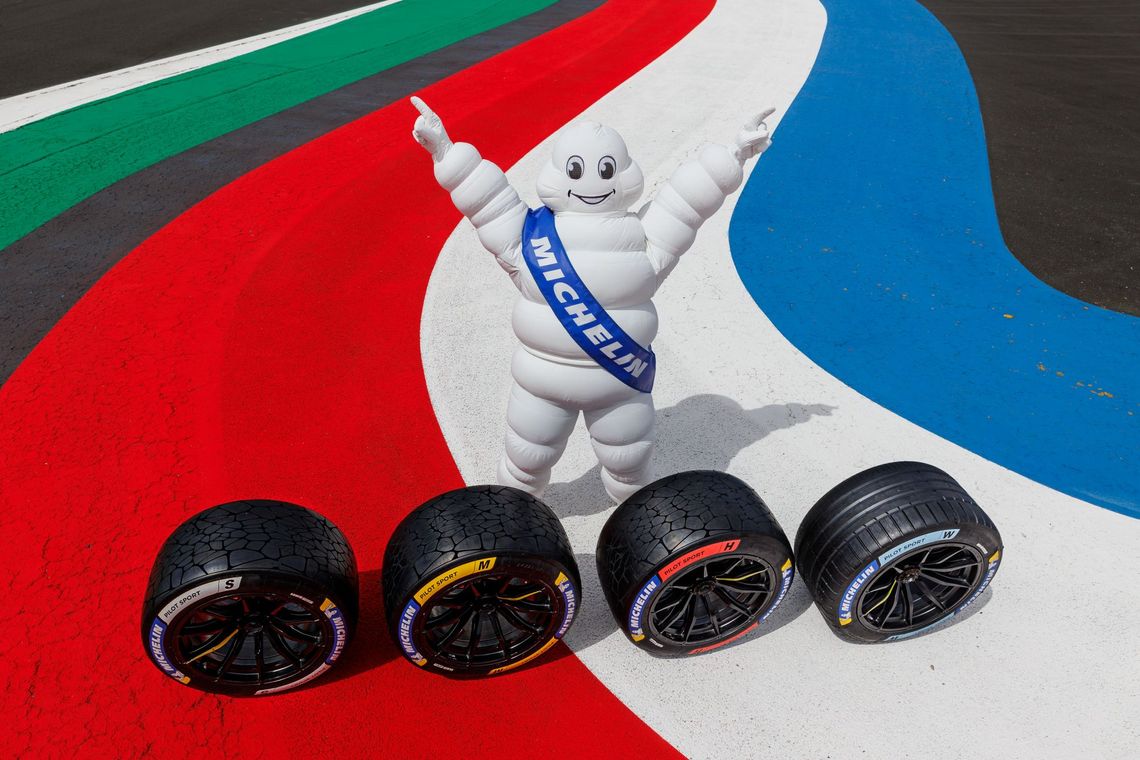
The FIA and Automobile Club de l’Ouest have completed the tyre tenders that will underpin the FIA World Endurance Championship from 2030 to 2032. Michelin will remain the exclusive Hypercar supplier, while Goodyear will continue in the same role for LMGT3.
The appointments, approved by an electronic vote of the FIA World Motor Sport Council and announced on 25 August, extend two incumbent relationships. Michelin has supplied every Hypercar since the category began in 2021. Goodyear has been the single LMGT3 supplier since that class entered the championship in 2024.
Financial terms were not disclosed. The commercial importance instead lies in the length and timing of the decisions. Teams, manufacturers and tyre companies now have visibility through 2032, covering the opening years of WEC’s next technical cycle rather than waiting until new cars are close to competition.
Stability before the next rules cycle
Tyres are a major design input, not a consumable selected after a car is complete. Their load capacity, operating window, construction and degradation affect suspension geometry, aerodynamics, simulation and race strategy. Confirming the suppliers early gives manufacturers a known technical interface around which to plan future programmes.
Continuity also reduces integration risk. Existing teams retain working relationships, trackside procedures and historical data, while the suppliers can plan development, manufacturing, logistics and staffing over a defined period. That matters in a world championship whose freight requirements and circuit conditions range from Qatar and São Paulo to Le Mans and Fuji.
The FIA said tenders were assessed across technical expertise, product quality, sporting performance in varied conditions, operational and customer service, sustainability, marketing support and the bidders’ prospective contribution to the championship’s growth. That list shows the contract is broader than producing the fastest tyre. A control supplier must also deliver consistent inventory, engineering support and service to an entire class.
What a single-supplier contract buys
Exclusive supply removes tyre competition from the race result, but it can contain costs and give every entrant access to the same core product. It also simplifies allocations and trackside operations for the championship. For smaller teams, the value is predictability: tyre testing does not become a separate spending contest, and supply is organised centrally rather than negotiated team by team.
The trade-off is concentration. When one company serves a full category, product quality and contingency planning depend heavily on the tender specification and contract management. The FIA and ACO therefore need clear performance standards for durability, wet-weather capability, manufacturing consistency, allocation and service response. Teams will want transparent processes for raising problems and contributing data without creating unequal access.
Competition still exists at the procurement stage. RACER reported that Goodyear also pursued the Hypercar contract and tested development tyres during 2026. Michelin retained the award, but the presence of another serious bid gives the tender commercial relevance even though drivers will not see rival tyre brands within Hypercar.
Sustainability becomes a procurement requirement
The inclusion of sustainability among the formal evaluation criteria is significant for suppliers. It turns environmental performance from a communications benefit into part of the purchasing decision.
Michelin says its current Pilot Sport Endurance slick range, introduced for the 2026 WEC and IMSA seasons, contains 50% renewable or recycled materials. That figure describes the present product rather than a published target for the 2030 contract, but it establishes a reference point for future development.
For procurement teams, material content is only one measure. Useful contract reporting should also address tyre life, the number of sets required, production energy, freight, reuse and end-of-life treatment. A tyre that completes more competitive running can reduce manufacturing and transport demand, but those gains need evidence that teams and rights holders can audit.
The long award period gives both suppliers time to connect those objectives with performance development. It also gives manufacturers a more stable basis for modelling tyre behaviour while their future chassis and powertrain programmes are still being defined.
What the paddock should watch next
The supplier names are settled, but the operational detail will determine the value of the agreements. Teams should watch how testing mileage is allocated, when future specifications are frozen, what data can be shared and how quickly the suppliers can react to a safety or performance issue. Manufacturers planning new Hypercars will also need early access to representative tyre models for simulation.
Suppliers outside the two winning companies should not treat the market as closed. The tender criteria reveal where championship buyers place value: reliable global service, credible sustainability evidence, marketing support and a long-term contribution to category growth alongside technical performance. Those capabilities can be developed for the next tender or applied in championships with open supply.
For Michelin and Goodyear, the agreements secure more than trackside visibility. They protect a high-load development environment, a global business-to-business platform and a direct relationship with leading vehicle manufacturers. The commercial return will depend on converting that position into useful technology, measurable sustainability progress and customer programmes away from the circuit.
The decision is therefore infrastructure for the championship rather than simply a renewal of two logos. By resolving a critical technical supply question years in advance, the FIA and ACO have given the WEC paddock a stable base on which to plan its next generation of cars, services and investment.