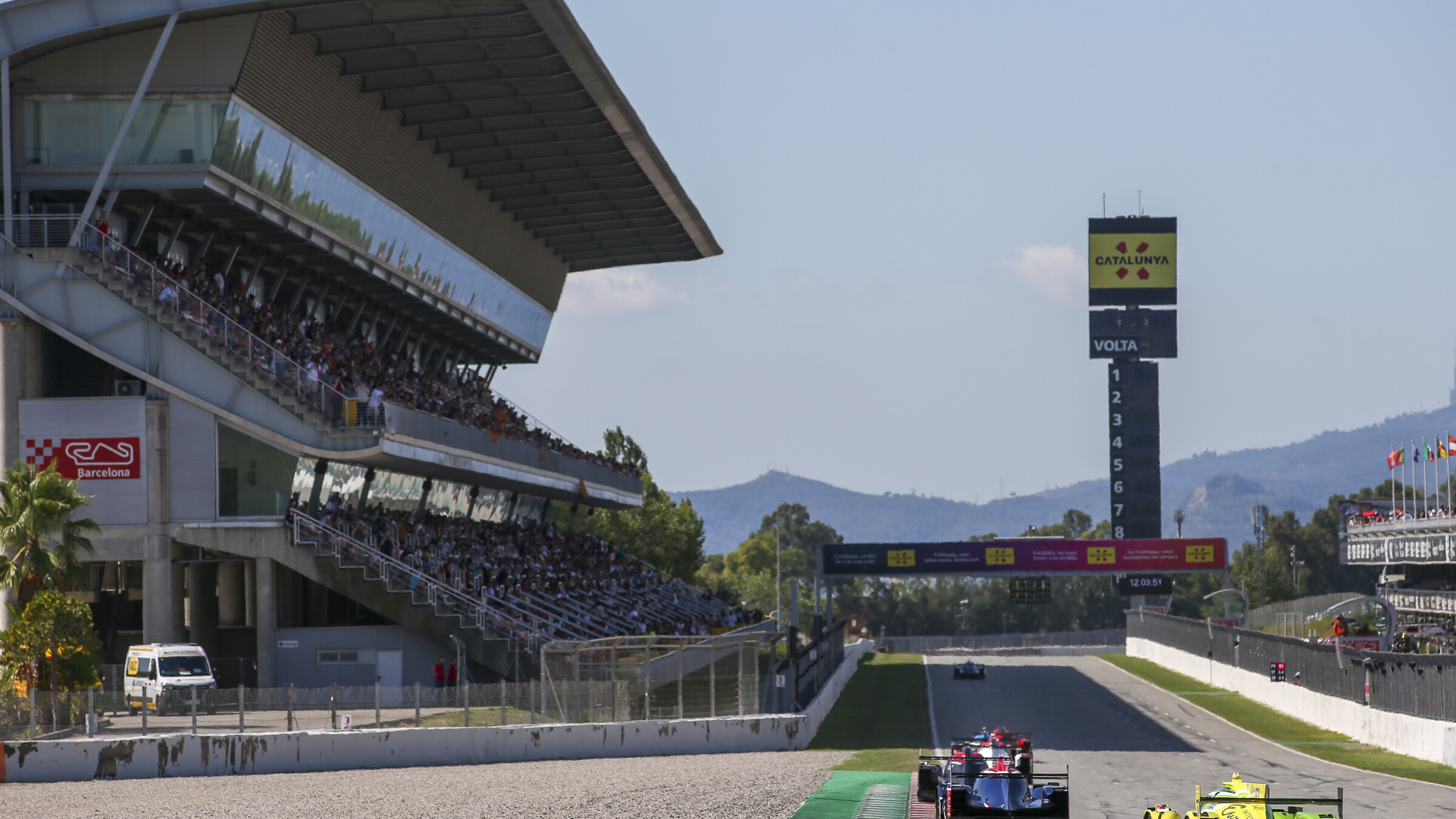
INDYCAR will race at Circuit de Barcelona-Catalunya on 16–18 July 2027, returning the championship to Europe for the first time since 2007 and taking it outside North America for the first time since São Paulo in 2013.
The event is a material international expansion rather than an exhibition. It will form part of a 17-round championship, carry full points and sit on the calendar between Mid-Ohio on 4 July and Portland on 1 August. All 25 full-time entries are therefore being asked to insert a European freight movement into the middle of a North American season.
INDYCAR and venue operator Fira Circuit describe their contract only as a multi-year agreement. At the Barcelona launch, however, circuit chairman Pau Relat said the commitment runs for ten years, according to independent reporting by RACER. That distinction matters: the written announcements establish a long-term relationship, while the precise ten-year term rests on a reported public statement rather than a published contract.
For the promoter, Barcelona offers a permanent circuit, established event infrastructure and a home-market story around five-time champion Alex Palou. For the series, it offers a credible European venue and an event intended to open sponsor, hospitality and audience opportunities in Spain. For teams and suppliers, it creates a practical test of whether INDYCAR can build a repeatable international operating model rather than a one-off overseas trip.
The public announcements do not disclose the sanction fee, promoter budget, freight subsidy, team travel contribution, customs plan, insurance structure, ticket prices, broadcast distribution outside the United States or the circuit configuration to be used. Those omissions are not minor administrative details. They are the variables that will decide who carries the cost and risk of the expansion.
A calendar slot with commercial logic
The 2027 timing gives the circuit a useful piece of inventory. Formula One's Spanish Grand Prix is moving to Madrid, while Barcelona is due to alternate with Spa-Francorchamps under a separate arrangement. Barcelona is scheduled to host Formula One in 2028, 2030 and 2032; 2027 is therefore an F1-free year at the venue, not evidence that the circuit has permanently lost its largest international event.
That makes the INDYCAR round a diversification product. Fira Circuit can sell another top-level open-wheel weekend using a site whose grandstands, garages, hospitality spaces, access routes and event workforce already support major championships. The operator says the event is intended to reinforce the circuit's international positioning, reach new audiences and generate opportunities in tourism, hospitality and services.
The attraction is not simply filling a date. A European INDYCAR event creates a North American-facing product that is different from the circuit's motorcycle, endurance and Formula One weekends. Local sponsors can buy association with an American championship; US partners can host customers in Barcelona; travel and hospitality suppliers can package an event around a destination with existing international air links and visitor capacity.
A permanent circuit also reduces some of the capital exposure attached to a street race. It does not eliminate event-specific cost. INDYCAR and the FIA will need to settle sporting and safety interfaces, the circuit must configure paddock and pit operations for the series, and suppliers must establish temporary systems for fuel, tyres, timing, communications, television, recovery and technical inspection. The circuit layout has not been confirmed publicly; RACER reports that both the 2.894-mile, 14-turn configuration and the 2.905-mile, 16-turn version with the final chicane remain possible.
For a ten-year proposition, the first edition should be treated as the start of a market rather than a single attendance play. The promoter can amortise sales knowledge, local partner development and event branding across multiple editions. Teams and sponsors can plan activation beyond a launch campaign. Suppliers can decide whether to develop local capacity once the expected frequency and specification are clear.
The risk is that a long term can preserve weak economics as easily as it can support growth. The contract's termination rights, performance thresholds and public-sector commitments have not been published. A serious business assessment therefore needs to separate the value of contractual duration from the profitability of each edition.
The mid-season freight problem
The calendar provides two weeks between each of the three relevant races: Mid-Ohio on 4 July, Barcelona on 18 July and Portland on 1 August. That is more forgiving than consecutive weekends, but it is not a conventional flyaway sequence.
After Mid-Ohio, cars, engines, gearboxes, pit equipment, data systems, spares, tools, consumables and support hardware must be prepared, packed, documented and moved to Spain. After Barcelona, the same operating capability has to reach the Pacific Northwest in time for scrutineering and practice at Portland. Teams also need to recover damaged components, service equipment and rotate personnel across time zones.
RACER reported before the announcement that the series had asked veteran teams whether they still held the shipping containers used for previous races in Brazil and Japan. That is a revealing readiness check, but it is not a published freight plan. Containers designed for earlier technical regulations may not match current car, battery, garage and broadcast requirements. Their existence also says nothing about certification, load planning, dangerous-goods compliance or who pays for refurbishment and movement.
The operating model could combine dedicated race kits, consolidated air freight and locally sourced non-critical equipment. Each choice changes the economics. Flying most equipment protects the schedule but raises cost and emissions. Sending selected infrastructure by sea can reduce unit cost, but it requires duplicate inventory and months of forward planning. Renting local equipment reduces transport volume, but only if the specification, availability and liability arrangements meet team requirements.
INDYCAR has not said whether it will centralise freight, negotiate an official logistics supplier, provide a fixed weight allowance or reimburse teams. It has not published a common list of equipment to be duplicated in Europe. Until those terms exist, a team cannot convert the announcement into a reliable event budget.
The series should also publish responsibility boundaries. If a consolidated shipment is delayed, does the series, promoter, freight forwarder or team carry the sporting and financial consequence? Who insures cars and components in transit? Who is importer of record? Which party manages temporary admission, customs bonds and ATA carnets? How are engines, batteries, pressurised cylinders, fuels, oils and other controlled goods classified and handled?
These questions extend down the supply chain. A small specialist may normally deliver a replacement component from Britain or the United States to an INDYCAR shop overnight. Barcelona introduces customs clearance, local tax rules and a different cut-off time. Suppliers need an approved process for urgent parts, an inventory position in Europe or a contractual service level that recognises the extra border.
For teams, the most resilient plan may not be the cheapest one. Duplicate pit equipment, spare data hardware and a European stock of generic consumables create redundancy but tie up capital. A central pool can lower cost but concentrates risk. The series must decide which assets are competitive, which can be standardised and which should travel under a shared contract.
The people plan is as important as the cargo
Twenty-five entries mean hundreds of travelling staff once mechanics, engineers, management, commercial teams, media, medical, officiating, broadcast and supplier personnel are included. The event will need immigration support, work-permit guidance, hotels, ground transport, catering and secure access on a scale beyond a normal European test.
The two-week spacing reduces direct clash, but it can lengthen time away from home if personnel remain in Europe between preparation and the race. Returning everyone to the United States adds flights and fatigue. Split crews and advance teams can protect recovery time, though smaller operations may lack enough staff to divide roles safely.
Teams should therefore model duty time rather than only airfare. Packing after Mid-Ohio, supporting freight handover, travelling to Spain, building the garage, racing, breaking down and preparing for Portland form one operating chain. Fatigue and handover risk can appear in the days around the televised sessions, not only during the event itself.
Local labour offers capacity but needs clear supervision and credentialling. The promoter can create a verified supplier pool for rigging, power, communications, security, catering, transport and temporary staffing. Teams should know which services are mandated, which may be procured independently and which are included in the event package.
The same applies to emergency capability. If a specialist component fails in Spain, the recovery plan may require a local machine shop, composites repair, electronics support or expedited shipment. An event supplier directory with response standards would turn Barcelona from a destination into an operating ecosystem.
Broadcast scale helps, but the local product is unfinished
INDYCAR's 2027 calendar announcement says all 17 races will air on the main FOX network in the United States for a third consecutive season. That gives US sponsors continuity and makes Barcelona part of the same domestic network proposition as the rest of the championship.
It does not complete the European media plan. The start time, Spanish and wider European rights distribution, production responsibilities, digital coverage, language feeds and support-series broadcast package have not been announced. Those details affect both the gate and the sponsor proposition.
A European afternoon start can place the race in a workable US morning window. That may support network carriage but creates different viewing habits and activation hours for North American partners. A later start can help US audiences but may compromise local event flow, transport and television competition. The promoter and broadcaster need a single timetable that values both markets rather than assuming one audience will follow the other.
The permanent circuit offers predictable camera positions, connectivity and broadcast compounds, but INDYCAR's production still has to be integrated with local providers and international distribution. Data, graphics, commentary and remote-production systems require testing. Supplier contracts should include rehearsal time and resilience standards, especially for the first edition.
For sponsors, the crucial issue is rights translation. A series partner, team partner and event partner may each hold different categories, marks, footage and hospitality. A brand buying local inventory cannot assume it may use driver likenesses or team content; a US team partner cannot assume its rights extend to Spanish retail activation. Early rights mapping will avoid campaigns being designed around assets that another party controls.
Palou is the launch engine, not the whole business case
Alex Palou gives Barcelona an unusually strong opening narrative. The Catalan driver is a five-time INDYCAR champion and a proven winner at the centre of the championship. His presence can support ticket sales, media attention, local sponsorship and corporate hospitality in a way an unfamiliar international series might otherwise struggle to achieve.
The event should still be built to survive driver cycles. Injury, team changes, performance and retirement are normal sporting variables. A ten-year platform needs an identity based on the championship, the venue and the competitive product as well as one home driver.
That means investing in audience education. European fans familiar with Formula One may not know INDYCAR's technical rules, refuelling, tyre choices, caution procedures, charter system or team economics. Content before the event should explain the sporting differences without presenting the race as an imitation of another series.
It also means developing local participation below the headline event. Fira Circuit expects support races and off-track activities, but no programme has been published. A relevant support bill can bring existing fan communities, give local suppliers more work and extend track activity across the weekend. Poorly matched categories can add cost without adding demand.
The reported discussion of a special guest driver illustrates both opportunity and constraint. Current charter rules limit non-Indianapolis rounds to the 25 chartered entries, so an additional car would require a rule or eligibility solution. A guest concept could generate attention, but it should not be sold until the sporting, technical and commercial mechanism is approved.
What the contracts need to settle
The public agreement confirms the date, venue and long-term intent. The delivery contracts must do more.
The promoter agreement needs clear allocations for circuit preparation, safety works, sanctioning, local services, ticketing, hospitality, sponsorship categories, broadcast facilities and government support. It should define who funds cost increases caused by regulation, currency movements, freight disruption or changes to the calendar.
The team agreement needs a transparent travel and freight package. A fixed grant is easy to understand but may disadvantage teams with different locations or equipment requirements. A centrally procured service can create scale savings, but teams need visibility into capacity, insurance and recovery options. A hybrid model may be best: a common baseline with declared weight and personnel allowances, plus team-funded extras.
Supplier arrangements require enough lead time to reserve aircraft capacity, containers, temporary imports and specialist labour. Tyre and fuel partners need volume forecasts and hazardous-goods plans. Engine suppliers need service and replacement procedures. Technology vendors need connectivity, data-residency and support coverage. Commercial partners need artwork, retail and hospitality deadlines much earlier than for a domestic race.
Currency should not be overlooked. Teams earn and spend mainly in dollars, while many local event costs will be in euros. The promoter and series must decide the contracting currency and adjustment mechanism. A long-term agreement can expose both sides to exchange-rate swings if escalation clauses are poorly defined.
Force-majeure and calendar-change terms are equally important. An international race depends on transport capacity, borders, government approvals and multiple sporting authorities. If Barcelona moves within the calendar, the cost of freight and staffing could change sharply. If it is cancelled, teams need to know whether committed travel and supplier costs are reimbursed.
A supplier opportunity with evidence requirements
Barcelona creates addressable work for freight forwarders, customs brokers, aviation providers, hotels, coach operators, caterers, event builders, telecoms companies, power specialists, security providers, technical workshops and hospitality agencies. The opportunity is real, but suppliers should avoid treating the announcement as a purchase order.
Buyers will need capabilities specific to an international race: timed delivery into a controlled paddock, chain-of-custody records, dangerous-goods certification, rapid customs escalation, secure storage, weekend support and the ability to recover from a missed connection. Generic event experience may not satisfy a motorsport service level.
The promoter can improve competition by publishing procurement windows and technical scopes early. Local suppliers should know whether the customer is Fira Circuit, Penske Entertainment, an individual team, a championship vendor or a broadcast contractor. Without that map, multiple buyers may reserve the same limited capacity or assume another party has contracted it.
Teams should test local claims as they would at home. Site visits, insurance certificates, reference checks and trial shipments matter. A low quote has little value if equipment reaches the circuit after the garage build. Conversely, a multi-year horizon gives a capable local supplier a reason to invest in motorsport-specific processes rather than pricing every requirement as a one-off exception.
How to judge the first edition
Attendance will matter, but it is not the only measure of whether the model works. The series and promoter should establish a scorecard before tickets go on sale.
Commercial measures include paid attendance, yield by ticket type, hospitality utilisation, local sponsorship revenue, renewal intent and the share of buyers arriving from outside Catalonia. Promotional reach should be separated from actual conversion. A large launch audience does not prove that paid demand will repeat.
Operational measures include freight delivered on time and intact, customs exceptions, cost per transported kilogram, equipment duplication, staff travel days, incidents, supplier response time and the effect on preparation for Portland. Teams should be able to report these in a common format without revealing competitive information.
Media measures include US network audience retention, Spanish reach, digital consumption, earned coverage and the proportion of content viewed before and after race week. Sponsors will also want qualified leads, hosted-customer attendance, content use and sales follow-up rather than a single equivalent-advertising figure.
Local impact claims should identify the method used. Hotel nights, visitor spending, temporary jobs and tax receipts can support government participation, but gross estimates should not be confused with incremental benefit. The circuit already hosts other events, and visitors may displace or replace other activity.
The most important long-term indicator is repeatability. If teams can price the second edition earlier, suppliers can reuse infrastructure, sponsors renew and the promoter grows demand without escalating subsidy, Barcelona becomes a platform. If every year requires emergency freight, exceptional payments and a driver-led sales rescue, the long term will exist on paper rather than in the operating model.
International ambition now has a delivery date
INDYCAR has pursued overseas opportunities before without putting them on the calendar. Barcelona changes the discussion because the series, operator and regional government have announced a dated championship event at an established venue.
The move has sound commercial ingredients: a marketable home champion, a circuit with major-event capability, an F1-free year in 2027, US network coverage and a promoter seeking diversified international inventory. The reported ten-year commitment offers time to build demand and a local supplier base.
It also concentrates risk into a demanding six-week section of the season. Twenty-five teams have to leave Mid-Ohio, race in Europe and be ready for Portland. The event will succeed only if freight, customs, staffing, technical support, broadcast and rights delivery are treated as the product rather than as administration behind it.
For teams, the decision point is the travel package and the amount of duplicate equipment required. For suppliers, it is whether procurement becomes visible early enough to reserve capacity and invest. For sponsors, it is whether European access can be converted into customers, content and hospitality without conflicting rights. For Fira Circuit and Penske Entertainment, it is whether a strong first-year story becomes a repeatable market.
Barcelona is therefore more than a return to Europe. It is the first live test of an international growth system. A race can be announced in a morning; a durable overseas championship round has to be engineered across every contract, container and customer programme that follows.
Sources and further reading
- INDYCAR official Barcelona announcement, 23 October 2026 ↗
- Circuit de Barcelona-Catalunya and Fira Circuit official announcement, 23 October 2026 ↗
- INDYCAR official 2027 schedule announcement, 23 October 2026 ↗
- RACER independent report on the Barcelona agreement, 23 October 2026 ↗
- RACER independent report on the 2027 schedule, 23 October 2026 ↗
- RACER independent report on international planning, 19 October 2026 ↗
- Wikimedia Commons image record ↗