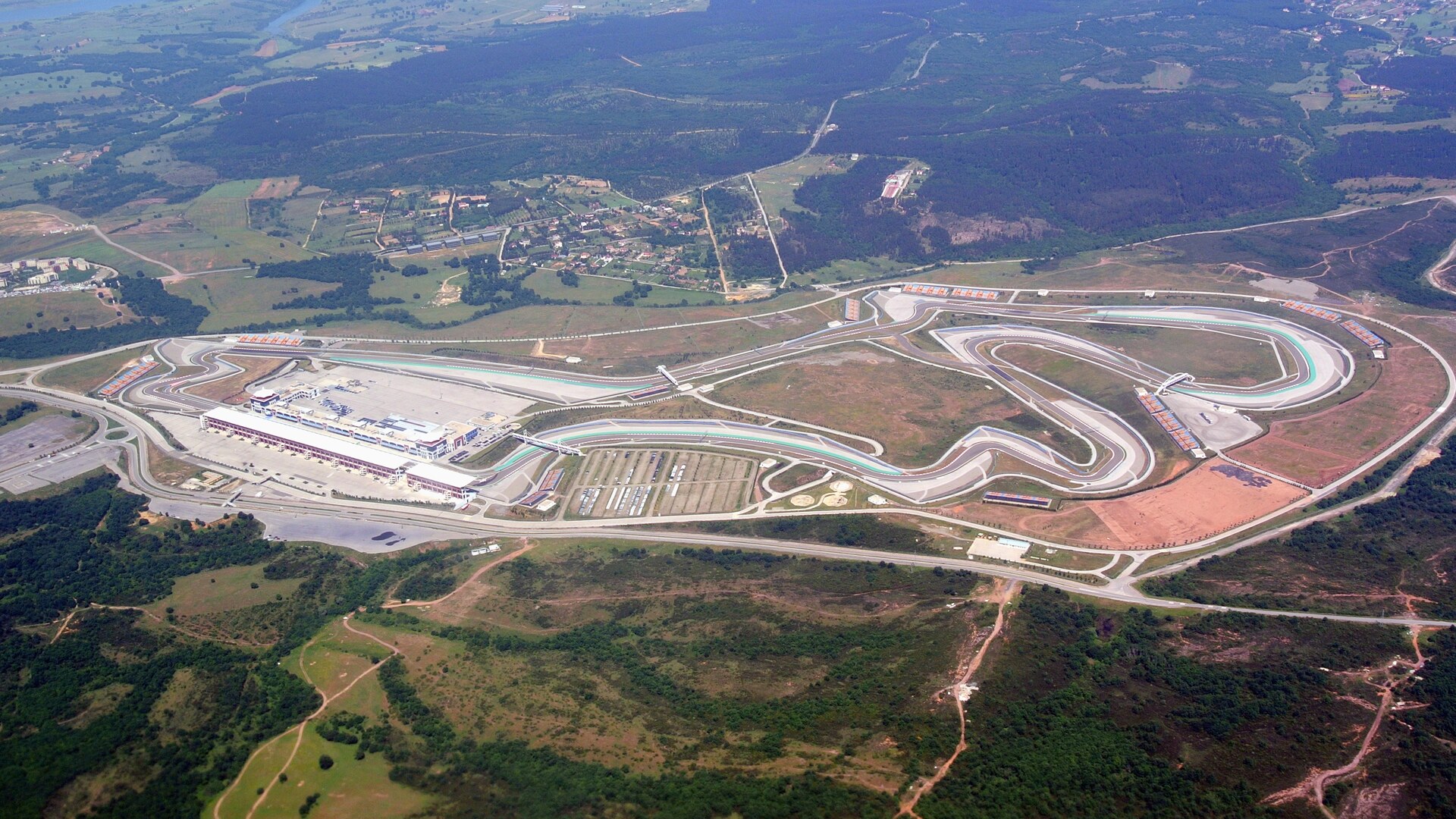
Istanbul Park’s return to Formula 1 is beginning to move from a calendar agreement into a venue-delivery programme.
A public-procurement result published on 11 November records a ₺205.4 million contract for perimeter security and wall construction at the circuit. The award, identified by procurement number 2026/2001864, was made by Istanbul’s Provincial Directorate of Youth and Sports after six valid bids. The reported contract value is about five per cent below the estimated ₺216.2 million cost, and the contract date is listed as 9 November.
That package is only one defined part of the work. It should not be read as the total cost of modernising Istanbul Park, the Formula 1 hosting fee or the promoter’s operating budget. The procurement record does not publish a delivery timetable in the accessible result, while Formula 1, the Turkish government and the Turkish Automobile Sports Federation have not disclosed the full capital programme.
What the award does provide is evidence that the project has entered an executable phase. The five-year race agreement covering 2027 through 2031 gives the public owner, TOSFED and their suppliers a fixed commercial runway. Their challenge is to convert it into a compliant, fan-ready venue without building a one-week asset whose costs cannot be supported during the rest of the year.
Five races change the procurement equation
Formula 1 announced the Turkish Grand Prix’s return on 24 April under an agreement with the Ministry of Youth and Sports. Istanbul Park is guaranteed a place on the calendar from 2027 through 2031, and TOSFED is the delivery partner. The 2027 race is scheduled for 1–3 October.
For suppliers, that date and contract term matter more than the nostalgia attached to the circuit. Permanent works, temporary overlays, maintenance and event services can now be assessed against five contracted race weekends rather than a speculative return.
The distinction influences capital decisions. A permanent security wall can serve every event and operating day. Temporary barriers, screening lanes and crowd-control equipment may be hired or bought depending on utilisation. Communications, ticketing, hospitality fit-out and power systems may need shorter replacement cycles than civil assets. A five-season horizon allows those categories to be separated instead of forcing the promoter into one undifferentiated race-year budget.
It also gives contractors a clearer basis for mobilisation. Local plant, fabrication, storage and trained labour are easier to justify when the venue has a multi-year anchor event. Framework agreements can reward repeat delivery, while staged procurement can keep technical specifications current.
The contract term does not eliminate risk. Formula 1 standards can change, public budgets remain subject to oversight and the agreement’s performance or termination provisions are not public. Suppliers should not assume that five race dates automatically mean five-year contracts in every category.
A public operator changes the delivery chain
TOSFED’s role is commercially important because the federation is not merely sanctioning the event. Formula 1 identifies it as the delivery partner, while TOSFED’s own activity report says it has assumed promoter responsibility and intensified the operation and development of Istanbul Park.
That creates a shorter line between sporting requirements, venue operations and event delivery than the circuit had under a separate private operating model. In principle, one organisation can coordinate national competition, international events, public driving activity, private use and preparation for the Grand Prix.
The structure can reduce hand-offs, but it also concentrates accountability. TOSFED must translate Formula 1 and FIA requirements into public procurement, operational plans and supplier packages while protecting the venue’s wider sporting purpose. The Ministry of Youth and Sports remains central: the Formula 1 agreement is with the ministry, and the perimeter contract was awarded by its provincial directorate.
For businesses bidding into the programme, the buyer map therefore matters. Some work may be procured directly by public authorities, some by TOSFED and some through the event organisation or championship suppliers. Commercial teams will need to distinguish public tender requirements from sponsorship, hospitality and ordinary supplier sales.
That split also affects timing. Public construction can require formal notices, bid securities, contract awards and inspection. Event services may move on different schedules. Suppliers that wait for a single master tender could miss specialist packages released through separate channels.
The eight-month window leaves little room for rework
TOSFED president Eren Üçlertoprağı told beIN Sports in August that comprehensive modernisation was expected to start in November and take about eight months. On that timetable, principal work would run into mid-2027, leaving roughly three months before the 1 October opening day.
That is a workable commissioning window only if the programme is sequenced tightly. Civil work needs to release areas for systems installation. Safety inspections, wayfinding, access control, catering, connectivity and temporary structures then need testing with real people and operational loads. Any late redesign compresses the time available for rehearsals.
The perimeter package illustrates why early enabling work matters. Security boundaries and controlled access affect where temporary structures can be placed, how workforce and freight enter the site, and how public and restricted zones are separated. Even though a wall is not a sellable fan product, it can determine the layout and cost of many later services.
TOSFED has said publicly that the modernisation will improve the spectator experience from end to end. Its president has also discussed higher capacity and more accessible domestic ticketing. No revised capacity, seating plan, ticket inventory or price architecture has been published, so the revenue effect cannot yet be calculated.
For the promoter, the sequencing should start with flow rather than finishes. Arrival routes, gate throughput, pedestrian separation, accessible viewing, sanitation and post-event dispersal set the practical ceiling for attendance. Adding seats before proving those systems would create inventory that the venue may struggle to service.
Fan experience is a business system
Istanbul Park’s sporting layout is already the attraction. The commercial task is to turn the surrounding infrastructure into a product that can support ticket yield, hospitality, sponsorship and repeat attendance.
The official return announcement says Formula 1 has more than 19 million fans in Türkiye and more than 7.5 million local social followers. Those are rights-holder audience estimates, not a ticket-demand forecast. They indicate a large addressable market, but they do not reveal willingness to pay, travel patterns or the split between domestic and international visitors.
The promoter therefore needs an inventory ladder rather than a single attendance target. Entry-level tickets can bring younger and local fans into the event. Reserved seating provides price differentiation. Premium viewing and hospitality can support corporate buyers, sponsors and international guests. Fan zones, food and beverage, retail and transport products can increase spend without relying only on ticket prices.
Each layer creates supplier demand. Grandstands require engineering, certification and maintenance. Hospitality requires fit-out, catering, connectivity and service staff. Ticketing depends on identity, payments and access-control systems. Fan zones add temporary power, staging, content, merchandising and brand activation. The value of the five-year agreement is that these systems can be improved from measured use rather than rebuilt from assumptions every season.
The first year should establish a data baseline. Gate wait times, transport mode, concession queues, hospitality occupancy, merchandise conversion, complaint categories and sponsor renewal intent are more useful than a single weekend attendance total. Without those measures, capital spending risks being judged by appearance rather than operating performance.
The venue needs a 52-week case
TOSFED’s activity report describes Istanbul Park as a venue for races, public driving activities and private events, with work under way to develop its operating capacity. That broader calendar is essential to the renewal case.
Formula 1 can justify standards and accelerate investment, but a permanent circuit carries maintenance, security, utilities and staffing costs throughout the year. Assets that generate revenue only during one Grand Prix week have a weaker return than facilities shared across national racing, international series, testing, manufacturer programmes, corporate events and public experiences.
The perimeter project should therefore be evaluated as venue infrastructure, not only as a Formula 1 cost. The same applies to future upgrades where specifications allow shared use. Better paddock services can support other championships. Reliable power and data can attract testing and media production. Flexible hospitality can host conferences or launches. Safer access and circulation can make smaller events easier to deliver.
There is a balance to protect. Designing every space around Formula 1’s largest temporary footprint could increase cost and leave underused facilities. Designing only for ordinary club activity could force expensive overlays each October. The best packages will identify the permanent core required for year-round use and the temporary layer required for the Grand Prix.
For teams and series evaluating future events at Istanbul Park, that distinction will be visible in pricing. A venue with reusable infrastructure should need fewer bespoke temporary services. If the circuit can spread fixed costs across a fuller calendar, hire charges and promoter risk may become more predictable.
What the disclosed contract does — and does not — prove
The ₺205.4 million award is substantial, but it is not a complete investment case. The result was republished from Türkiye’s electronic public-procurement bulletin by tender-tracking services. MRI has matched the procurement number, contracting authority, contract date, six-bid count, estimated cost and award value across multiple records. The accessible government pages do not yet present the full contract documents directly.
The award is reported at five per cent below estimate. That difference does not by itself establish value for money. Scope, materials, delivery time, warranties, change-control provisions and contractor capability will determine the outcome. A low headline discount can be erased by variations or delay, while a modest discount can still produce good value if the specification and delivery are strong.
The procurement route is listed as negotiated under Article 21(b). MRI has not inferred the authority’s legal rationale from that label. The records available to us do not disclose the evaluation report or the circumstances used to select the procedure.
Nor can the contract value be compared directly with future Grand Prix revenue. Formula 1’s sanctioning fee, public contribution, promoter income, ticket forecast, hospitality rights, sponsorship inventory and broadcast-related payments remain undisclosed. Without those figures, no reliable payback period or event margin can be calculated.
The correct conclusion is narrower: a defined piece of enabling infrastructure has been contracted, and it sits inside a larger modernisation programme whose budget remains unknown.
Supplier opportunity will arrive in layers
The visible civil award is likely to be followed by work across safety, event overlay and commercial operations, but suppliers should distinguish confirmed contracts from probable categories.
Confirmed evidence covers the perimeter security and wall package, the five-race agreement, TOSFED’s promoter role, the October 2027 date and the commitment to modernise the circuit. Potential categories such as grandstands, hospitality, digital systems, temporary power, signage and fan-zone production are logical requirements for a Grand Prix, but no specific tenders or awards should be assumed until published.
Engineering suppliers should watch for specifications that touch FIA Grade 1 licensing and Formula 1 operations. Event businesses should monitor procurement from both the public authority and TOSFED. Sponsors should focus on when audience inventory becomes defined: ticket allocations, hospitality products, physical activation space and media rights need to exist before a credible activation plan can be priced.
Local partnerships will matter. International event specialists may understand championship requirements, while Turkish contractors and service companies bring procurement eligibility, workforce, logistics and market knowledge. Joint delivery can reduce mobilisation risk if responsibilities and quality control are explicit.
The schedule favours suppliers that can design for staged handover. A package completed early enough to be used at smaller events can generate operational evidence before Formula 1 arrives. That is more valuable than a nominally complete system first tested under Grand Prix load.
What the industry should watch next
The first indicator is the publication of a full capital plan. Scope, budget, milestones and the split between permanent assets and temporary event overlay will show whether the programme is being managed as a venue portfolio or a race deadline.
The second is procurement cadence. A steady sequence of appropriately sized packages would give specialists time to bid and deliver. A late concentration of large bundled contracts would increase execution risk and could narrow the supplier base.
The third is commissioning. National races, public driving days and private events can be used to test access, safety and customer systems. The number and type of pre-Grand Prix operating days will be a better readiness signal than construction photographs alone.
The fourth is commercial inventory. Capacity, ticket bands, hospitality products, sponsor assets and sales timing will reveal how the promoter expects to fund event delivery. Large fan estimates have limited value until they are converted into products that customers can buy and brands can activate.
The fifth is transparency. Public money and public procurement are central to the programme. Publishing awards, variations, delivery milestones and utilisation would help suppliers plan and allow the market to distinguish infrastructure investment from the separate economics of Formula 1 rights.
Istanbul Park has the calendar certainty that venue projects usually lack: five consecutive Formula 1 editions and a fixed first race date. The ₺205.4 million perimeter contract shows one part of the programme has crossed into delivery. The commercial outcome will depend on whether the wider renewal is sequenced for safe commissioning, sold as a coherent fan product and used by the circuit long after the Grand Prix leaves each year.
Sources and further reading
- Formula 1 official five-year agreement announcement, 24 April 2026 ↗
- TOSFED official 2027 race announcement, 16 September 2026 ↗
- TOSFED 2024–2026 activity report ↗
- Turkish Ministry of Youth and Sports venue inspection and modernisation report, 8 October 2026 ↗
- beIN Sports Türkiye independent interview on the modernisation timetable ↗
- İhaleGör public-procurement result record 2026/2001864, published 11 November 2026 ↗
- RehberSanayi independent procurement record 2026/2001864 ↗
- Licensed image record: Adbar, CC BY-SA 3.0 ↗