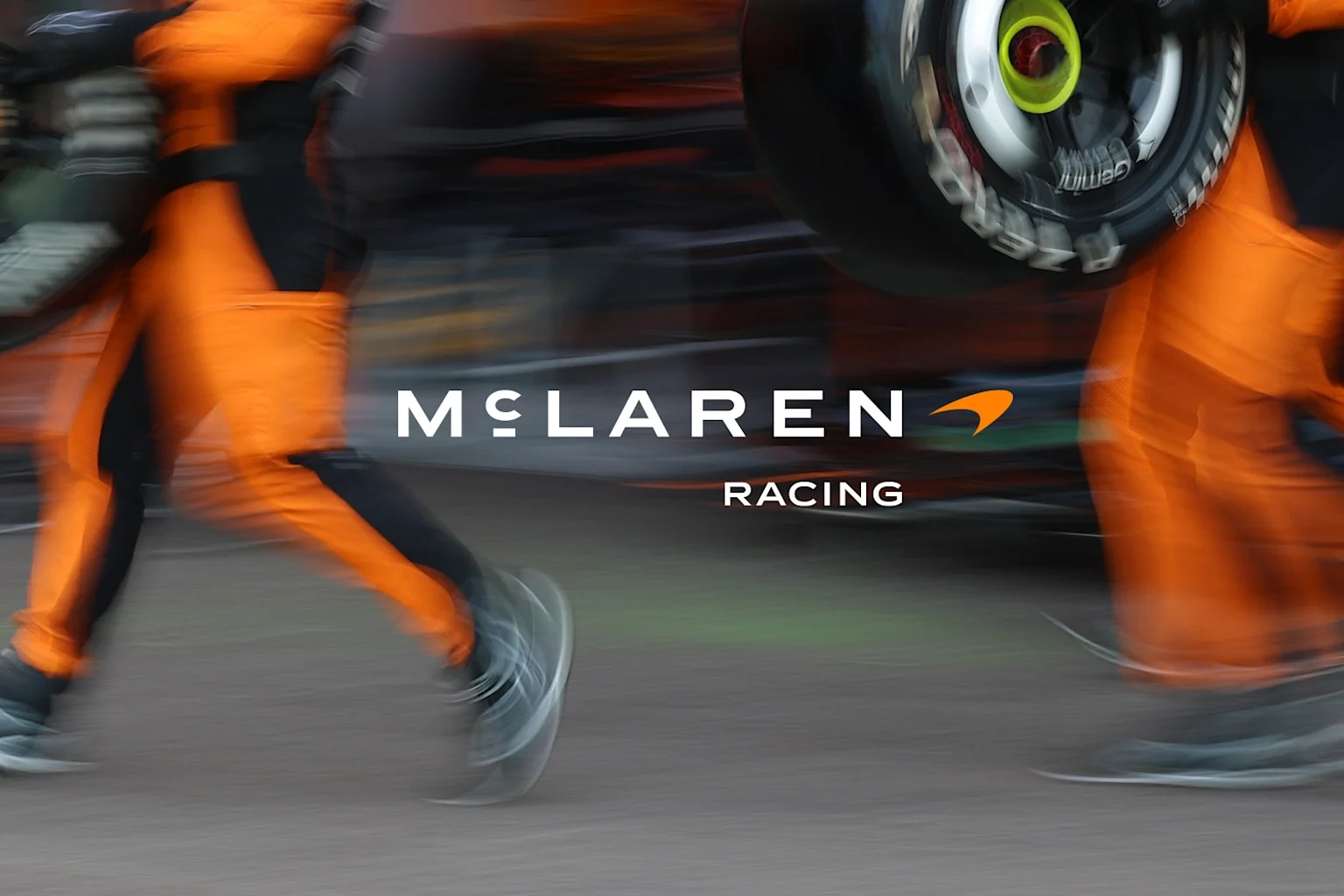
McLaren's new visual identity is more than a revised wordmark. It is an operating system that must work across road cars, Formula 1, IndyCar, endurance racing, merchandise, hospitality, digital products and partner campaigns.
McLaren introduced the identity across McLaren Automotive and McLaren Racing on 22 September 2026. The two remain distinct businesses; the announcement is not a corporate merger. What has changed is the visual framework through which both businesses present themselves to customers, fans and commercial partners.
The wordmark draws on the sign above the Remuera service station operated by Bruce McLaren's parents. McLaren has retained the Speedmark and papaya, while giving the Heritage Shield and Speedy Kiwi defined places in a wider system. It has also created McLaren Sans and a broader colour palette.
That combination of change and continuity matters commercially. A total reset can weaken recognition and strand usable inventory. Keeping the best-known assets while adding a common design language gives McLaren a route to update the brand without asking partners and customers to relearn it.
One master system for several rights markets
McLaren Racing currently sells exposure and activation across Formula 1, IndyCar and its developing World Endurance Championship programme. Automotive operates a separate product, retail and ownership business. The new identity gives those activities a shared set of approved assets even though their contracts, audiences and operating teams differ.
For sponsors, a common system can reduce the number of one-off decisions needed when a campaign crosses racing and automotive channels. Logo hierarchy, colour use, typography and heritage imagery can be governed from one reference point. That should make it easier to build work that feels connected across a race car, customer event, social film and licensed product.
The benefit is not automatic. Rights still need to be defined by property, territory, channel and term. A partner of one racing programme does not gain access to Automotive—or to every other McLaren series—because the marks now look consistent. Brand alignment can simplify activation, but it does not replace rights clearance.
This is particularly important where a title partner or product collaborator appears beside the McLaren name. The new system needs rules for prominence, spacing, colour, animation and co-branded merchandise that remain legible from a mobile screen to a garage fascia. Consistency will depend on the quality of those templates and the speed of the approval process.
The rollout creates real supply-chain work
Implementation is a production programme. Team kit, paddock structures, transporters, hospitality graphics, factory signs, digital interfaces, retailer materials, packaging and licensed merchandise all have different lead times and replacement economics.
Suppliers will need controlled source files, colour standards, type licences, material specifications and approval routes. Digital assets can change quickly; manufactured stock cannot. Existing garments, signage and packaging may need to run down before replacement, while high-visibility race and launch assets move earlier.
McLaren has not disclosed the cost, appointed agencies, supplier contracts or a completion timetable. It has also not said how much existing inventory will be replaced rather than consumed. Those omissions mean the announcement should not be converted into a speculative spending figure.
The practical opportunity is nevertheless clear. Design-production studios, apparel makers, sign and graphics companies, retail-fixture specialists, digital asset managers and experiential agencies can all sit inside the implementation chain. Winning that work will require more than reproducing a logo: suppliers must control colour, versioning and approvals across multiple markets and deadlines.
Heritage assets add another layer. The Speedy Kiwi, Heritage Shield and archive-derived wordmark create useful material for limited products and storytelling, but their value depends on disciplined use. If every licence combines them differently, the promised coherence disappears.
What McLaren and its partners should measure
The first measure is operational: how quickly approved assets reach teams, licensees and regional marketers, and how many exceptions or reworks the rollout creates. That indicates whether the system is genuinely easier to use.
Commercial measures come next. McLaren can compare merchandise conversion, licensing sell-through, engagement with heritage-led content and partner activation across Racing and Automotive. It can also track whether shared campaigns reach customers who previously interacted with only one side of the brand.
No such targets were published with the launch. McLaren described deeper personalisation, richer experiences and stronger community as objectives, not achieved results. The business test is whether one identity makes those products and experiences easier to build, approve and sell.
For the motorsport industry, the lesson is broader than McLaren. As racing organisations add series, consumer products and technology partners, brand architecture becomes part of commercial infrastructure. The visible mark is only the front end. The value comes from the rules, files, suppliers and measurement behind it.