A reported valuation of about $13 million for IndyCar’s first charter transfer is beginning to give the series’ new ownership model something it did not previously have: a market price.
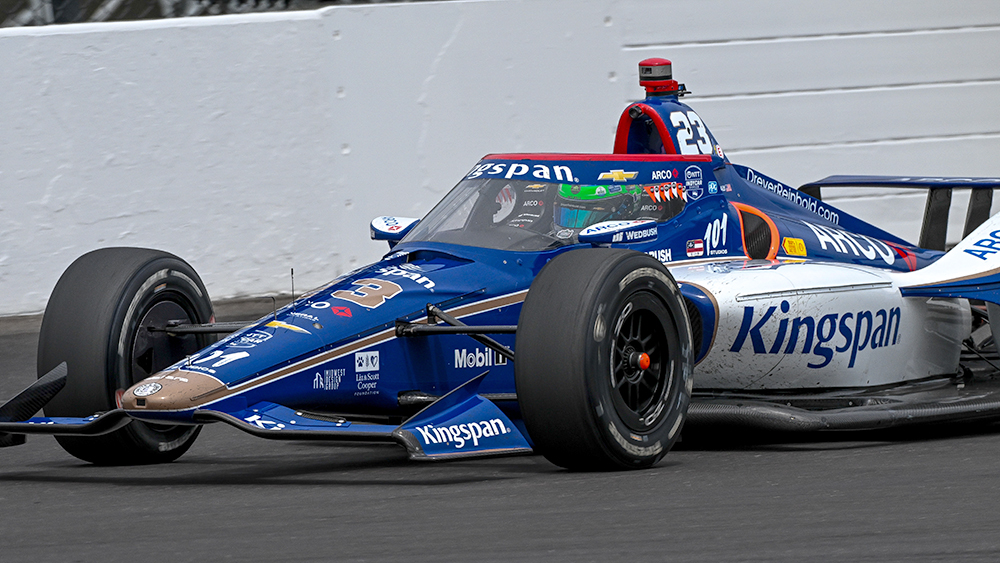
The underlying transaction is official. Rahal Letterman Lanigan Racing announced on 22 July that it had agreed to sell one of its three NTT IndyCar Series charters to Dreyer & Reinbold Racing, subject to series approval. Dreyer & Reinbold plans to use the asset for a one-car, full-season return in 2027, while RLL will reduce its own programme from three cars to two.
The price is not official. Neither team disclosed the commercial terms. A report published on 21 August identified the transferred asset as the charter attached to RLL’s No. 47 entry and estimated the transaction at around $13 million, including a technical and operational relationship for next season. Dreyer & Reinbold’s chief operating officer declined to comment on those details.
That distinction matters. One reported number does not create a fully transparent valuation benchmark. It does, however, offer teams, investors and commercial partners their first indication of what a scarce IndyCar entry asset might command in an arm’s-length transaction.
From allocated right to tradeable asset
IndyCar distributed 25 charters to full-season teams in late 2024. The system was designed to give team owners an asset with long-term value, while guaranteeing each chartered entry a place at championship events outside the Indianapolis 500 and providing other competitive and commercial benefits.
Until now, those charters had strategic value but no completed transfer against which the market could measure them. The RLL–Dreyer & Reinbold agreement changes that. It shows that an established part-time entrant can acquire a defined route back to the full championship, and that an existing team can convert one of its entries into capital while reshaping its operation.
For RLL, the transaction is both financial and operational. The team said returning to two cars would allow it to concentrate resources and improve competitiveness as it prepares for IndyCar’s new car. Reducing an entry can release engineering capacity, workshop space and management attention as well as the sale proceeds themselves.
For Dreyer & Reinbold, the charter solves only one part of the expansion equation. The organisation last contested a full season in 2012 and has since built a strong Indianapolis 500 programme. A championship return still requires an engine agreement, driver, commercial partners, additional personnel, equipment and a season-long logistics structure. IndyCar reported in July that those decisions remained in development.
Purchase price is not operating budget
Prospective investors should therefore avoid treating the reported charter value as the cost of entering IndyCar. It is closer to the price of access and certain participation rights. The working capital needed to build and run a competitive team sits on top of it.
That separation has consequences for sponsors and suppliers. A buyer able to fund the asset but not the annual programme could still create commercial risk. Due diligence needs to cover the buyer’s operating plan, management team, technical relationships and multi-year funding—not simply the purchase agreement.
The reported structure also shows why headline values can be misleading. If technical support is included, part of the consideration may pay for services rather than the charter alone. Payment timing, approvals, liabilities and continuing relationships can also change the economic value of a deal without changing its announced headline.
A further report said RLL retains the potential 2026 Leader’s Circle payment attached to the No. 47 entry if it finishes inside the eligible top 22. The amount was put at $1.65 million. That figure and the allocation have not been confirmed by the teams, but the distinction is commercially important: current-season performance income can be separated from the future right being transferred.
What the first deal signals
The clearest signal is liquidity. IndyCar’s charter system now has a willing seller, a willing buyer and a transaction that the series has described as an important milestone. That makes the asset more credible to team shareholders and potential investors than a right that exists only on paper.
It also creates a reference for future negotiations. Sellers will point to the reported value as evidence of scarcity; buyers will examine the differences in included support, competitive history and timing. Lenders and equity investors can begin to model a residual value, although one transaction is far too little evidence for a dependable valuation curve.
For promoters and sponsors, the deal adds a recognised team to the full-season field and gives Dreyer & Reinbold time to assemble a credible 2027 commercial package. For suppliers, it points to fresh demand across engineering, fabrication, electronics, pit equipment, transport and event support. Those opportunities will arrive on different lead times, making early programme clarity valuable.
The remaining uncertainties are material. Series approval is still required, the definitive transaction terms remain private and the long-term rules governing transfers will influence future values. Charter prices will also depend on broadcast reach, event economics, prize distributions and the cost of running the new car.
The reported $13 million estimate should therefore be read as an opening data point, not a settled market price. The more important development is that IndyCar’s franchise model has moved from allocation to transaction. For the first time, the industry can begin to observe what access to the series is worth—and how that value is divided between the asset, the operation and the partnerships required to race it.