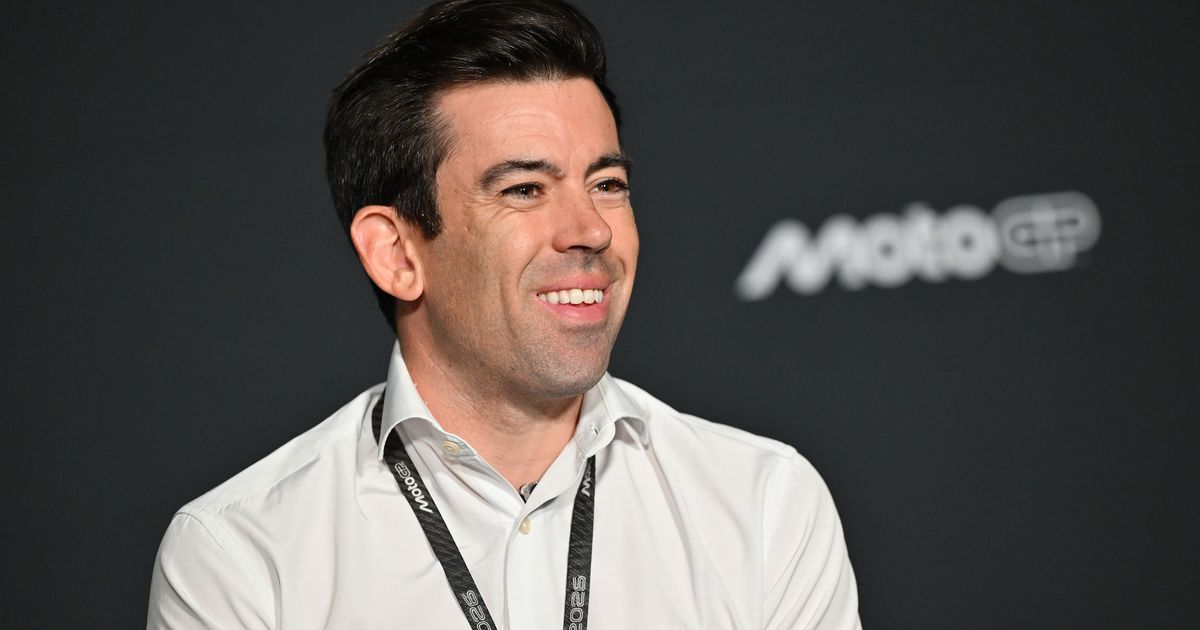
MotoGP has appointed four senior executives across commercial, media, operations and strategy, creating a more specialised leadership structure for the championship's next growth phase.
The appointments, announced on 23 September 2026, put Ryan Norys in as Chief Commercial Officer, Sameer Pabari as Chief Media Officer, Louise Young as Chief Operating Officer and Denitza Batchvarova as Chief Strategy Officer. They follow Carlos Ezpeleta's promotion to Deputy CEO in August, Vince Russell's arrival as Chief Financial Officer in May and Enrique Aldama's move to Chief Administrative Officer. Carmelo Ezpeleta remains CEO.
The significant development is not simply the number of hires. MotoGP has separated four jobs that can become difficult to manage inside one broad growth office: selling rights, building media products, delivering events and setting corporate direction. For teams, sponsors, promoters and suppliers, that provides a clearer view of how the rights holder intends to organise decision-making under Liberty Media ownership.
Commercial and media now have distinct owners
Norys will lead partnerships, sponsorship, licensing, hospitality, marketing and digital. He joins from Tottenham Hotspur, where his most recent role was Chief Revenue Officer. His earlier positions included commercial work at AS Roma, Manchester City and the Miami Dolphins.
Pabari's media brief is different. MotoGP says he will oversee live broadcast production, long-form programming, media-distribution partnerships and commercial growth of the championship's direct-to-consumer streaming service. He has been advising MotoGP and previously held senior roles at the NFL, Warner Bros. Discovery and Manchester United.
That split matters. A sponsor may buy exposure across broadcasts, hospitality and digital channels, but the production, distribution and product economics behind those channels need a dedicated media operation. Separating the two functions can give each leader a sharper mandate: the commercial office can package and sell inventory, while the media office develops the audiences and products that make the inventory valuable.
It also creates a handover risk. Digital sits inside Norys' stated commercial remit, while Pabari owns the streaming product and media content. MotoGP has not published an internal responsibility matrix, revenue targets or reporting lines below the four executives. Partners should therefore expect the practical boundaries between content, platform development, fan data and sponsorship activation to become clearer only as programmes are launched.
Race promotion sits beside event delivery
Young will direct race promotion as well as events, operations and environmental, social and governance functions. She moves from Formula 1 after more than eight years, most recently as Chief Race Promotion Officer.
Combining promoter relationships with operational delivery is commercially important. A new or renewed Grand Prix involves more than a hosting agreement: circuit readiness, temporary infrastructure, broadcast compounds, freight, hospitality, fan areas, staffing and public-sector coordination all affect whether the promised event can be delivered.
For promoters and their suppliers, a single executive responsible for both the commercial host relationship and the operating system around it may shorten some decisions and expose delivery constraints earlier. That is an inference from the remit, not a service commitment. MotoGP has not announced new promoter standards, approval processes, procurement plans or calendar changes alongside the appointments.
Young's arrival also places recent Formula 1 race-promotion experience inside MotoGP without establishing that the two championships will use the same commercial model. Liberty Media completed its acquisition of MotoGP's rights holder in July 2025, but the properties remain separate businesses with different vehicles, venues, audiences and event requirements.
Strategy becomes a standalone function
Batchvarova joined earlier in September and will lead global growth strategy. Her background includes strategy and corporate finance at TKO Group Holdings following the combination of UFC and WWE, building on an earlier strategy role at UFC.
A dedicated strategy office can test investment choices across markets, products and partnerships without making every decision an extension of the next sponsorship sale or media-rights negotiation. The value will depend on whether strategy is translated into funded programmes with owners, deadlines and measures.
The announcement does not identify acquisition plans, market-entry priorities, capital budgets or financial targets. It would therefore be premature to treat Batchvarova's appointment as evidence of a particular transaction or calendar move.
What the structure means for the supply chain
The new organisation gives agencies and vendors a more useful map of potential buyers. Sponsorship sales, hospitality and licensing sit with the commercial function. Broadcast production, distribution, long-form content and the streaming service sit with media. Promoter support, event operations and ESG sit with operations. Market evaluation and corporate development sit with strategy.
That map does not amount to an invitation to tender. MotoGP has not disclosed budgets, approved projects, supplier panels or procurement timetables. Businesses approaching the championship should connect a proposal to one accountable function and a measurable operational or commercial result rather than assuming a broad growth mandate will fund speculative work.
The next proof points will be organisational rather than rhetorical: confirmed start dates, the first rights packages developed under Norys, distribution or product changes under Pabari, promoter-service changes under Young and investment priorities set by Batchvarova. Public targets for sponsorship revenue, streaming subscriptions, event economics or market growth would make the structure easier to evaluate.
For now, the verified change is substantial. MotoGP has installed specialist leaders across the four systems that turn racing into a scalable international business. The opportunity for teams, promoters and suppliers will depend on how effectively those offices coordinate—and how quickly their mandates become contracts, products and deliverable event programmes.
Sources and further reading
- MotoGP executive appointments, 23 September 2026 ↗
- MotoGP appointment of Carlos Ezpeleta as Deputy CEO, 25 August 2026 ↗
- Liberty Media completion of MotoGP acquisition, 3 July 2025 ↗
- BlackBook Motorsport independent report, 23 September 2026 ↗
- SportsPro interview on Ryan Norys and Tottenham commercial strategy, 12 November 2025 ↗