The International Motor Sports Association and Collegiate Racing Series have formed the National Advisory Board for Motorsports Education, a joint initiative intended to bring university programmes closer to the skills and working practices required by the racing industry.
The board will bring together leaders from engineering, race operations, manufacturing, safety, marketing and business. Its remit includes curriculum alignment, skills-gap assessment, accreditation guidance, experiential-learning standards and workforce pathway development.
Internships form the first practical step
IMSA will offer engineering and partnership-marketing internships to qualified students, subject to its business requirements and policies. The first recipients are due to be announced during IMSA’s State of the Sport presentation on 1 October, before Petit Le Mans at Michelin Raceway Road Atlanta.
That commitment gives the initiative an immediate operating element rather than limiting it to advisory meetings. Engineering and commercial placements also recognise that professional motorsport needs talent across both technical and revenue-generating disciplines.
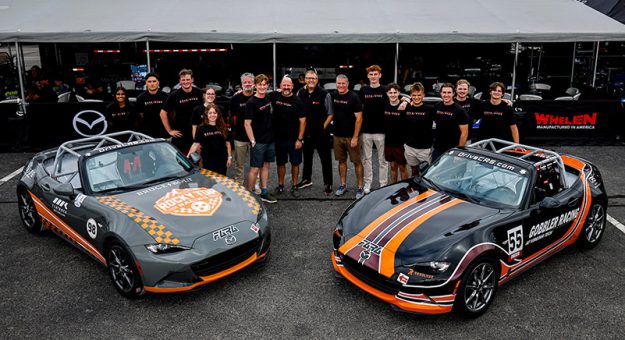
Collegiate Racing Series provides students with practical responsibility for designing, preparing, operating and managing race programmes. More than 80 colleges and universities participate, according to the announcement. Mazda MX-5 race cars representing Virginia Tech and the University of Tennessee were displayed during IMSA’s recent VIRginia International Raceway weekend.
Closing the readiness gap
The board is responding to a familiar industry problem: academic knowledge does not always translate directly into readiness for a race team, supplier, promoter or sanctioning body. New entrants may understand engineering theory but have limited exposure to regulations, trackside decisions, team communication, safety culture and the time pressure of an event environment.
IMSA president John Doonan said the initiative is designed to bridge classroom learning and real-world experience while showing students the range of careers available in the sport. CRS president Jack Hobbs said closer links between educators and industry leaders should give students practical experience, professional awareness and useful connections.
IMSA and CRS will operate a joint steering committee, with quarterly reviews and annual planning. The stated principles include industry relevance, hands-on experience, safety, leadership, collaboration, accessibility and continuous improvement.
For employers, the test will be whether the board produces candidates who require less basic operational onboarding and can contribute more quickly. For universities, success will depend on receiving clear, current feedback from the companies and organisations that recruit their graduates.
Additional student-participation opportunities and programme updates are expected later in 2026.