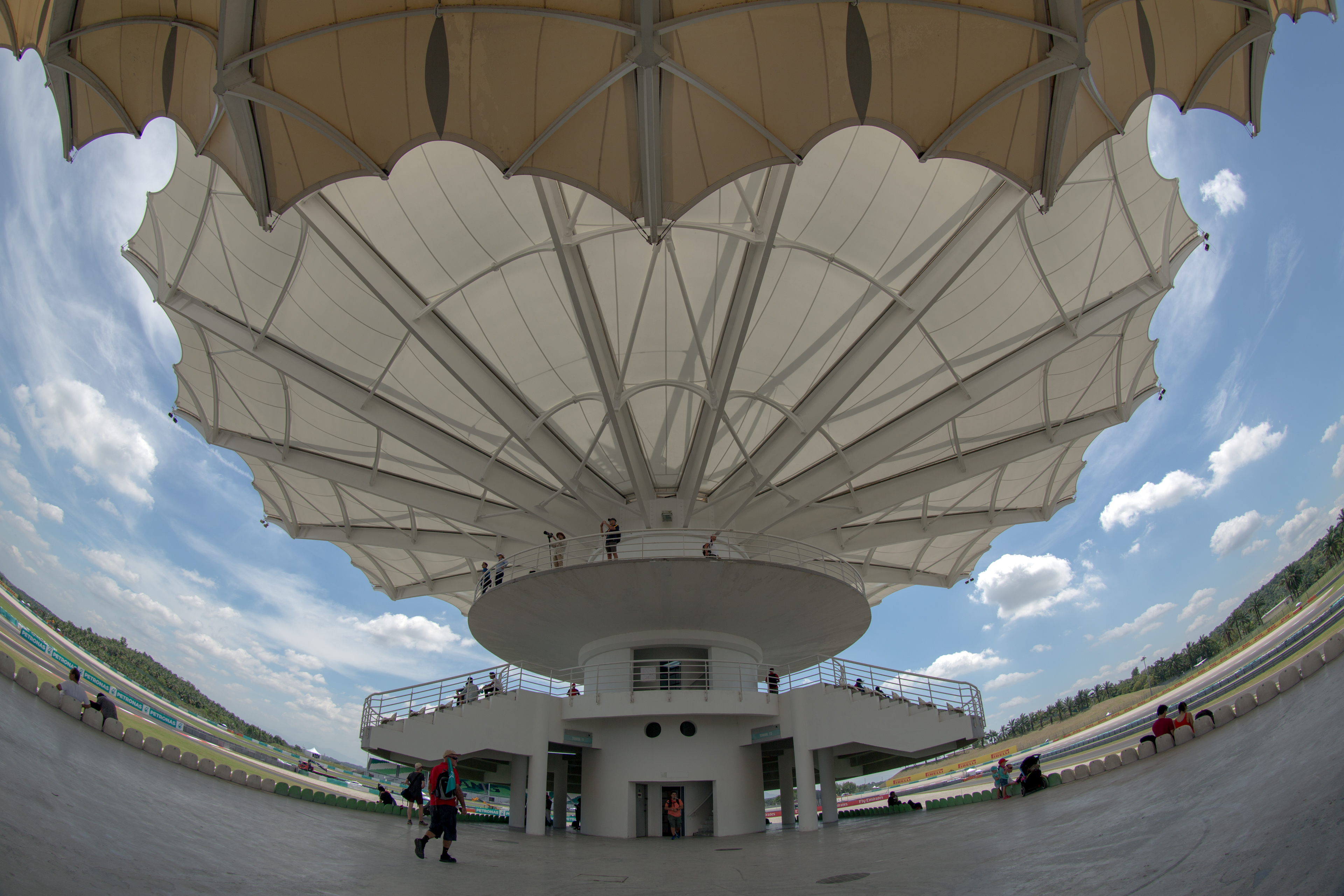
A reported 261,000 spectator admissions across the Formula 1 Gulf Air Bahrain Grand Prix in Malaysia have turned an emergency calendar solution into a commercially relevant case study for promoters, suppliers and rights holders.
Bahrain International Circuit said the relocated event at PETRONAS Sepang International Circuit drew 103,000 spectators on race day and 261,000 across the weekend. Malaysia's public broadcaster RTM reported those figures from BIC's official post and described the event as sold out. Bernama independently reported the same total and said it surpassed Sepang's previous attendance record.
The weekend figure should be read as cumulative attendance, not necessarily 261,000 unique individuals. Formula 1 and the organisers have not published ticket yield, hospitality occupancy, per-capita spending, promoter revenue or a final event profit. Even with those limitations, the scale matters because this was not a conventional race built through a multi-year sales cycle.
Formula 1 confirmed Malaysia as the replacement host on 26 July, only ten weeks before the 2–4 October event. The agreement between Formula 1, the FIA and the governments of Bahrain and Malaysia preserved a Grand Prix that otherwise would not have happened. Sepang then converted the short lead time into a record reported crowd.
That combination strengthens the business case for a small group of established circuits to remain capable of hosting at short notice. It also shows why a backup venue is not merely a piece of available asphalt. It is an operating network of officials, contractors, transport providers, hotels, ticketing systems, security teams, temporary-infrastructure suppliers and public agencies that can be reactivated under deadline pressure.
Existing infrastructure reduced the delivery risk
Sepang last hosted Formula 1 in 2017, but it remained an active international venue rather than a dormant former Grand Prix circuit. Its continuing MotoGP programme, other race events and FIA Grade 1 infrastructure gave organisers a base from which to rebuild an F1-scale operation.
Formula 1's July announcement explicitly framed the replacement as evidence that the championship could adapt and deliver. That claim was tested in practice. The race was installed between the Azerbaijan and Singapore Grands Prix, placing it inside an existing Asian freight window, yet the local operation still had to prepare facilities, recruit and brief personnel, sell inventory and coordinate two host countries.
For suppliers, the useful distinction is between permanent capability and event-specific inventory. Garages, control systems, track infrastructure and access roads can be maintained between major events. Grandstands, hospitality fit-out, catering, wayfinding, communications, fan zones, power distribution and branded assets must be scaled to the expected crowd and the commercial plan.
Short-notice hosting favours vendors with current venue knowledge, pre-approved specifications, local labour and the ability to reserve capacity without a normal annual procurement cycle. It also increases the value of reusable equipment and modular systems that can be mobilised without redesigning the event from zero.
The crowd validates demand, not yet the profit
Before the event, Hong Leong Investment Bank research reported by Business Today estimated that the race could generate RM1.1 billion to RM1.3 billion in additional Malaysian economic output. The analysis expected tourism, accommodation, transport, food, beverage and retail to receive much of the benefit.
Those figures were forecasts based on spending assumptions and an economic multiplier. They are not a post-event audit, and economic output is not the same as promoter profit or government return. The 261,000 attendance report supports the demand side of that forecast, but a credible final assessment still needs visitor origin, room nights, average spend, tax receipts, preparation costs and the distribution of ticket revenue.
The commercial structure also makes this event unusual. Business Today reported the investment bank's view that Bahrain would absorb the Formula 1 rights fee and receive ticketing revenue, while Malaysia would fund circuit preparation and benefit mainly from tourism and wider economic activity. Neither Formula 1 nor the two governments has published a full event account, so those allocations should remain treated as reported estimates rather than settled financial fact.
For other prospective hosts, that is the central warning. A record crowd can prove audience appetite while leaving unanswered who carried the risk and who captured each revenue stream. Hosting fees, ticket income, hospitality, local sponsorship, freight, circuit upgrades and public funding must be separated before one event's apparent success becomes a template.
A portable race creates new rights questions
The replacement preserved Bahrain's race identity, Gulf Air title rights and Formula 1 calendar position while moving the physical event to Malaysia. That is a rare layering of rights across a championship, a contracted promoter, a substitute circuit and two national governments.
For sponsors, the model offers continuity but complicates delivery. A title partner can retain the event name, yet hospitality guests, consumer activation, local media and retail execution move into a different market. Circuit partners may gain a global weekend without owning the Grand Prix designation. Suppliers can find themselves serving one promoter's event inside another venue's operational system.
Contracts designed for a fixed location may not answer all of those questions. Future agreements could need clearer provisions covering relocation, substitute inventory, local category conflicts, guest travel, currency, tax, insurance, content rights and responsibility for assets that cannot be transferred.
The Malaysia weekend showed that a Grand Prix brand can travel more readily than the physical operation. It also showed that the substitute market has its own value. A venue able to absorb a race protects Formula 1's broadcast schedule, team commitments and global partner inventory, while gaining an exceptional event without first securing a normal long-term calendar slot.
Record demand raises the service benchmark
High attendance is commercially attractive, but it concentrates operational pressure. Bernama reported that heavy rain delayed the race by 93 minutes while spectators remained at the circuit. A capacity crowd under severe weather conditions tests drainage, shelter, communications, crowd movement, transport and contingency staffing as much as it tests the track.
That matters to every event supplier. Temporary structures must meet wind and water requirements. Catering and sanitation capacity must survive longer dwell times. Digital channels need enough resilience to distribute changing instructions. Transport plans must handle a concentrated exit after a delayed programme. Sponsors need activation and hospitality teams prepared for schedule disruption rather than only the planned run of show.
The public attendance number therefore creates two sales stories. One is positive: Sepang demonstrated exceptional demand and delivered a major international event on a compressed timetable. The other is a performance obligation: any future Formula 1 return will be judged against a record crowd and the service levels expected around it.
Backup readiness can become a sellable asset
Formula 1 is unlikely to need a replacement host every season, and keeping a circuit permanently ready carries cost. The business case improves when readiness also supports other championships, testing, corporate events and regional races.
Promoters considering that position should treat backup capability as a portfolio rather than a speculative F1 bid. Grade 1 maintenance, trained officials, current supplier frameworks, scalable ticketing and public-sector coordination can serve multiple events. The occasional global replacement then becomes the highest-value use of an operating system that already produces revenue elsewhere.
For Formula 1, a credible reserve network reduces the commercial damage of cancellations. For teams, it protects championship continuity but demands fast travel, freight and staffing adjustments. For sponsors and broadcasters, it preserves contracted content while changing the activation market. For local suppliers, it creates a surge opportunity that rewards pre-qualification and mobilisation speed.
Sepang's record reported attendance does not prove that every substitute race will make money, nor does it settle whether Malaysia should pursue a permanent Formula 1 contract. It does demonstrate something more immediate: an established venue with active infrastructure and strong latent demand can turn a calendar problem into a sold-out international event within ten weeks.
The next step is financial transparency. If organisers publish ticket mix, visitor data, preparation spending and economic outcomes, the industry will be able to distinguish a spectacular crowd from a repeatable host model. Until then, Sepang provides strong operational and demand evidence—but only a partial profit-and-loss account.
Sources and further reading
- RTM report citing Bahrain International Circuit attendance announcement, 5 October 2026 ↗
- Bernama independent event report, 4 October 2026 ↗
- Formula 1 and FIA host confirmation, 26 July 2026 ↗
- Business Today report on Hong Leong Investment Bank economic analysis, 12 September 2026 ↗
- Wikimedia Commons image record ↗
- Creative Commons Attribution-ShareAlike 4.0 licence ↗