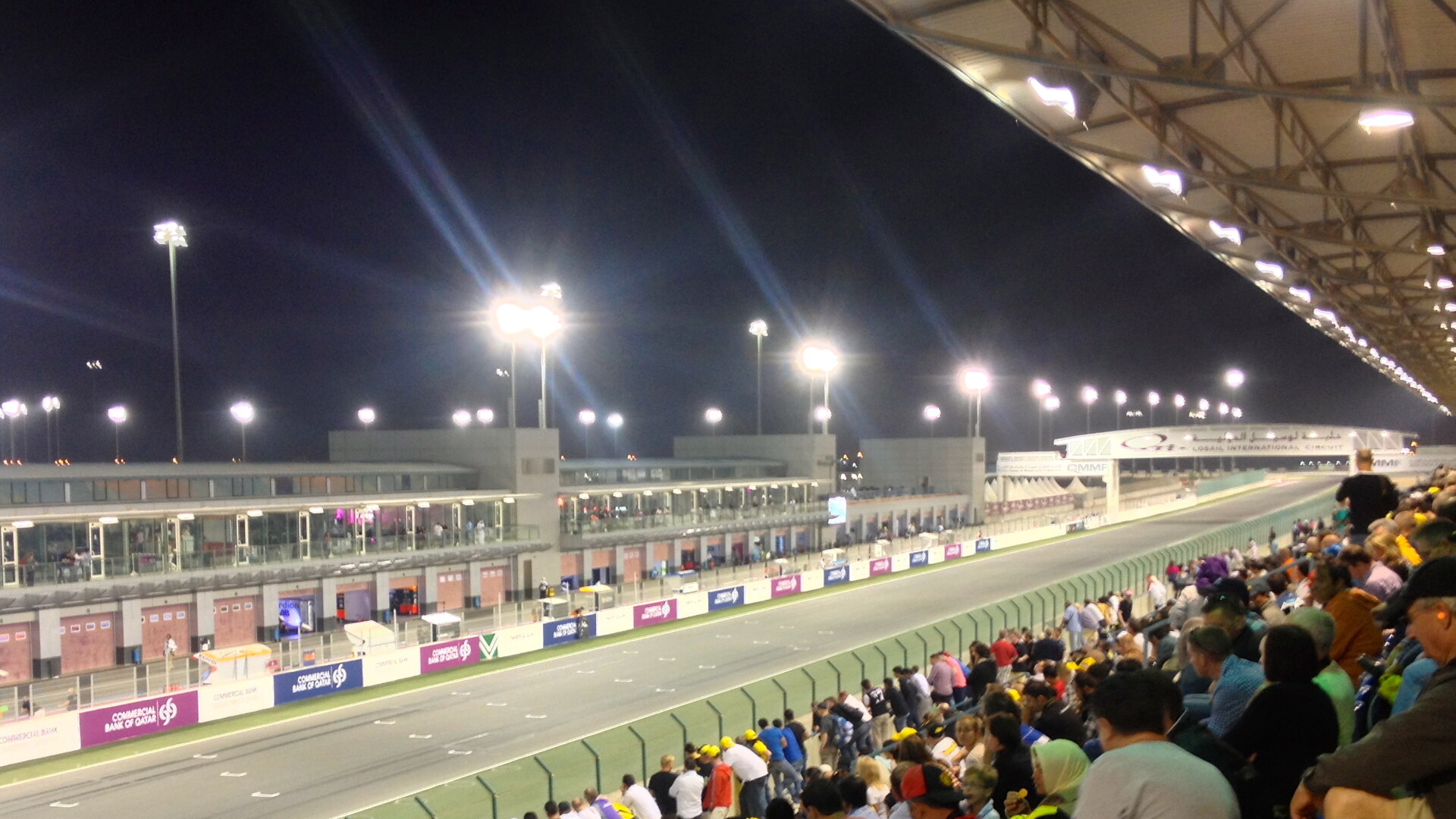
Lusail International Circuit has appointed Ooredoo Qatar as a Founding Partner of both its 2026 MotoGP and Formula 1 grands prix. The title matters commercially, but the more useful part of the agreement is underneath it: Ooredoo says it has upgraded the circuit with indoor and outdoor 5G+ coverage and expanded network capacity for spectators and event operations.
That combination makes the deal more than a conventional category sponsorship. It packages media and activation rights around infrastructure that the venue needs to deliver two global events, three weeks apart, to different championship organisations and fan bases.
The MotoGP Qatar Grand Prix runs from 6–8 November, followed by the Formula 1 Qatar Grand Prix from 27–29 November. Financial terms, contract length, category exclusivity and the value of the network work have not been disclosed. Neither party has published capacity figures, service-level commitments, coverage maps or a list of operational systems that will use the network. Those omissions limit any claim about performance, but they do not reduce the business significance of the structure.
One asset, two rights packages
Venue partnerships are often sold one event at a time. Lusail's agreement gives Ooredoo a single platform across two of the largest properties on the circuit's calendar. That creates reuse: the same network, hospitality areas, customer demonstrations, staff knowledge and activation equipment can support MotoGP in early November and Formula 1 later in the month.
The audiences are not identical. Motorcycle and Formula 1 spectators have different media habits, sponsor affinities and ticket products. The rights inventory will also sit under different championship rules. A two-event agreement therefore should not be measured as if the second weekend were a simple repeat of the first.
For Ooredoo, the operating asset can remain common while the commercial message changes. MotoGP can test the first high-density weekend, identify weak points and generate evidence for the later Formula 1 activation. Formula 1 then supplies another customer segment, larger global business-hospitality opportunities and a second proof point for enterprise connectivity.
For Lusail, bundling the events can increase the value of a category that would otherwise be fragmented. A telecommunications partner can plan capital, engineers and temporary capacity against a venue programme rather than a single weekend. That can make the rights fee only one element of the exchange; infrastructure, technical support and access to a live demonstration environment may carry value as well.
The parties have not separated those elements publicly, so it would be wrong to assign a value to either the sponsorship or the network upgrade. Promoters considering a similar model should nevertheless price the components separately in contract schedules. Media rights, brand exposure, hospitality, fan activation, permanent infrastructure and event-time support have different useful lives and different acceptance tests.
Connectivity is now part of event delivery
Fans judge a mobile network at the moment it is under the most pressure: when a grandstand reacts to a start, crash, overtake or podium and thousands of devices attempt to upload video at once. Average coverage on a quiet day says little about performance at that peak.
The official announcement says the upgrade provides comprehensive indoor and outdoor 5G+ coverage and more network capacity. It also refers to greater speed and reliability. No benchmark accompanies those claims. The first useful commercial evidence will be operational data from the two race weekends: connection success, throughput at peak moments, latency, dropped sessions, congestion by zone and the time taken to restore service after an incident.
Those measures matter to more than spectators. Venue teams rely on connectivity for ticket scanning, cashless payments, point-of-sale systems, workforce coordination, transport updates and digital wayfinding. Hospitality operators need dependable service for guests and corporate hosts. Promoters increasingly distribute schedules, alerts and content through mobile channels, making the customer experience dependent on networks they may not directly operate.
Ooredoo has also positioned the deployment as a demonstration of connectivity for enterprises and mission-critical services, citing potential applications in connected healthcare and public safety. That is a statement of intended capability, not evidence that safety-critical race systems have been moved onto the public mobile network. MRI has found no published network architecture, security model or confirmation that sporting, medical or emergency communications share infrastructure with fan traffic.
That separation should be explicit. Public access, staff devices, payment terminals, broadcast contribution, team services and emergency operations have different resilience and cybersecurity requirements. A venue can use one supplier while maintaining independent network segments, priorities and fallbacks. The commercial contract should define which service sits in which class and what happens if the public network is congested or unavailable.
The first weekend becomes an acceptance test
The three-week interval between the grands prix creates a rare operational sequence. MotoGP is not merely the first activation; it is the first full-load test of the upgraded environment before Formula 1 arrives.
Lusail and Ooredoo can use that interval to review radio coverage, backhaul capacity, power resilience, customer-support demand and traffic concentrations. Temporary cells, antennas or staffing can then be repositioned before the second event. The value comes from a disciplined handover: an incident log, agreed severity levels, named owners and a deadline for fixes that can realistically be completed between weekends.
Promoters should be careful not to turn paying spectators into an undisclosed technical trial. The network is expected to operate from the first event. The learning opportunity is in observing real demand and improving an already accepted service, not in postponing acceptance until the higher-profile weekend.
Suppliers also need a baseline that distinguishes venue improvement from event variation. Formula 1 and MotoGP may use different grandstands, hospitality footprints, working hours and content programmes. A busier cell in one weekend does not automatically mean the network degraded; it may reflect a different crowd distribution. Measurement needs denominator data such as connected devices, traffic volume and occupied zones.
Sponsorship metrics must connect to service metrics
The deal promises fan activations inside and outside the circuit, but the formats have not been disclosed. Whatever the creative execution, the partnership should not be evaluated only through logo exposure or social reach. The infrastructure gives both parties a chance to connect marketing outcomes with service delivery.
A useful scorecard would separate four layers. The first is availability: coverage, connection success and uptime in the areas sold to spectators and partners. The second is experience: speed, latency and support satisfaction during peak periods. The third is commercial response: activation participation, qualified enterprise enquiries, hospitality engagement and conversion into relevant products. The fourth is venue value: reduced operating friction, fewer connectivity complaints and infrastructure that remains useful after the grands prix.
Each layer needs governance. Ooredoo will hold network data, while Lusail controls ticketing, venue operations and many customer touchpoints. Privacy, aggregation, retention and permitted marketing use should be agreed before datasets are combined. A sponsorship clause that grants broad access to fan data would be a poor substitute for clear consent and purpose limits.
The same discipline applies to claims. Describing the network as 5G+ is a product designation; it does not by itself prove a particular user experience. Public case studies should show the test conditions and the event load behind any performance figure. That makes the demonstration more credible to enterprise buyers and more useful to other promoters.
Permanent value needs a post-event plan
The announcement says the relationship will extend into corporate social responsibility and sustainability initiatives, but it does not name programmes, budgets or targets. Those elements should be treated as future work rather than delivered benefits.
The permanent network is easier to evaluate. Lusail also hosts the World Endurance Championship and a wider programme of motorsport, corporate and community activity. If the upgrade remains available, its return can extend beyond November's two grands prix. The circuit can use it for other events, demonstrate connected-venue products to prospective partners and reduce the amount of temporary infrastructure required for later meetings.
That long-term value depends on ownership and lifecycle terms. Contracts should specify who owns installed equipment, who pays for software and hardware refreshes, what capacity is guaranteed outside the headline events and how the venue can switch supplier at the end of the term. A sponsor-funded installation can become an expensive dependency if maintenance, access and exit rights are vague.
The sustainability case also requires evidence. Reusing infrastructure across events may avoid duplicated temporary equipment, freight and installation work, but no environmental assessment has been published. Energy consumption, equipment life and reuse rates would be better measures than a general association between digital technology and sustainability.
A stronger model for promoter partnerships
Lusail's agreement illustrates a practical direction for event sponsorship: sell a partner the audience and give it a real operating problem to solve. The partner receives a live product demonstration under exceptional load. The promoter receives infrastructure and technical capability aligned with the fan experience. Both gain content grounded in delivery rather than a logo alone.
The model also creates more accountability. If the network performs badly, the brand promise and the venue experience fail together. That risk should be reflected in service levels, escalation procedures, contingency networks and honest public reporting. Founding-partner status cannot replace operational assurance.
For teams and suppliers, the opportunity is adjacent rather than direct. Better venue connectivity can improve guest programmes, mobile content, retail and workforce services, but paddock and sporting systems should remain governed by their own security and reliability requirements. Suppliers pitching connected-event tools should show how their products operate across segmented networks and during degraded service.
The two November weekends will reveal whether Lusail and Ooredoo have created a repeatable venue platform or simply attached infrastructure language to a sponsorship. The test is not the number of 5G+ signs around the circuit. It is whether one deployment can deliver measurable service, commercial reuse and operational learning across two different world championships.
Sources and further reading
- Lusail International Circuit official announcement, 26 October 2026 ↗
- Ooredoo Qatar official partnership announcement ↗
- Qatar News Agency independent report, 26 October 2026 ↗
- Qatar Tribune independent report, 27 October 2026 ↗
- Lusail International Circuit MotoGP event information ↗
- Lusail International Circuit Formula 1 event information ↗
- Wikimedia Commons image record ↗
- Creative Commons Attribution-ShareAlike 3.0 licence ↗