Formula 1's aborted start procedure at Sepang has turned a technical bug into a business case study in common-mode risk.
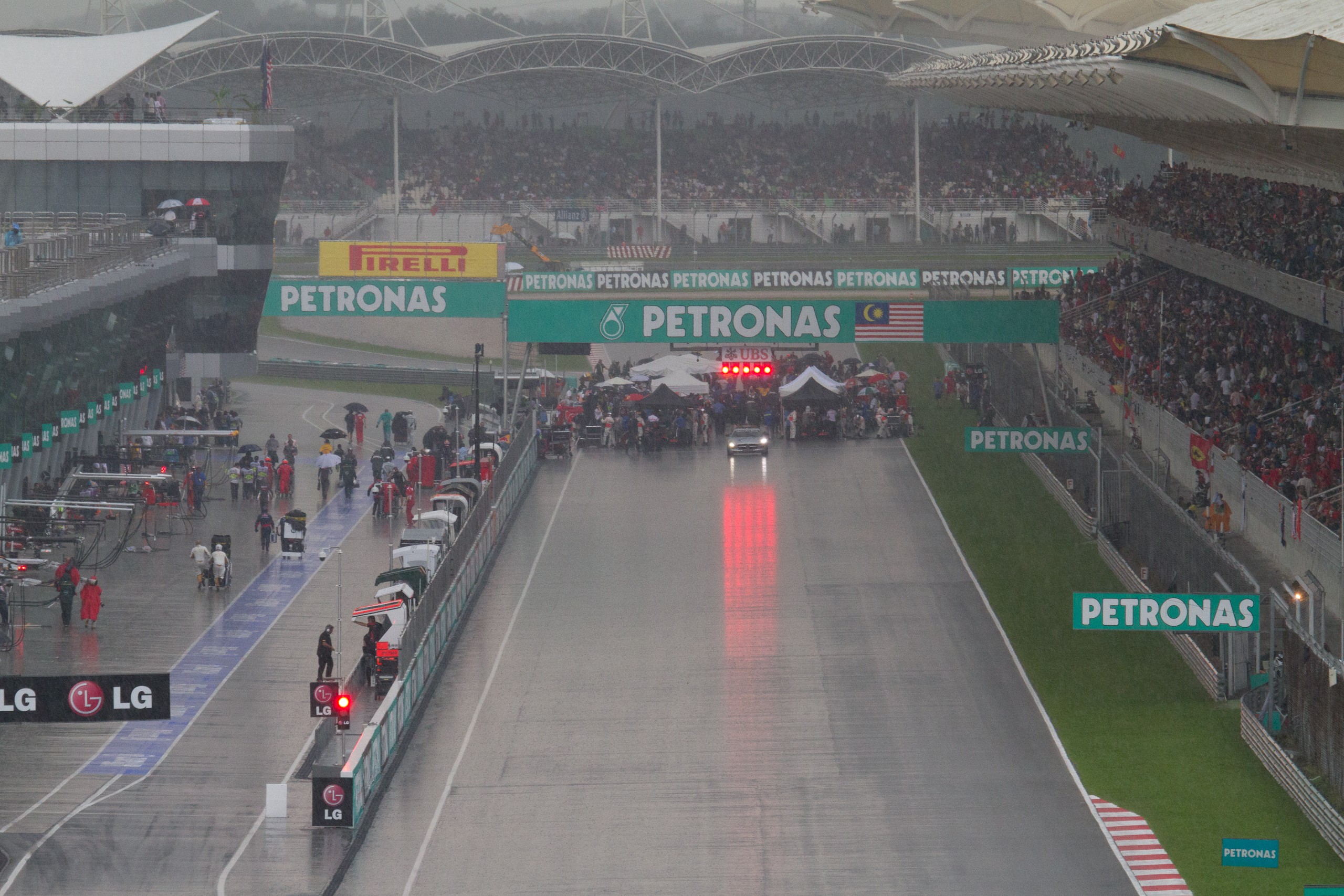
During the formation lap for the Formula 1 Gulf Air Bahrain Grand Prix in Malaysia on 4 October, several cars lost power while running slowly in wet conditions. The FIA said an unprecedented combination of low engine speed, low grip, wet-weather energy-management settings and the circuit's sector configuration produced the failure.
Race control abandoned the start procedure. During the delay, the FIA Technical Department removed the energy-limit constraint in the affected sectors through an updated software release distributed to every competitor. Teams then installed the change before the race could begin.
The incident is relevant beyond Formula 1 engineering. It shows what happens when a shared technical layer becomes a single point of operational dependency across a championship. Standardisation can reduce cost, simplify policing and create consistent interfaces, but it also concentrates the effect of an overlooked edge case.
No financial loss has been disclosed. Formula 1, the FIA, the promoter, broadcasters and teams have not published overtime, hospitality, production or audience-retention costs attributable to the extra delay. The business significance lies in the exposure: one control problem interrupted a live global event and required coordinated deployment across 11 teams and five power-unit manufacturers under race-day pressure.
The failure sat inside a common control framework
The FIA's 2026 Formula 1 Technical Regulations require the power unit, fuel system, transmission, brake system, tyre-pressure monitoring and adjustable bodywork to be controlled by the FIA Standard ECU. The same article says that the standard ECU may only run FIA-approved software and connects it to the control system in a prescribed way.
That does not mean every team's complete software stack is identical. Competitors and power-unit manufacturers still develop their own approved applications, calibrations and operating strategies. The relevant point is that the championship deliberately places critical functions inside a governed common architecture.
At Sepang, the FIA described the fault as an unintended loss of power and said it had not been detected by the governing body or the teams during testing or on laps to the grid. Independent reporting from RACER quoted FIA single-seater director Nikolas Tombazis saying that teams, power-unit manufacturers and the official ECU provider had all failed to identify the scenario beforehand.
That is a classic common-mode failure. Different cars and engines encountered the same untested combination of inputs, while the recovery depended on a central fix being accepted, installed and verified across the field.
For suppliers, the distinction matters. Component reliability is normally assessed at the individual-product level. A standard platform also needs system-level assurance: how the common component behaves when multiple independently developed applications meet unusual operating conditions at the same time.
Edge-case testing becomes a commercial deliverable
The problem emerged on a wet formation lap at unusually low speed, not during a conventional high-load race simulation. That is precisely why scenario coverage belongs in the commercial and operational specification, rather than being treated only as an engineering detail.
Championship suppliers must test the normal performance envelope, but they also need a catalogue of abnormal states: prolonged low-speed running, repeated safety-car procedures, red-flag restarts, mixed grip, depleted energy stores, failed sensors, interrupted telemetry and rapid changes between modes.
Each scenario has a cost. It requires test rigs, simulation time, representative hardware, track running, integration engineers and a controlled way to reproduce failures. When a rule set introduces more software-defined behaviour, those assurance resources become part of the real price of the platform.
The lesson for procurement teams is to value test evidence alongside unit cost and specification compliance. A cheaper common system can still create a larger total risk if its validation programme does not cover the operational combinations that a promoter, race director or team may encounter.
Suppliers bidding for controlled electronics, timing, telemetry, energy management or race-control systems should expect increasingly detailed questions about boundary testing, software provenance and incident response. Rights holders should ask not only whether a system works, but how quickly the supplier can diagnose, patch and prove it safe when an unexpected condition appears in public.
The emergency update was an operational achievement
The failure exposed a gap, but the recovery also demonstrated the value of a governed release process. RACER reported Tombazis saying the software was updated within minutes and that installation, questions from teams and verification across the cars took about 20 to 25 minutes.
That sequence required more than writing code. The FIA had to identify a common cause, decide that abandoning the start was necessary, produce an approved change, distribute it securely, explain it to competitors and confirm that the field was running the required version.
In another industry, those functions would sit across incident command, change control, release engineering, cybersecurity and customer support. Formula 1 had to perform all of them while a live event waited.
The technical regulations support that control model by requiring software versions to be identifiable and registered. The Sepang incident shows why those provisions matter operationally. A patch is useful only if the organiser knows which build is on every car, can prevent version drift and can trace the decision that authorised the change.
For teams, emergency deployment also creates practical demands. Cars may have different hardware states, power-unit suppliers have their own engineers and validation routines, and a late change must be installed without introducing a second fault. Clear rollback procedures, signed release packages, compatible tooling and rehearsed communications are therefore part of sporting readiness.
The response should not be romanticised. A fast fix does not remove the testing failure that made it necessary. It does, however, show that a common platform can support a coordinated recovery when ownership, version control and authority are unambiguous.
Promoters carry the customer-facing consequences
The initial race start had already been delayed by heavy rain. The software problem then prolonged the disruption before competition could begin. Reuters reported through Channel News Asia that the FIA promised a full review after drivers had to stop or reboot their cars.
For the promoter, the cause of a delay matters less than the service consequences. Spectators need accurate information, shelter, catering, sanitation, transport updates and confidence that the event remains safe. Hospitality programmes run beyond their scheduled windows. Broadcasters must fill airtime. Sponsors lose certainty over activation moments, and venue staff and contractors may incur overtime.
None of those costs has been quantified for Sepang, so it would be wrong to attach a financial estimate. The operating principle is nevertheless clear: technical dependencies owned by a sanctioning body or championship can create liabilities at venue level.
Promoter agreements and supplier contracts should therefore define who communicates a central-system failure, who authorises schedule changes and how incremental costs are recorded. Service-level language designed for normal support hours is inadequate for a system whose most important operating window is a live race start.
This is particularly important for substitute events. Sepang staged the race on a compressed timetable after Bahrain's original date was cancelled, and the venue had already absorbed the operational demands of a short-notice Formula 1 return. A central software incident added another layer of risk that the local organiser could not directly prevent.
Shared platforms need shared assurance data
The FIA said it would conduct a full review with teams and power-unit manufacturers. That review can create value only if its conclusions improve the whole ecosystem rather than remaining inside one technical working group.
Teams need a clear account of the trigger conditions, detection gap and future safeguards. Power-unit manufacturers need to know how the common logic interacts with their applications. The ECU supplier needs requirements that reflect wet-weather and low-speed reality. Promoters and broadcasters need assurance that the operational response plan has been updated.
A useful outcome would separate immediate containment from long-term prevention. Containment covers the updated constraint, installation process and checks used at Sepang. Prevention covers expanded scenario testing, simulation ownership, acceptance criteria, release rehearsals and the monitoring signals that should reveal a similar state sooner.
Transparency has limits because detailed control software and team configurations are commercially and competitively sensitive. The FIA can still publish enough process evidence to show that responsibilities, test coverage and recovery procedures have changed. A generic promise to review the incident would not give suppliers or promoters much basis for adjusting their own plans.
The industry should also resist the easy conclusion that standardisation itself is the problem. Common components can reduce duplication and make competition easier to regulate. The stronger conclusion is that common components require common assurance at the scale of their potential impact.
When a bespoke team system fails, one competitor may retire. When a shared championship layer fails, the event may stop. The investment in testing, release management and contingency planning should reflect that difference.
The business case is resilience, not blame
Formula 1 recovered and completed the race. The official FIA post-race transcript records Max Verstappen describing the initial loss of power and later celebrating Red Bull Ford Powertrains' first victory. That outcome limited the commercial damage: the event still delivered a result, broadcast content and a full competitive story.
The incident should therefore be treated as a resilience test rather than a search for a single culprit. The FIA owns the regulatory framework and coordinated the fix. Teams and manufacturers share the integration and test environment. The designated electronics supplier operates inside requirements set by the championship. Each party sees a different part of the system, which is exactly why joint validation is necessary.
For motorsport businesses, the opportunity is practical. Simulation providers can build edge-case libraries. Electronics suppliers can make diagnostic and rollback capability part of their offer. Teams can rehearse rapid software deployment as they rehearse pit stops. Promoters can integrate technical interruptions into crowd and broadcast plans. Insurers and legal teams can map which party carries which cost when a common system delays an event.
Sepang's wet-weather bug lasted less than the programme of work that will follow it. The lasting test is whether Formula 1 converts a public failure into better assurance for every race, rather than treating the emergency patch as the end of the incident.
Sources and further reading
- FIA post-race press conference transcript, 4 October 2026 ↗
- FIA 2026 Formula 1 Technical Regulations, Section C, Issue 20 ↗
- RACER report and FIA statement, 4 October 2026 ↗
- Reuters report via Channel News Asia, 5 October 2026 ↗
- Wikimedia Commons image record ↗
- Creative Commons Attribution-ShareAlike 3.0 licence ↗