Mercedes-Benz South Africa has become presenting partner of the inaugural Michelin 24H Kyalami, adding a local automotive backer to a race that Creventic relocated from Dubai after uncertainty in the Gulf disrupted logistics planning.
The event is scheduled for 8–10 January 2027 at Kyalami Grand Prix Circuit. Creventic describes it as South Africa’s first international 24-hour motor race. Mercedes-Benz South Africa announced its partnership on 27 November, while independent reports published on 27 and 28 November confirmed that the agreement includes a presenting role and an on-track customer-racing presence.
The commercial terms are private. No party has disclosed a rights fee, underwriting commitment, activation budget, hospitality allocation, dealer target or revenue guarantee. It would therefore be inaccurate to assign a value to the deal or to assume that Mercedes-Benz South Africa is covering a particular share of the event’s costs.
What is visible is the structure. Michelin already holds title and exclusive tyre-supplier rights. Brand Leadership Solutions is the local commercial and spectator partner. Mercedes-Benz South Africa now adds an OEM layer connected to two Mercedes-AMG customer teams, GetSpeed Racing and Viper 65. Kyalami provides the venue and a 40-garage pit complex; Creventic supplies the international sporting and operating platform.
For promoters, teams and suppliers, that combination is more significant than a conventional race-week sponsorship. Creventic has had to move an established January event to a different continent on a short lead time. A local automotive partner can connect the replacement venue to dealers, customers, corporate guests, media and a domestic enthusiast audience while the organiser rebuilds transport, servicing and event-delivery plans.
The partnership is therefore best understood as part of the event’s operating model. Mercedes-Benz South Africa gains an endurance-racing business platform on home soil. Creventic gains a recognised local brand with customer-racing relevance. Kyalami gains another stakeholder with an incentive to make the first edition work. Whether that produces a durable annual property will depend on delivery in January, not on the announcement alone.
A venue switch creates commercial work, not only a calendar change
Creventic announced in September that the annual 24H Dubai would move to Kyalami for January 2027. The organiser said uncertainty in the Gulf had affected logistics costs and the reliability of transport planning. It also postponed its Abu Dhabi races to the 2027–28 campaign.
Moving an endurance race between regions changes almost every operating assumption. Teams need revised sea- or air-freight routes, customs documentation, temporary-import arrangements, local vehicle transport, fuel and consumables planning, hotel inventory, crew travel, communications and emergency spares. The promoter has to rebuild supplier contracts, spectator information, hospitality, media operations and local authority relationships around a venue that was not the original season-opener destination.
The sporting format remains familiar: a 24-hour race on a 4.522-kilometre circuit, starting at 13:00 on Saturday 9 January and finishing at the same time on Sunday. The business delivery chain is new.
That distinction matters for teams. A race can retain its championship label and technical regulations while imposing materially different costs and lead times on entrants. South Africa offers a strong motor-racing market and a historic circuit, but it is not a direct substitute for the freight, workshop and travel routines built around Dubai.
The organiser’s early-entry announcement listed 37 cars, including 14 in GT3, across a field of GT and touring-car machinery. That is evidence of competitor intent, not a final grid. Entries can change before scrutineering, and the number does not reveal how many teams have completed freight bookings, deposits, local support agreements or driver line-ups.
For the event business, retention between the early list and race week is a more useful metric than the announcement total. Each withdrawal can reduce entry-fee income, garage demand, tyre consumption, accommodation bookings and the range of manufacturers represented. Each confirmed car strengthens the product sold to spectators, hospitality clients and media partners.
Mercedes combines rights with customer racing
Mercedes-Benz South Africa is not entering the event as an unrelated consumer sponsor. Its presenting role sits beside the announced participation of two Mercedes-AMG customer teams.
GetSpeed Racing brings international GT experience, while Viper 65—previously known as Viper Niza—adds a customer programme with regional relevance. The precise cars, drivers, technical support package and commercial relationship between the teams and Mercedes-Benz South Africa have not been fully set out in the public announcement, so the partnership should not be described as a factory entry.
The customer-racing connection nonetheless gives the sponsor useful activation material. Dealer guests can see a product derived from the same performance brand competing through a full day-night-day cycle. Technical staff can discuss durability, service and engineering with a live racing reference. Content teams have access to preparation, pit work and endurance strategy rather than relying on static branding.
That makes the asset relevant to business customers as well as fans. Corporate hospitality can be built around engineering, fleet, finance, dealer and supplier relationships. A presenting partner can connect the paddock to product displays, technical briefings, client meetings and owner experiences without pretending that the race car is identical to a road model.
For Mercedes-AMG’s customer-racing ecosystem, the event also creates a local proof point. A car that can be supported in a new intercontinental 24-hour race helps demonstrate the breadth of the parts, engineering and team network. The value of that proof point depends on reliability and service performance. A visible shortage of spares or delayed technical support would undermine the same message the event is intended to strengthen.
The opportunity extends to local suppliers. Teams arriving from outside South Africa may need fabrication, fluids, fasteners, electrical items, workshop equipment, recovery support, catering, transport and short-notice engineering services. The OEM and organiser can make that demand easier to capture by publishing approved supplier routes and clear paddock access procedures before freight closes.
The rights stack is becoming layered
The event now has several distinct commercial layers.
Michelin holds the title position and is the exclusive tyre supplier. That connects naming rights to a mandatory competition input and trackside service operation. Brand Leadership Solutions is responsible for local commercial and spectator activity, including ticketing and market activation. Mercedes-Benz South Africa adds presenting rights and an OEM/customer-racing narrative. Kyalami supplies the venue, facilities and regional identity. Creventic remains the promoter and sporting operator.
Layering can expand total revenue because each partner buys a different role. It can also create confusion if the public hierarchy is not controlled. Ticket buyers, corporate guests, entrants and media need consistent language for the title partner, presenting partner, promoter, venue and customer teams.
The partners should therefore operate from one rights matrix. It needs to specify brand order, logo size, verbal naming, trackside zones, hospitality spaces, vehicle-display areas, content access, driver appearances, digital inventory and crisis-communication responsibility. The same matrix should be used by broadcast, ticketing, accreditation, social media and venue contractors.
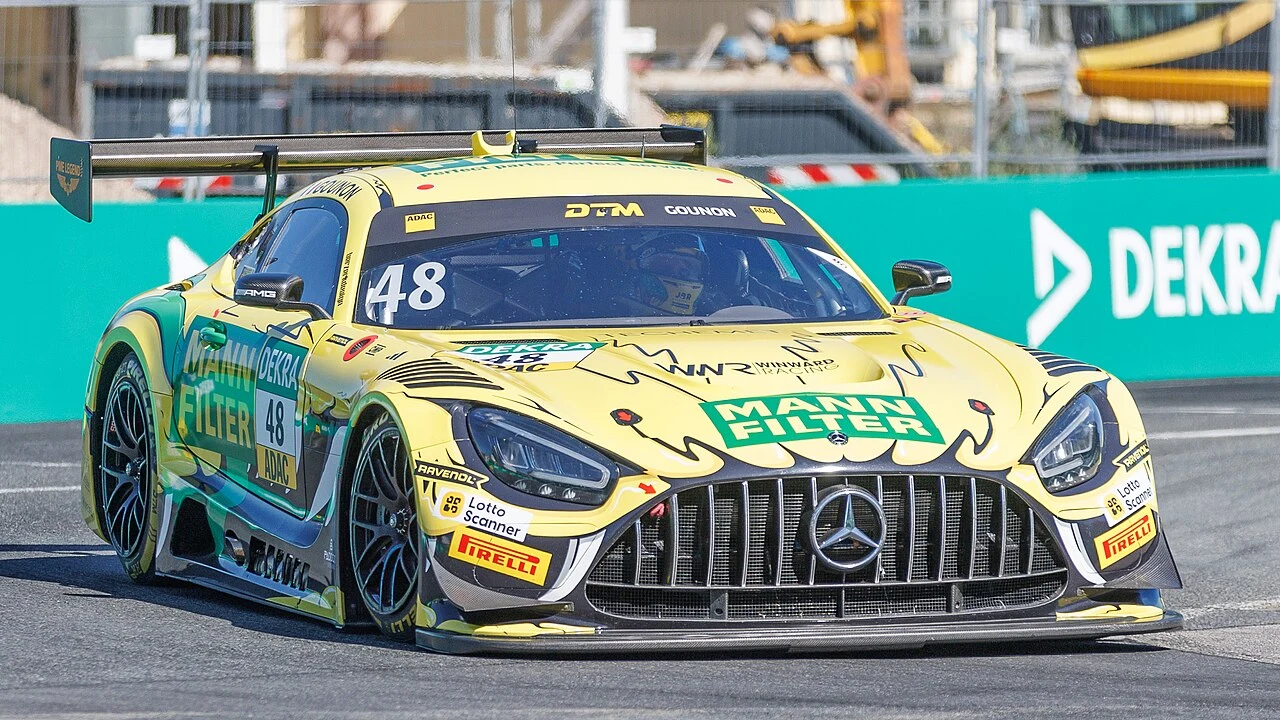
Category conflicts require particular attention. Michelin’s tyre exclusivity applies to the event, while the representative image used with this article depicts a Mercedes-AMG GT3 competing in another series on a different tyre brand. Sponsor content for Kyalami must avoid importing unrelated competition branding into event creative. The same discipline applies to fuel, lubricants, transport, financial services and automotive categories.
Good rights architecture should also leave room for team sponsors. An event presenting partner does not automatically override the commercial agreements carried by individual entrants. Teams need a clear rulebook for conflicting marks, hospitality invitations, vehicle displays and branded technical content before they commit activation budgets.
Local distribution is the point of the presenting role
International event brands often have global awareness but weak local sales routes. A South African presenting partner can help convert an imported race format into a domestic proposition.
Mercedes-Benz South Africa has dealer, customer and corporate relationships that the promoter cannot replicate quickly. Those channels can distribute hospitality, client invitations, vehicle experiences and content. They can also explain why the event matters beyond a single weekend: the return of an international 24-hour format, the endurance challenge for customer teams and the commercial activity around Kyalami.
The partnership should not be measured only by how many guests occupy a suite. The more useful measures are invitation acceptance, attendance, qualified dealer or corporate conversations, follow-up activity and the proportion of guests who engage with more than the hospitality offer. A full room can still be commercially unproductive if it contains no relevant audience or follow-through.
Dealer involvement needs central control. Local retailers may want their own displays, test-drive activity, customer lists and regional creative. Without templates and approval deadlines, that can produce inconsistent claims and duplicated invitations. A shared activation kit can define imagery, event naming, product eligibility, data consent and the process for booking client experiences.
The promoter can also use the partner’s distribution to widen the spectator base. Endurance racing asks more of a new audience than a short-format event. Fans need information about when to arrive, what happens overnight, which areas remain open, how parking and re-entry work, and where they can follow timing. Marketing reach is useful only if the event converts it into a practical visit.
Freight performance will shape the first edition
Creventic’s stated reason for the venue change puts logistics at the centre of the business case. The success of Kyalami cannot be separated from whether cars, equipment and people reach the circuit predictably.
Teams need milestone reporting rather than reassurance. The organiser and its freight partners should track booking confirmation, documentation completeness, departure, customs status, local release and circuit delivery for every container or air-freight consignment. Exceptions need owners and escalation times.
South African suppliers can reduce exposure by providing locally sourced equipment and consumables, but substitution must be approved. A team cannot assume that a familiar specification, certification or brand will be available at short notice. The event’s technical and commercial operations should identify common high-risk items and publish what can be procured locally.
The timing is demanding. A January race follows the European holiday period and leaves little recovery time if freight, visas or parts preparation slip. Entrants should separate critical items that travel with personnel from bulk equipment that moves earlier, subject to aviation and customs rules. They also need a return plan; equipment delayed after Kyalami can affect the next programme even if the race itself proceeds normally.
Promoter-side logistics affect spectators and partners too. Signage, hospitality furniture, timing systems, broadcast equipment, merchandise and vehicle displays all compete for transport capacity. Local sourcing may improve resilience and create economic benefit, but only when specifications, procurement responsibility and payment terms are fixed early.
This is where the Mercedes-Benz relationship can add operational value without the company becoming the logistics provider. Its local supplier knowledge, corporate procurement experience and dealer footprint can make introductions and identify capacity. Any such support should be documented separately from sponsorship rights so that responsibilities remain clear.
Kyalami has infrastructure, but the product must be built
Creventic describes Kyalami as an FIA Grade 2 circuit with 40 pit garages and an elevation of approximately 1,500 metres. Those features make the venue credible for an international endurance field, but facilities alone do not create a commercially successful 24-hour race.
The event product includes sightlines, night-time access, food and beverage, sanitation, security, camping or late-stay arrangements, public-address coverage, live timing, transport, merchandise and clear information when on-track action is difficult to follow. Hospitality requires separate service standards and contingency plans because corporate clients will judge the event against other premium experiences, not only other races.
The 24-hour format can increase dwell time and spending, but it also raises operating cost. More security shifts, medical coverage, lighting, cleaning and catering hours have to be funded. Promoters should not assume that a longer event automatically means higher margin.
The event’s elevation and January conditions add technical and guest-planning considerations. Teams will model cooling, tyre behaviour and driver workload. Organisers need weather plans and information that helps guests prepare for changing conditions across a full day and night.
Kyalami’s established identity gives the race a stronger story than an anonymous replacement venue. That advantage should be used carefully. Historic reputation can attract attention, but the 2027 event has to be judged on its current operation. Marketing should distinguish heritage from confirmed facilities and services for this edition.
What has not been disclosed
The announcement establishes Mercedes-Benz South Africa’s presenting partnership and names two customer teams. It does not disclose the contract term beyond the inaugural event, the fee, any minimum spend, the value of supplied services or whether the agreement contains an option for future editions.
No public document reviewed by MRI states the partner’s hospitality volume, dealer allocation, content deliverables, media rights, data access, vehicle-display inventory or exclusivity within the automotive category. The parties have not published ticket-sales targets, break-even attendance, broadcast distribution, sponsorship revenue or the event budget.
The early entry of 37 cars is not a guarantee of the final starting field. The presence of 14 GT3 cars does not establish class balance at scrutineering. The names of two Mercedes-AMG teams do not by themselves establish factory status or a works-funded programme.
The event’s description as South Africa’s first international 24-hour motor race should not be broadened into a claim that the country has no endurance-racing history. Kyalami has hosted major long-distance competition before. The distinction is the full 24-hour international format now scheduled by Creventic.
Those limits matter because business analysis should separate confirmed rights from promotional interpretation. The event has a credible commercial stack and an encouraging entry list. Its economics remain private, and its repeatability has not yet been proved.
A measurement plan for January
The first measure is grid conversion: how many of the 37 early entrants complete documentation, arrive, pass scrutineering and start. The figure should be analysed by class, origin and transport route so the organiser can identify where attrition occurred.
The second is freight reliability. On-time delivery, customs exceptions, emergency air-freight use, damaged equipment and return-shipment performance should be captured across teams and event contractors.
The third is rights delivery. Michelin, Mercedes-Benz South Africa, Brand Leadership Solutions, team sponsors and other partners need a verified record of signage, naming, content, hospitality, display and digital assets. Conflicts or missed assets should be logged while evidence is available.
The fourth is audience conversion. Ticket sales should be separated by channel, geography, order date and partner referral. Attendance, re-entry and overnight retention can show whether the 24-hour format was understood and used as intended.
The fifth is hospitality productivity. The organiser and presenting partner should track invitations, acceptances, check-in, meetings, dealer or corporate leads and follow-up outcomes while respecting data-consent requirements.
The sixth is local economic participation. Spend with South African suppliers, temporary employment, hotel nights, transport bookings and local procurement can support future partner and authority discussions, provided the method avoids double counting.
The seventh is customer-racing performance. Car reliability, parts availability, technical response time and team satisfaction matter to Mercedes-AMG’s commercial story even when finishing position is affected by ordinary racing incidents.
The eighth is repeatability. Creventic, Kyalami and their partners should decide before the event which financial, operational and audience thresholds would justify another edition. A renewal conversation based only on atmosphere will be weaker than one supported by a shared scorecard.
From replacement race to durable property
Mercedes-Benz South Africa’s presenting role gives the Michelin 24H Kyalami more than another logo. It connects local distribution, corporate hospitality and customer racing to an event that has been moved between continents because its original logistics environment became uncertain.
For Creventic, the partner can help localise a format that arrives with international teams but needs South African customers, suppliers and spectators. For Kyalami, it adds a stakeholder capable of activating beyond the circuit perimeter. For Mercedes-Benz South Africa, it creates a home-market endurance platform with relevant cars, teams and business audiences.
The arrangement does not remove the risks created by a late venue change. Freight, customs, local procurement, holiday-period timing and a new spectator proposition still have to be managed. Nor does the announcement reveal whether the event is financially secure or contracted beyond January.
The commercial opportunity is clear: combine an established international race operator, a historic venue, a tyre partner, a local sales agency and an automotive presenting partner around a field already showing multi-class demand. The operational test is equally clear: deliver the cars, rights, guests and spectators reliably enough that all parties want to repeat the exercise.
If the first edition meets that test, the January switch could become more than a contingency response. It could establish a recurring South African endurance property with a supply chain, customer-racing base and sponsorship architecture of its own. If it does not, the event will remain an instructive example of how much commercial work sits behind a simple change of venue.
Sources and further reading
- Mercedes-Benz South Africa partnership announcement, 27 November 2026 ↗
- Official Michelin 24H Kyalami event page ↗
- Creventic venue-switch announcement, 18 September 2026 ↗
- Creventic early-entry announcement, 2 November 2026 ↗
- Creventic local commercial-partner announcement, 8 October 2026 ↗
- Viranova DRIVE independent report, 27 November 2026 ↗
- IOL independent report, 28 November 2026 ↗
- Wikimedia Commons image and licence record ↗