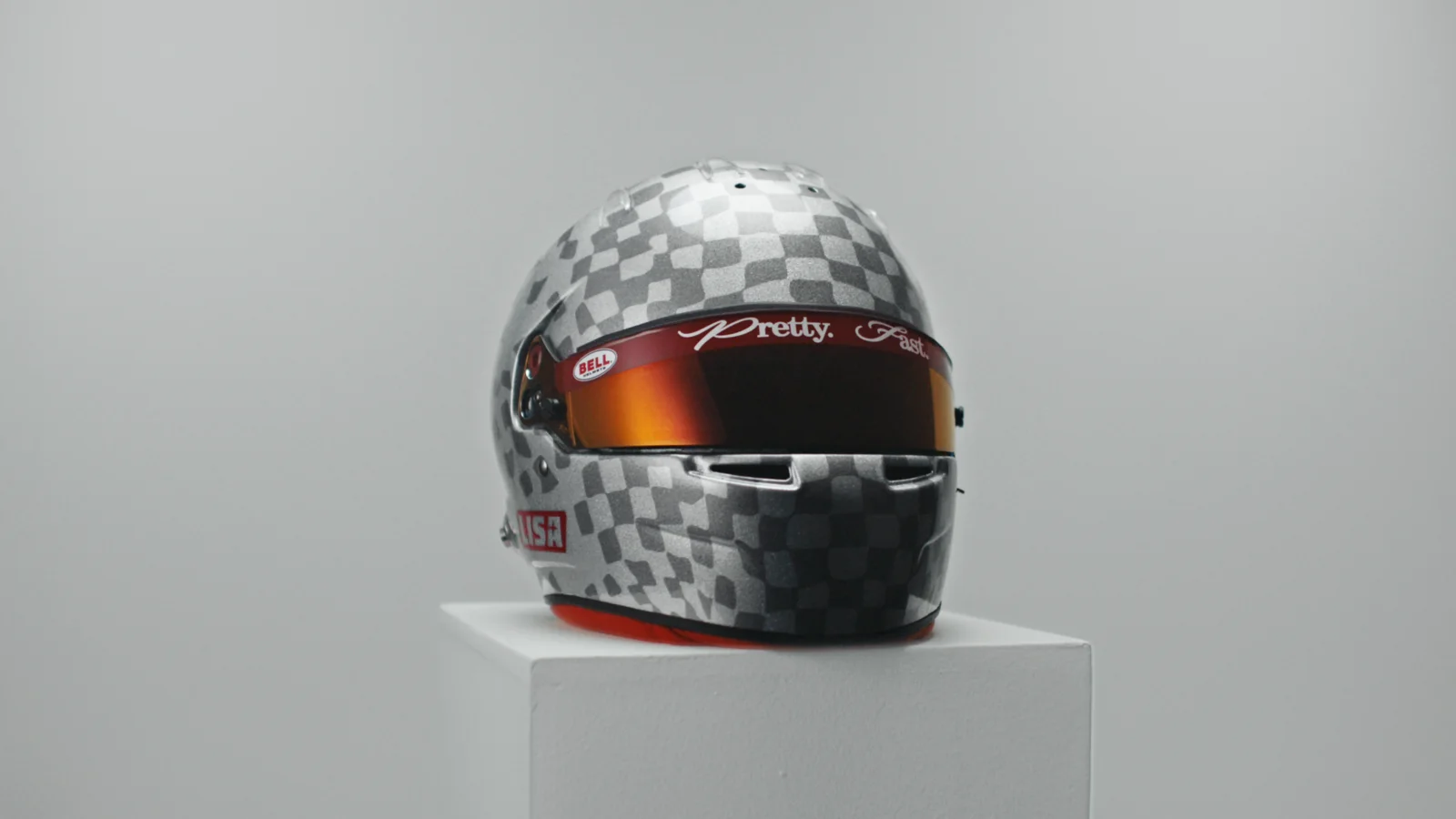
Formula 1 is using a limited apparel collection with LISA to test a commercial model that connects sport, music, fashion and event retail in one transaction.
Pretty Fast, announced on 17 November and due to go on sale globally on 19 November, is the first Formula 1 apparel collection to put an artist in creative leadership. It is also the first product in what the championship describes as a series of artist collaborations under a licensing partnership with Ceremony of Roses, Sony Music’s global merchandising business.
That second point is the material one for the motorsport industry. A one-off celebrity capsule can generate attention and incremental merchandise sales. A planned series with an established music-merchandising operator can become a repeatable route into artist audiences, direct-to-consumer data, event retail and location-specific product.
The launch has been designed around four sales channels: LISA’s official website, the F1 Store, the F1 Hub at the Las Vegas Grand Prix and the Colosseum at Caesars Palace. The range includes a racing jacket, cropped hoodie, baby tee, oversized tote, limited-edition accessories and items exclusive to Las Vegas. LISA is expected to attend the Grand Prix on 21 November.
Formula 1 has not disclosed prices, production volumes, minimum guarantees, royalty rates, inventory ownership, revenue shares, the duration of its Ceremony of Roses agreement or targets for the collection. There is no sales evidence before launch. The defensible conclusion is therefore that F1 has assembled a new licensing and distribution architecture, not that the programme has already produced a financial return.
Creative control changes the product proposition
Traditional licensed sportswear starts with a rights holder’s marks and applies them to products selected by a licensee. Pretty Fast reverses more of that process. Formula 1 says LISA provided creative direction, combining racing graphics, vintage motorsport references and custom artwork with her own approach to style.
That gives the collection a different customer proposition. The product is not only Formula 1 merchandise carrying an artist endorsement; it is presented as an artist-designed range that interprets Formula 1. For the artist’s existing audience, that can reduce the distance between fan merchandise and fashion. For F1, it offers a route to customers who may recognise the creator before they follow a team or driver.
Creative authority also complicates execution. Every graphic, garment, campaign asset and product description must satisfy Formula 1 brand rules, artist approval, manufacturing constraints and the launch calendar. If a range includes event-exclusive items, the rights chain must also cover territorial sales, venue retail, online marketing and any use of race or circuit identity.
Motorsport licensors should therefore distinguish three rights in their contracts: use of championship or team intellectual property, the artist’s name and likeness, and ownership of newly created artwork. They also need an approval timetable short enough to protect production and freight deadlines. A collaboration can be culturally current and still fail commercially if approvals arrive after the factory slot or the event-delivery window.
The published material does not identify who owns the Pretty Fast artwork, who can reuse it after the collection, or whether any designs are exclusive to particular channels. Those omissions are normal in a consumer announcement, but they are central questions for any supplier attempting to reproduce the model.
Four storefronts create four different jobs
The channel plan is unusually useful because each outlet serves a different commercial purpose.
LISA’s website provides access to an artist-led customer journey and a fan base built outside motorsport. The F1 Store places the collection beside the championship’s established merchandise catalogue. The F1 Hub turns the Las Vegas race week into a physical retail and discovery environment. The Colosseum links the range to LISA’s presence in the city and captures customers attending her entertainment activity.
Those channels should not be treated as interchangeable stock points. They have different customer acquisition costs, demand patterns, fulfilment expectations and data ownership. A buyer arriving through an artist website may respond to different creative and product bundles than a race attendee making an event purchase. An exclusive Las Vegas item may support urgency and higher event conversion but creates a more difficult forecasting problem because unsold inventory has less flexibility after the weekend.
For the rights holder, the most valuable result may be information rather than a single sell-through total. The launch can reveal whether customers enter through the artist or the sport, which products travel between audiences, how event-exclusive demand differs from global ecommerce, and whether buyers return to F1 channels after the collaboration.
None of those data arrangements has been disclosed. Contracts should specify which party controls customer records, what consent covers cross-marketing, how conversion is attributed when a customer sees several campaigns, and which performance data can be shared after the programme. Without that foundation, a multi-channel launch can produce fragmented reports rather than a reusable customer-acquisition model.
Ceremony of Roses supplies the operating layer
Formula 1 describes Ceremony of Roses as a creative practice focused on the commercial needs of artists. Sony Music’s own description is broader. After investing in the business in 2022, Sony made it the group’s flagship global merchandising arm and combined it with existing artist merchandise operations.
Sony says the business covers media, branding, design, events, artist merchandise, manufacturing and artist-backed brands. It also works with festival partners and was built to extend artist-fan relationships beyond the conventional tour T-shirt. That capability explains why the F1 agreement can be structured as a series rather than an isolated product licence.
For Formula 1, Ceremony of Roses brings artist relationships and a specialist operating system for design, production, ecommerce and live retail. For Sony Music and its artists, Formula 1 offers intellectual property, global events and an audience with demonstrated demand for teamwear, technical clothing and collectible products.
The exchange is strategically complementary, but the financial balance is unknown. Formula 1 has not said whether the agreement includes a minimum guarantee, royalty-only economics, shared product investment, marketing commitments or inventory-risk allocation. Those terms determine whether the rights holder earns predictable licence income or participates more directly in upside and unsold stock.
Suppliers evaluating similar deals should ask who funds sampling and tooling, who places factory orders, who owns stock at each stage, how returns are handled and what happens to event-exclusive inventory after the event. A headline collaboration can conceal very different working-capital positions.
Las Vegas is a retail laboratory
The launch date and physical outlets place the programme inside Formula 1’s Las Vegas event economy. Pretty Fast goes on sale two days before the Grand Prix, with merchandise available at an F1-operated hub and at a major entertainment venue. LISA’s expected race attendance adds a content and publicity layer without requiring the collection to depend only on trackside exposure.
This structure compresses product, media and retail activity into one week. That can increase discovery and reduce the gap between seeing a collaboration and buying it. It also creates operational dependencies: stock must arrive before a fixed event, point-of-sale systems must recognise channel-specific inventory, staff need product information, and replenishment decisions must be made before demand is fully visible.
Promoters can learn from the location strategy. Event retail no longer has to be confined to circuit concessions. City-centre hubs, entertainment venues, hotels and artist activity can extend the commercial perimeter of a race week. The trade-off is coordination across property owners, ticketed events, local licensing, staffing, security, payment providers and sponsor-category restrictions.
Formula 1 has not disclosed whether Caesars Palace, the race promoter or any presenting partner participates in merchandise revenue. Nor has it published the number or location of F1 Hub units allocated to Pretty Fast. The programme should therefore be judged on the disclosed channel design rather than assumed venue economics.
What teams and series can copy
The reusable idea is not simply to sign a musician. It is to build collaborations around a defined audience bridge and an operator capable of delivering products through both digital and physical channels.
Teams already have driver, team and partner communities. An artist-led capsule can add a new one, but only if the creative proposition is credible to that audience. Selecting talent by social following alone risks producing generic merchandise with high launch reach and weak repeat demand. The better test is whether the creator has a recognisable design language, a functioning commerce channel and a reason to engage with the sport.
Rights holders should also protect their existing merchandise ecosystem. Licensees may already hold exclusive rights in certain categories or territories. Team sponsors can have competing apparel, retail, payment or technology rights. A new collaboration needs a rights audit before creative work begins, not after launch assets have been approved.
For suppliers, the opportunity extends beyond garment manufacture. Limited capsules need forecasting, small-batch sourcing, product compliance, packaging, ecommerce integration, fraud controls, warehousing, event delivery, returns and post-launch reporting. A supplier that can connect those functions reduces the number of interfaces the rights holder must manage.
The operational risk is volatility. Artist and event demand can be highly concentrated in the first hours of sale. Overproduction leaves stock that loses scarcity and relevance; underproduction leaves revenue and customer goodwill on the table. Pre-registration, staged releases and channel allocations can improve planning, but the parties have not said whether Pretty Fast uses any of those tools.
The scorecard starts after the drop
The first measure should be sell-through by product and channel, not aggregate impressions. A racing jacket and a baby tee have different price points, lead times and audiences. Blending them into one revenue number would obscure the decisions needed for the next collaboration.
The second is customer movement. Formula 1 should be able to see how many buyers are new to its commerce environment, how many purchase through LISA’s channel, and whether collaboration customers later buy race tickets, subscriptions or other merchandise. Privacy and consent rules limit how that analysis can be performed, so the data design must be part of the licence from the start.
The third is event performance: conversion at the F1 Hub and Colosseum, the effect of Las Vegas exclusives, replenishment accuracy and the share of stock remaining after race week. Those results will tell promoters whether external retail locations add demand or redistribute purchases that would have occurred elsewhere.
The fourth is repeatability. Formula 1 has explicitly positioned Pretty Fast as the beginning of a series. The quality and timing of the next artist announcement will show whether Ceremony of Roses has created a pipeline with shared templates, approved suppliers and predictable delivery, or whether each capsule remains a bespoke project with limited economies of scale.
The fifth is economic transparency inside the partnership, even if figures remain private. The parties need a complete view of gross sales, discounts, tax, freight, returns, marketing, production cost, venue charges and royalties. High-profile sell-outs can still produce weak margins if air freight, rush production and unsold channel allocations are not controlled.
Pretty Fast gives Formula 1 a credible experiment because creative leadership, direct-to-consumer distribution and event retail are built into one launch. The collection itself may be temporary. The more durable asset is a system that can connect future artists to Formula 1 intellectual property and sell through several routes at once.
For motorsport businesses, that is the development to watch. The commercial test is not whether LISA creates attention in Las Vegas; that is already likely. It is whether F1 and Ceremony of Roses can turn one culturally specific launch into a repeatable, measurable licensing business without losing the authenticity that made the first collaboration valuable.
Sources and further reading
- Formula 1 official Pretty Fast announcement, 17 November 2026 ↗
- Sony Music official Ceremony of Roses investment and operating overview, 19 January 2022 ↗
- Sony Music direct-to-consumer strategy announcement, 2 September 2025 ↗
- License Global independent report, 17 November 2026 ↗
- InMusic independent report, 17 November 2026 ↗
- Official source-authorized image record, 17 November 2026 ↗