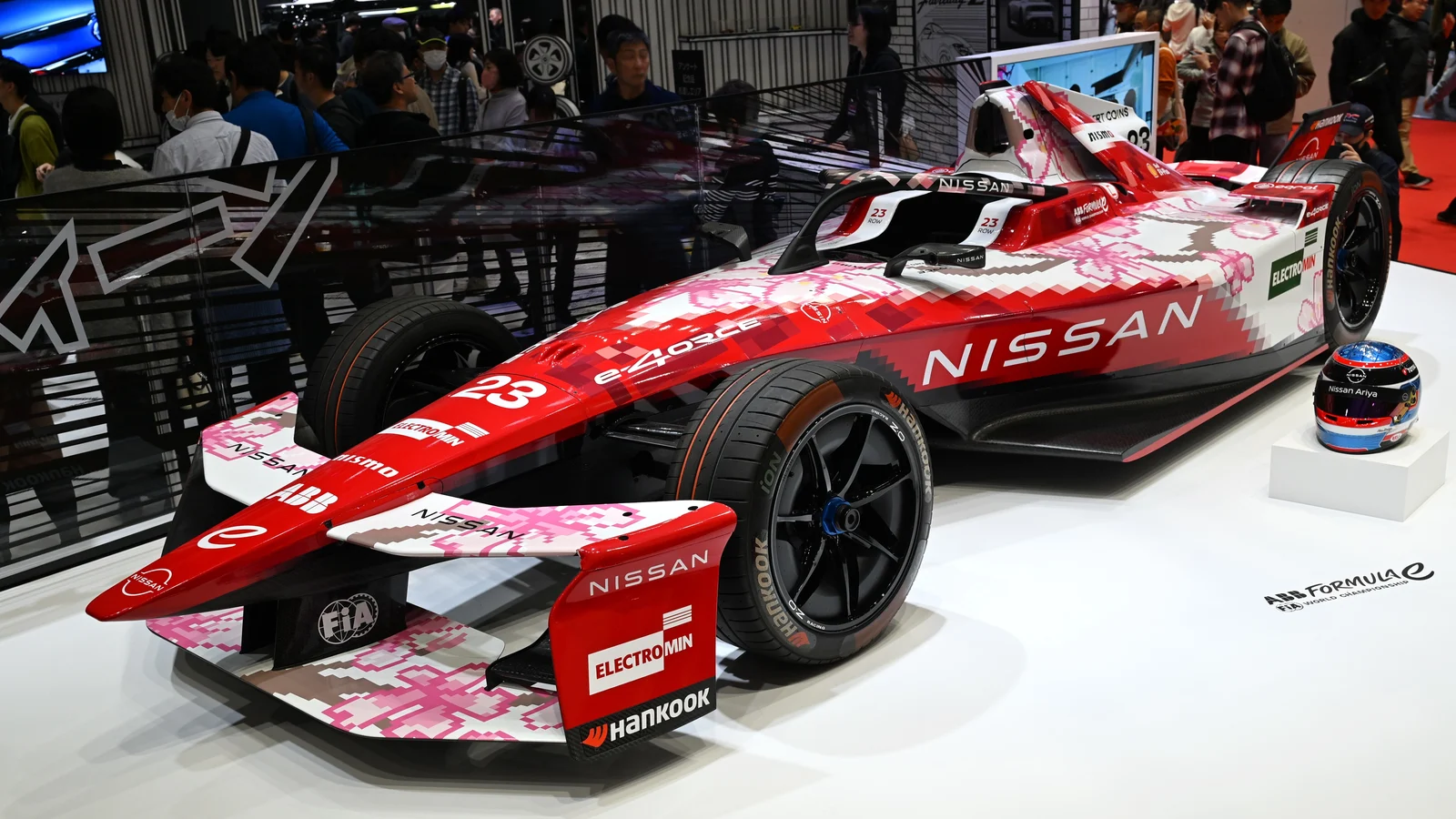
Formula E's first full-field GEN4 test ended with a serious incident and an important piece of positive evidence: Taylor Barnard left the Fusion car safely and no injuries were reported.
The fire occurred during the final hour of running at Circuito de Madrid Jarama - RACE on 20 November. The session was stopped and did not resume. The FIA and Formula E said emergency crews responded, confirmed that nobody was injured and announced a thorough investigation into the cause.
That investigation is the only responsible basis for a technical conclusion. At the time of publication, the governing bodies had not identified a failed component or published a root cause. Reports that name one part of the car are therefore not findings and should not be repeated as if they were.
For the motorsport industry, the development is larger than one stopped test. GEN4 is a new platform combining common championship hardware with manufacturer-controlled systems. The hardware has been homologated, 12 teams have completed their first collective week, and the race debut is scheduled for Mexico City on 16 January 2027. The fire has turned the remaining preparation period into a test of supplier governance: who preserves evidence, who can order a fleet check, who approves a change, how information crosses company boundaries and what proof is required before cars return to representative running.
No public evidence supports a conclusion that the GEN4 concept is unsafe, that a common component failed or that a manufacturer-developed component failed. Equally, the absence of an announced cause is not evidence that the matter is minor. The correct commercial response is a disciplined process that can distinguish an isolated assembly defect, a configuration problem, an operating condition and a systemic design issue without allowing schedule pressure to choose the answer.
The architecture makes responsibility shared
Formula E's technical model divides the car between single-supplier components and a manufacturer development perimeter. Jaguar's official description of its GEN4 programme says the chassis and battery are common to every team, while manufacturers develop the motor, inverter, gearbox, rear suspension, active rear differential, cooling system, drive shafts, electrical harness and software and controls.
That split is commercially efficient. Common parts control duplication and support grid parity, while the open perimeter gives manufacturers road-relevant engineering territory. It also means that an incident cannot be allocated to one company by looking at the badge on the nose or by observing where flames were visible.
A fault can propagate across interfaces. A common component can receive commands, loads or cooling from manufacturer-developed systems. A manufacturer component can depend on common hardware, sensors and installation specifications. Software, calibration, connectors, sealing, assembly, transport damage, track debris and recovery actions can all affect the evidence available after an event. This is why a credible investigation must be organised around a fault tree and configuration record rather than a public theory.
The first governance question is custody. The parties need an agreed record of the car's physical condition, component serial numbers, software versions, calibrations, warnings, telemetry, charging history, ambient conditions, interventions and recovery sequence. Parts removed or disturbed before documentation can erase the difference between cause and consequence.
The second question is access. A team may hold operational data, the powertrain manufacturer may hold proprietary control logic, and a single supplier may hold manufacturing and batch records. The FIA and Formula E need enough visibility to connect those records. Contracts and technical regulations should already define that access, but an incident tests whether the definitions work at operational speed.
The third question is decision authority. A supplier can recommend an inspection, a manufacturer can restrict its cars, a team can stop running and the regulator can impose a condition or approve a change. The network needs one documented route from evidence to action. Parallel instructions with different thresholds can create delay, duplicated work or a car that is technically complete but not formally cleared.
Homologation is a baseline, not the end of validation
The FIA described GEN4 hardware as homologated before the Jarama test. Homologation matters because it freezes a defined technical specification and provides a controlled basis for competition. It does not mean every possible operating combination has been experienced or that no defect can emerge.
Pre-season testing exists precisely because complete cars must be brought together under representative loads. Jarama combined all teams, race simulations and the newest controls on a circuit that will also host a championship round. The week generated the system-level evidence that component benches and private running cannot fully reproduce.
The business risk now lies in confusing two different decisions. One decision is whether the existing specification remains acceptable subject to checks. The other is whether a design, production or operating change is required. The first may be resolved by inspection, traceability and confirmed configuration. The second can trigger new parts, software releases, validation, homologation work, logistics and cost allocation.
Change control must be fast without becoming informal. Every proposed action should identify the evidence behind it, the cars and serial ranges affected, the validation required, the owner, the approval route and the rollback plan. A precautionary change that is poorly controlled can introduce a new failure mode or make later root-cause work harder.
Teams also need a single configuration view. A championship with customer powertrains and common parts can contain cars that look identical but differ by component revision, mileage, repair history, calibration or assembly date. Clearance should attach to the actual configuration and evidence package, not merely to a model name.
This is where motorsport's digital infrastructure becomes a safety and commercial asset. Serial-level records, signed software versions, torque and inspection records, non-conformance reports and supplier batch data reduce the time between an incident and a defensible decision. If those records must be reconstructed through email after the event, the supply network has already lost valuable time.
Fleet containment should be proportionate and traceable
An investigation does not automatically require every GEN4 car to be rebuilt, nor does an apparently isolated event justify assuming that the rest of the fleet is unaffected. The practical task is to define a containment boundary and narrow it as evidence improves.
That process begins with comparison. Investigators can identify cars using the same component batch, production process, software version, assembly procedure, mileage band or operating profile. They can then examine whether warnings or precursor signals appeared elsewhere. Absence of a visible problem is useful evidence only if the relevant data were captured and compared consistently.
For teams and suppliers, the containment matrix should answer five questions: which cars may run, which require inspection, which require parts or software, which evidence remains outstanding and who signs each release. The matrix should be time-stamped and version-controlled because decisions will evolve.
The distinction between safety containment and root cause is important. A fleet can sometimes return to controlled running under an interim condition before the final technical report is complete. Conversely, finding a damaged component does not establish why it was damaged. The return-to-run case should state what risk is being controlled and what uncertainty remains.
Supplier capacity is part of that case. If inspection damages seals or consumes single-use parts, the grid needs enough replacements. If a batch is quarantined, procurement must know how many conforming units exist and where they are. If a new revision is ordered, manufacturing capacity, quality checks, freight, customs and installation time become schedule constraints.
The 16 January opener leaves several weeks, but that period includes holidays, long-haul freight to Mexico and the need for teams to complete their own preparation. A decision delayed by ten days can consume more than ten days of programme because production and transport windows are not continuous.
Contracts need to work under investigation pressure
Technical regulations determine what may compete. Commercial contracts determine who must supply information and parts, who pays for urgent work and how disruption is allocated. A new-generation incident exposes any gap between the two.
Single suppliers, manufacturers and teams should be able to locate provisions covering incident notification, data preservation, access to proprietary information, investigation leadership, recall or service campaigns, expedited manufacture, transport, warranty, indemnity, insurance cooperation and public statements. The objective is not to begin a liability contest while evidence is incomplete. It is to prevent commercial uncertainty from slowing a safety decision.
Customer teams require particular clarity. Fusion uses a customer powertrain, while other systems belong to common suppliers and the team's own operations. The public facts do not establish which layer is relevant to the fire. The contractual system nevertheless needs to function before that answer is known.
A customer should know where to send the complete evidence package, which supplier has authority to issue technical instructions and whether one instruction supersedes another. The manufacturer needs access to enough data to assess its perimeter without gaining unrelated competitor information. The regulator needs the integrated view. Those are information-governance problems as much as engineering problems.
Cost allocation can be deferred until causation is established, but spending authority cannot. Teams may need to reserve freight, inspect cars, purchase consumables or hold additional staff before responsibility is decided. An interim protocol should allow necessary work to proceed without making payment an admission of fault.
Insurers should be notified on the facts, not on a preferred technical theory. Relevant policies may include property, transit, product liability, business interruption and event cover. Late notice, destroyed evidence or an unsupported public admission can complicate recovery. Teams and suppliers should coordinate legal, technical and insurance communication while preserving the independence of the engineering investigation.
The promoter risk extends beyond the car
Jarama's response demonstrated the first requirement: the driver exited and emergency services intervened without reported injury. The review should capture what worked as carefully as it examines the failure.
Promoters and circuits need a factual operational record: detection time, radio traffic, red-flag timing, driver instructions, vehicle locations, access routes, extinguishing and cooling resources, exclusion zones, recovery method, storage after recovery and the effect on the rest of the field. The purpose is not to grade one venue from incomplete public information. It is to convert a real GEN4 event into a repeatable plan for every host.
Electric racing requires circuit teams to plan for high-voltage hazards and possible re-ignition regardless of what ultimately caused this fire. Venue procedures should specify isolation, specialist personal protective equipment, monitoring, quarantine, contaminated-water handling where relevant and handover to the investigation team. The championship can standardise the core method while each circuit adapts access and local emergency coordination.
The event schedule also needs a decision tree. At Jarama the final session ended early. At a race weekend, the promoter may face ticketed sessions, broadcast windows, support categories and public movement. Race control needs pre-agreed triggers for stopping, relocating or resuming activity, with clear responsibility for declaring the affected area safe.
These preparations have commercial value even if they are never used. Insurers, host authorities and venue owners can assess a documented procedure. Sponsors are better protected when incident communication is coordinated. Teams avoid improvising recovery rules under television scrutiny.
Formula E should distribute the operational findings widely enough to improve the championship without publishing technical information that would compromise the investigation or a manufacturer's legitimate intellectual property. Safety learning and competitive secrecy are not mutually exclusive if the report separates procedure from proprietary design.
Communication must keep pace with decisions
The initial joint statement did three useful things: it confirmed the absence of injuries, said emergency crews were responding and committed to an investigation. That is the right level of certainty at the start.
The next updates should follow decision points rather than the social-media cycle. The championship can say whether evidence collection is complete, whether a fleet-wide check has been ordered, whether running restrictions apply and whether the season timetable remains unchanged. It does not need to name a cause before the causal chain is established.
Silence creates a vacuum, but excessive detail can create a false conclusion that later needs correction. A useful update distinguishes confirmed facts, precautionary actions and unresolved questions. It should also identify who is leading the investigation and when another update is expected, even if the answer is that technical work continues.
Teams and suppliers need a common communications protocol. Engineers should not learn about a supposed technical finding from a sponsor statement. Partners should receive a short factual brief that explains the process and directs media questions to the authorised channel. Drivers should know what they can say about their own experience without being asked to interpret systems outside their knowledge.
Sponsors will evaluate the incident partly through the quality of that response. Electric motorsport sells innovation, relevance and performance, but credible innovation includes controlled learning when a system fails. An investigation that is transparent about decisions and restrained about speculation can reinforce the engineering proposition more effectively than pretending the interruption did not occur.
What the industry should watch before Mexico
The most important indicator is not a public deadline for a root-cause report. It is whether the championship establishes a defensible return-to-run basis for every relevant configuration. That basis may include inspections, part replacements, software conditions, additional monitoring or no change. The reasoning should be documented even if proprietary detail remains confidential.
The second indicator is traceability. A rapid investigation is more credible when the parties can identify affected serial numbers, production batches and software states without broad assumptions. Suppliers should treat the time required to assemble that view as a key performance measure.
The third is change capacity. If action is required, the industry should watch whether parts can be produced, validated and delivered without creating unequal access across the grid. A common platform depends on all participants receiving controlled updates, while customer arrangements need the same clarity as factory programmes.
The fourth is operational learning. Formula E can update circuit guidance before Mexico even if the final engineering report takes longer. Emergency response, vehicle quarantine and evidence handover are processes that can be improved independently of the initiating cause.
The fifth is schedule confidence. The official pre-season material describes 2027 as Formula E's largest season, with 21 races and 12 teams. The GEN4 debut is a major product launch for the championship, its manufacturers, Bridgestone and the single-supplier network. Teams, promoters and partners need an honest view of the critical path rather than reassurance unsupported by milestones.
The sixth is contractual learning. After the immediate work, every participant should review whether data access, investigation authority, urgent spending and communication were clear. Any workaround used at Jarama should become a formal process before the first freight leaves for Mexico.
A launch test for the whole supply network
The fire does not provide a verdict on GEN4. It provides a test of how GEN4 is governed.
Formula E has deliberately created a platform that combines controlled common hardware with meaningful manufacturer freedom. That model can accelerate development and contain costs, but it relies on interfaces between organisations being managed as carefully as interfaces between components.
Barnard's safe exit and the absence of reported injuries are the most important outcomes from Jarama. The next outcome must be a decision trail that teams, suppliers, insurers and the regulator can defend. That means preserving evidence, refusing to convert suspicion into fact, containing the right population of cars, controlling any change and giving promoters an updated operating case.
If the network can do that before Mexico, the industry will have learned more than which component failed. It will have demonstrated that a new electric racing platform can respond to a serious event without losing technical discipline, competitive fairness or commercial control. That capability is part of the product Formula E is selling to manufacturers and partners, and it is now being tested in public.
Sources and further reading
- FIA official GEN4 pre-season testing announcement, 16 November 2026 ↗
- Formula E official GEN4 pre-season testing explainer, 16 November 2026 ↗
- Jaguar TCS Racing official GEN4 technical overview, 18 September 2026 ↗
- Formula E official GEN4 frequently asked questions ↗
- RACER independent incident report, 20 November 2026 ↗
- e-Formula.news independent incident report, 20 November 2026 ↗
- Wikimedia Commons image record ↗