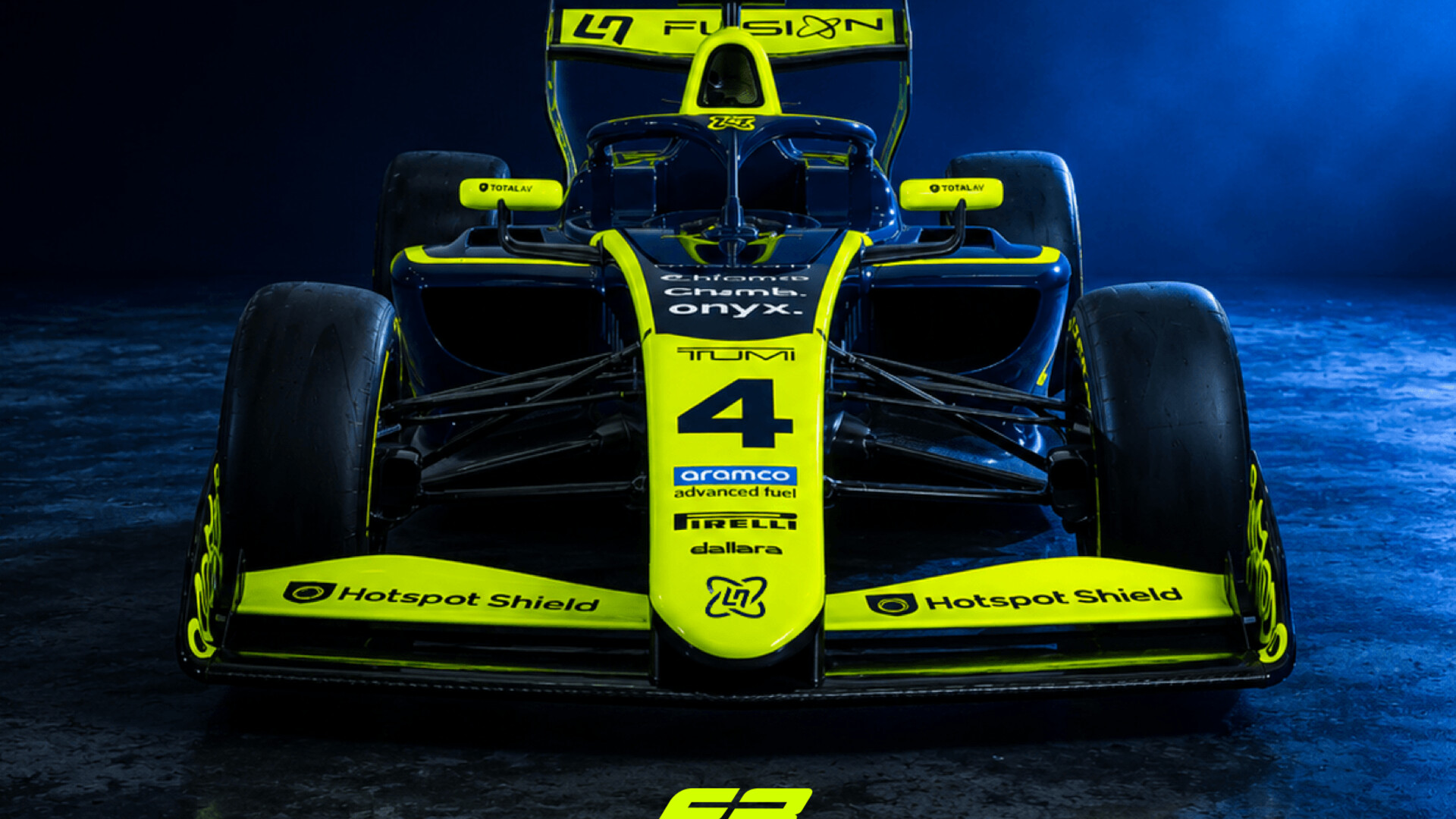
A new shareholder has entered LN4 Fusion at the point where its junior-racing plan stops being a sequence of acquisitions and starts becoming an integration test.
Canadian entrepreneur Chiko Nanji acquired what the group describes as a substantial equity stake in Fusion Racing Group through Automobiles Etc Motorsport Inc. on 11 November. He becomes Group Executive Vice Chairman, a major shareholder and a director of both Fusion Racing Group and LN4 Fusion. The parties did not disclose the price, exact percentage, valuation or amount of new capital entering the business.
That absence of financial detail matters, but so does the form of the transaction. Nanji is moving from a commercial relationship into ownership and governance. Metro Supply Chain, the logistics business he founded, became an official LN4 Fusion partner in September. The new investment is being made through a separate vehicle and the announcement does not say that Metro itself has acquired shares or that it will supply race logistics. MRI is therefore treating sponsorship, equity ownership and any future operating contracts as three distinct arrangements.
The distinction is useful for teams and rights holders evaluating strategic partners. A sponsor buys defined inventory and activation. An investor accepts enterprise risk and can influence capital allocation through governance. An operating partner may deliver services under a separate contract. Combining those roles can create a deeper relationship, but only if the rights, conflicts and performance obligations are clear.
A platform assembled by transaction
Fusion Racing Group is being built across six named championships for 2027: Formula 2, Formula 3, Formula Regional European Championship, Italian Formula 4, British Formula 4 and German Formula 4. It also plans karting programmes in OK, OK-Junior and IAME X30.
The route to that footprint has not been a single greenfield build. LN4 Fusion emerged from an investment group led by Dan Richards, an investment in Fusion Motorsport and the acquisition of selected assets from AIX Racing. The latter provided the basis for the Formula 3 operation and the pursuit of a Formula 2 place. Formula 2 subsequently selected LN4 Fusion for the 2027-29 cycle, while Formula 3 confirmed that the team will take over AIX Racing's place on its grid.
On 6 November, LN4 Fusion also acquired a majority stake in Chris Dittmann Racing and confirmed four British F4 entries for 2027. Chris Dittmann remains team principal. The legal adviser to the group, Lester Aldridge, separately described the wider work as a complex cross-border acquisition involving selected AIX assets and investment arrangements with the eventual partners.
Put together, those disclosures describe a roll-up rather than a conventional single-series team expansion. It combines equity investments, selected-asset purchases, a majority acquisition and championship selections under one developing brand. Each route carries different liabilities, employment arrangements, supplier contracts and integration work.
Where logistics experience can create value
Nanji's relevance is not simply that he has capital. Metro Supply Chain grew from one warehouse into a group that, at the time of its sale, reported more than 9,000 employees and over 190 sites across North America and the United Kingdom. Japan's NX Group completed its acquisition of all Metro shares on 1 October; Nanji remained Group Chairman. Neither NX nor Metro has said that proceeds from that transaction are funding the racing investment, and MRI is not inferring such a flow.
The transferable skill is operating a distributed network. Nanji identified the movement of people, cars and equipment across continents as one of the racing group's central challenges. That is a credible diagnosis. LN4 Fusion is planning activity from karting to Formula 2, with an Italian headquarters, a United Kingdom operation and calendars that create overlapping freight, staffing and test demands.
For a multi-series team, logistics is not limited to booking trucks or air freight. The operating system includes spares forecasting, customs documentation, dangerous-goods compliance, temporary imports, workshop inventory, equipment standardisation, supplier lead times and contingency stock. A platform that can see those requirements together may reduce duplicate inventory, improve utilisation and strengthen purchasing data.
The opportunity should not be overstated. Formula 2 and Formula 3 use tightly controlled equipment and centralised event structures. Formula Regional, national Formula 4 championships and karting have different suppliers, testing rules, tyre allocations, transport patterns and staffing ratios. A common shareholder does not automatically make their physical or technical resources interchangeable.
The best economies may therefore sit around the racing rather than inside the cars: finance, recruitment, commercial production, data governance, travel procurement, freight visibility and shared supplier controls. The sporting units still need enough independence to make rapid decisions within their own regulations and calendars.
Capital allocation becomes the real test
The new stake arrives while the group is making simultaneous commitments that consume working capital before they produce stable revenue. Cars and equipment must be acquired or leased, personnel recruited, workshops prepared, testing funded and championship deposits met. Driver income and sponsorship can arrive on different schedules from those costs.
That makes board-level capital allocation as important as headline funding. The group will need to decide which programmes receive shared staff, when equipment is duplicated for resilience, how losses are carried during the build phase and whether a weak series result changes investment elsewhere on the ladder. A vertically connected driver pathway is commercially attractive only if no category becomes a cash or talent bottleneck.
The announcement does not disclose Nanji's shareholder rights, board voting arrangements, reserved matters, dilution protections, investment horizon or capital commitments. It also does not identify the ownership percentage held by the other investors or explain how the Fusion Racing Group entity sits above the operating companies. LN4 Fusion's own website says the brand belongs to Alphabet Racing Italia S.r.l., which is controlled by Alphabet Racing Limited in Jersey, but that disclosure does not by itself map the full group structure.
For suppliers, those unanswered questions affect credit and contracting decisions. A brand can be presented as one platform while purchase orders, employment contracts and assets remain distributed among several legal entities. Vendors should establish which entity is ordering, which company owns the relevant assets, where liability sits and whether payment support is shared across the group.
For sponsors, the expanded ladder creates useful inventory: a relationship can potentially follow drivers from karting to international single-seaters, span several national markets and combine paddock access with digital storytelling. The risk is dilution. Six championships plus karting generate many cars, events and stakeholders. The group will need a clear hierarchy for partner categories, livery rights, hospitality and driver conflicts if it wants the portfolio to feel connected rather than crowded.
What the next evidence should show
The strongest proof will be operational, not promotional. Industry partners should watch whether LN4 Fusion publishes a coherent management structure, fills technical and commercial roles without weakening acquired teams, centralises appropriate procurement and meets each programme's testing and delivery milestones.
Supplier onboarding will be another indicator. A genuine platform should be able to offer consistent forecasting, contracting and payment processes even where series-specific components remain separate. Freight and inventory performance can also be measured through reduced emergency shipments, fewer stock-outs and clearer asset visibility. None of those outcomes has yet been reported.
The investment nevertheless changes the quality of the project. LN4 Fusion has added an owner who has spent decades scaling a logistics network through organic growth and acquisitions, and who is taking an executive and board role rather than buying only brand exposure. For a racing group being assembled through multiple transactions, that operating background is directly relevant.
The caveat is equally direct: integration expertise is not the same as completed integration. The commercial case will depend on whether Fusion Racing Group can turn its collection of grid places, assets, teams and partners into a repeatable operating platform while preserving the sporting focus required in every championship. The next year will show whether the roll-up produces shared capability or merely a larger set of commitments.
Sources and further reading
- Fusion Racing Group official investment announcement, 11 November 2026 ↗
- Lester Aldridge transaction disclosure, 10 November 2026 ↗
- LN4 Fusion British F4 acquisition announcement, 6 November 2026 ↗
- Formula 2 selection announcement ↗
- Formula 3 entry announcement ↗
- NX Group acquisition announcement, 16 October 2026 ↗
- Metro Supply Chain leadership profile ↗
- LN4 Fusion authorised media library ↗