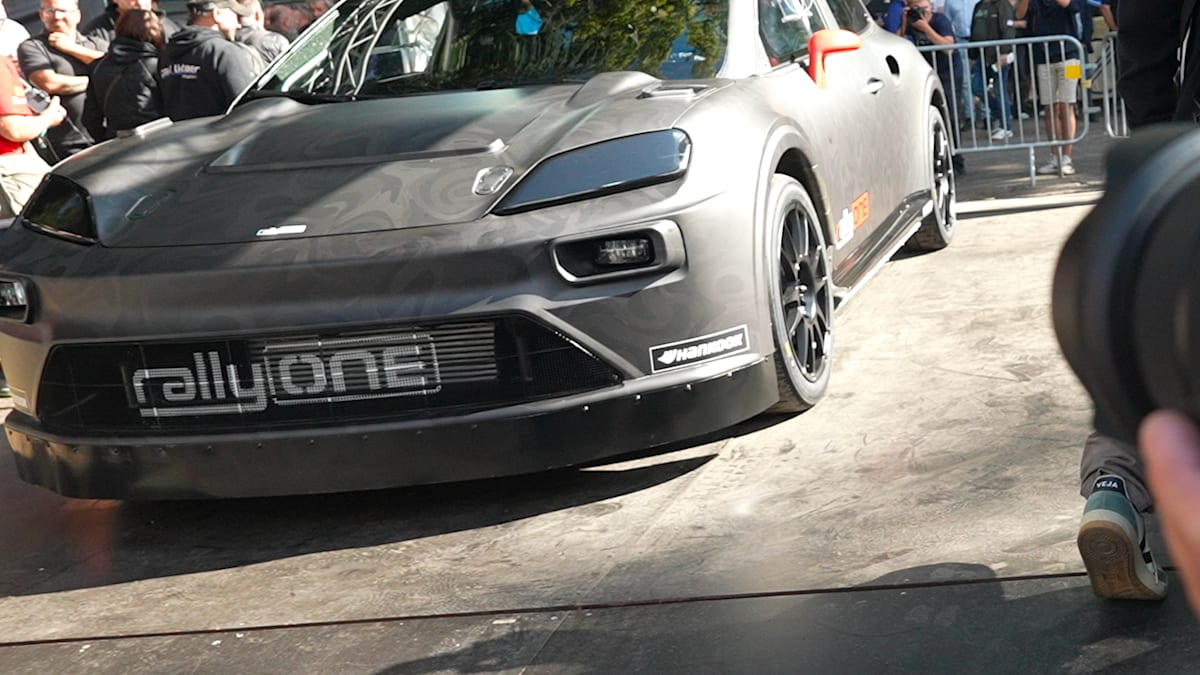
Project Rally One has shown the first privately led car built for the World Rally Championship's 2027 regulations, giving the FIA's lower-cost constructor model its first practical test outside an established manufacturer programme.
The prototype was presented at the Rally4Passion event in Huy, Belgium, after five days and about 750 kilometres of asphalt running. Project Rally One says the car completed that work without a reliability issue and is targeting FIA homologation on 1 November, followed by a two-car debut at Rallye Monte-Carlo in January 2027.
Those milestones matter, but the greater business test is still ahead. WRC27 was designed to let independent tuners become constructors, not merely enter customer cars. That means Project Rally One must turn a prototype and a network of specialist suppliers into a repeatable product, parts operation and support service while preparing its own competition programme.
A constructor becomes a product business
The FIA's WRC27 framework sets a €345,000 price cap for a ready-to-compete car in tarmac specification. It also defines a constructor as the organisation responsible for designing, building and homologating the car and for marketing cars and parts to customers.
That is a different proposition from operating a conventional rally team. The constructor needs engineering and sporting capability, but also procurement, production planning, inventory, documentation and customer support. A sale price controlled by regulation can open the market only if the business behind the car can manufacture it consistently and leave enough margin to fund those functions.
The €345,000 figure therefore should not be read as the budget for entering WRC. It is a capped vehicle price. Homologation work, test mileage, tooling, spares, personnel, freight and the working capital required to hold components all sit around that product. Project Rally One has not disclosed its development budget, target build volume, customer pipeline, margin or funding structure.
The regulations nevertheless change the addressable market. They allow teams and tuners to homologate cars on the same basis as automotive manufacturers, while a ten-year technical cycle gives a successful platform more time to earn back its development cost. For suppliers, that can create recurring demand in production parts, rebuilds, updates and technical service rather than a one-off prototype contract.
A 21-person core depends on a wider network
Project Rally One says it employs 21 people full time. Its published supply structure extends well beyond that payroll: Paris-based Faster Racing developed and constructed the bespoke bodywork, while the programme has previously identified WRT Manufacturing, Marelli Motorsport, Multimatic and OMP Racing among its technical partners.
That structure is evidence of the consortium model WRC27 was intended to enable. A compact constructor can buy specialist capability rather than own every machine, process and facility. The approach reduces fixed investment and gives established suppliers a route into a top-level programme without requiring them to fund a complete car.
It also creates interfaces that must be managed. Design changes affect lead times, certification, stock and service information across several companies. A late component or capacity constraint can stop both the works cars and any customer programme. The commercial value of the network will depend on clear ownership of drawings and tooling, change control, minimum order quantities and the ability to supply identical parts over a long homologation period. None of those commercial terms has been made public.
The engine illustrates both the opportunity and the boundary. Project Rally One says its 1.6-litre turbo unit is related to the engine in the Skoda Fabia RS Rally2 but has been extensively modified for the higher output required by WRC27. Reusing a proven architecture can shorten development and connect the programme to an existing knowledge base, but the constructor still carries the integration, validation and supply responsibility for its own application.
The calendar turns engineering into working capital
The disclosed timetable is tight. Project Rally One plans gravel testing with Teemu Suninen in October, homologation at the start of November and two cars at Monte Carlo roughly three months later. The 750 kilometres already completed establishes that the prototype runs; it does not yet demonstrate durability across gravel, winter conditions, accident repair, component life cycles or a multi-car event schedule.
Moving from one development car to two rally-ready cars also requires parallel hardware, spares and trained staff. Suppliers must freeze specifications early enough to manufacture and inspect parts, while the team needs contingency stock before the first event. Every component ordered ahead of revenue absorbs cash. Every late redesign risks making existing inventory obsolete.
The championship obligation is material too. FIA rules require a new constructor to contest at least half of the WRC rounds in its first season. That prevents a business from homologating a car solely for occasional customer appearances, but it also establishes a meaningful minimum operating commitment before sales volumes are known.
Project Rally One has said it is open to a manufacturer or strategic partner. It has not announced confirmed drivers, customers, sponsors or a vehicle brand for the programme. Those are not minor omissions: a badge partner can add funding and distribution value, while customer orders can spread development and support costs across more cars.
What the market should measure next
For teams considering WRC27, the useful proof will be broader than stage times. They should watch whether Project Rally One reaches homologation on schedule, produces the second car without disrupting development, publishes a parts and support offer, and maintains availability once the season begins.
Suppliers should look for evidence of forecast volume and service responsibility before treating the €345,000 car as a large production opportunity. The regulations lower the entry price, but low-volume motorsport manufacturing still carries tooling, quality and inventory risk. A ten-year cycle can reward durable relationships; it can also lock a weak component or fragile commercial arrangement into a long support obligation.
For WRC and its promoters, the project is the earliest public test of whether regulatory access becomes genuine constructor diversity. The reveal proves that an independent organisation can assemble the people and partners needed to put a WRC27 car on the road. Homologation, production and customer service will show whether that organisation can become a sustainable supplier to the championship.